A brand built around the wardrobe you have
UniqueYou began in 2014 with scarves and clothing. Its history includes a pause and a return after the domain was recovered, rather than an uninterrupted run of trading. That distinction matters because a brand story is most useful when it stays straightforward. The original brown wordmark, horse motif and “Since 2014” detail give the identity a recognizable starting point; a neutral taupe palette supports the understated feel. None of those visual cues tells you how a particular scarf was made, but they do explain the quiet, accessible direction of the presentation.
The more helpful question for a buyer is not whether an accessory can transform an entire wardrobe. It is whether it belongs with the clothes already worn most often. A scarf can soften the line of a structured jacket, bring colour to a plain knit or connect two colours that otherwise feel separate. UniqueYou’s approach is best understood through that everyday decision: look at your coats, shirts and dresses first, then choose an accessory with a useful shape, comfortable feel and colour relationship. An elegant scarf earns its place when it is easy to reach for repeatedly, not only when it photographs well on its own.
Start with the job the scarf needs to do
Before choosing a fibre or pattern, decide how the scarf will be worn. A narrow fold tucked into a coat collar needs less bulk than a wrap meant to cover the shoulders. A square scarf offers compact styling possibilities at the neck or in the hair, while a larger shawl has more surface area to drape over clothing. Length and width affect how many times a scarf can be wound, how long its ends hang and whether it stays comfortable under outerwear. These are design decisions with visible consequences, not minor details to leave until the end.
Think about the conditions in which you will use it. A light accessory may serve as a colour accent indoors and on milder days; a more substantial scarf can add coverage when layered with a coat. Neither description is a guarantee of warmth, since fabric weight, construction and the rest of an outfit matter too. If you prefer a tidy silhouette, check how a scarf folds rather than judging only its spread-out appearance. If you enjoy a loose drape, consider whether its dimensions give you room to arrange it without constant adjustment. The best starting point is a real wearing situation, not an abstract idea of the perfect scarf.
Read material names with care
Silk, cashmere and wool are useful collection categories, but a category name is not a substitute for an individual product’s composition. UniqueYou’s offer includes those categories; the fibre content can vary by product. Read the specific description and care information before assuming that every item in a collection has the same blend or feel. Even two scarves made with a similarly named fibre may differ because yarn, weave or knit, finishing and fabric weight affect the result. A photograph can suggest drape and surface texture, but it cannot fully communicate hand feel.
As a general guide, silk can produce fluid folds and a distinctive surface, making it worth considering for a compact square or a lighter neck accent. Cashmere is often chosen for softness, while wool covers a broad range of textures and constructions suitable for different levels of coverage. These are starting points for comparison, not promises about a particular item. Look beyond the fibre name to the way a piece is constructed: a closely woven fabric, an open weave and a knitted scarf will respond differently to folding and movement. For a gift, material preference matters especially if the recipient dislikes particular textures against the neck.
How construction changes the way a scarf behaves
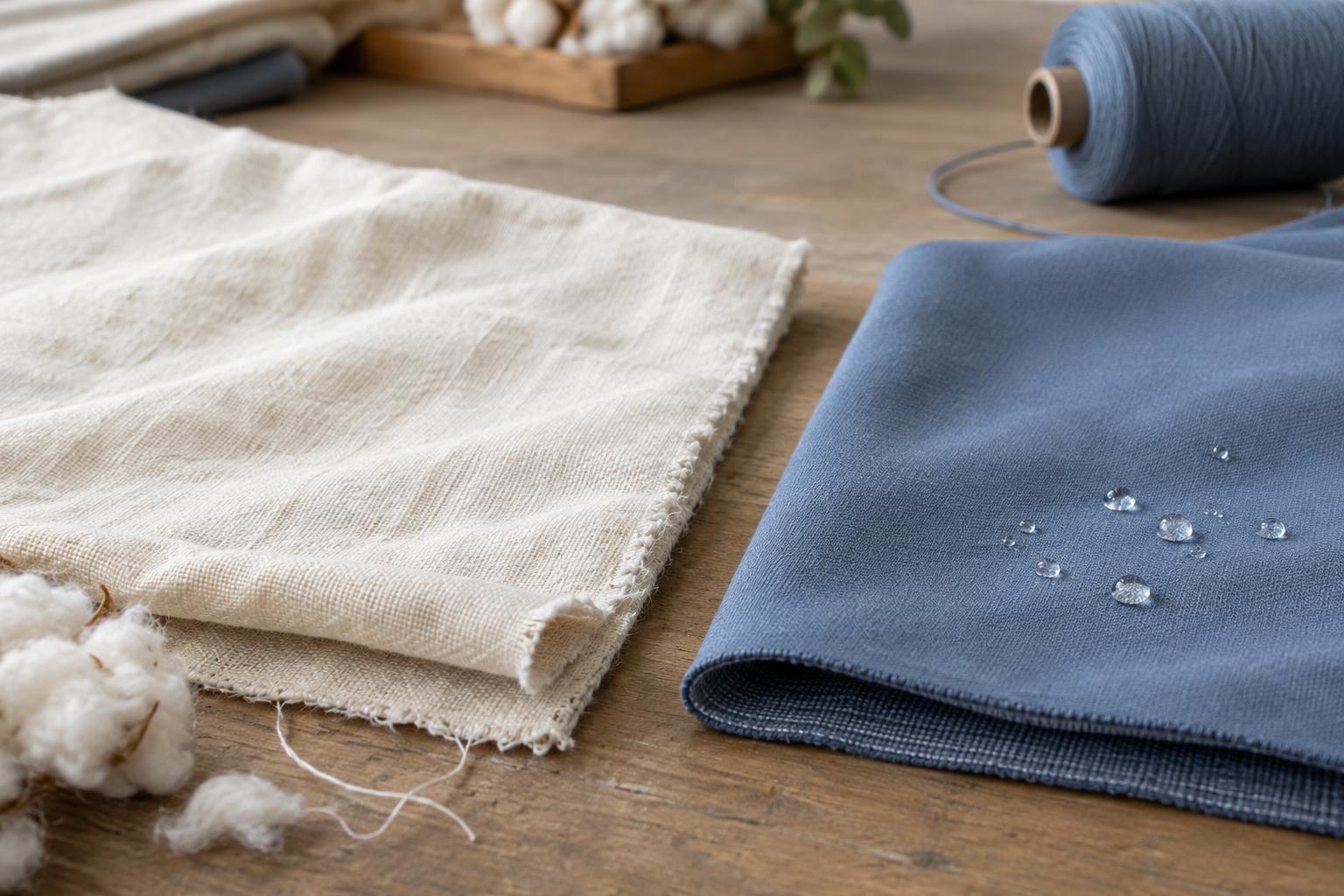
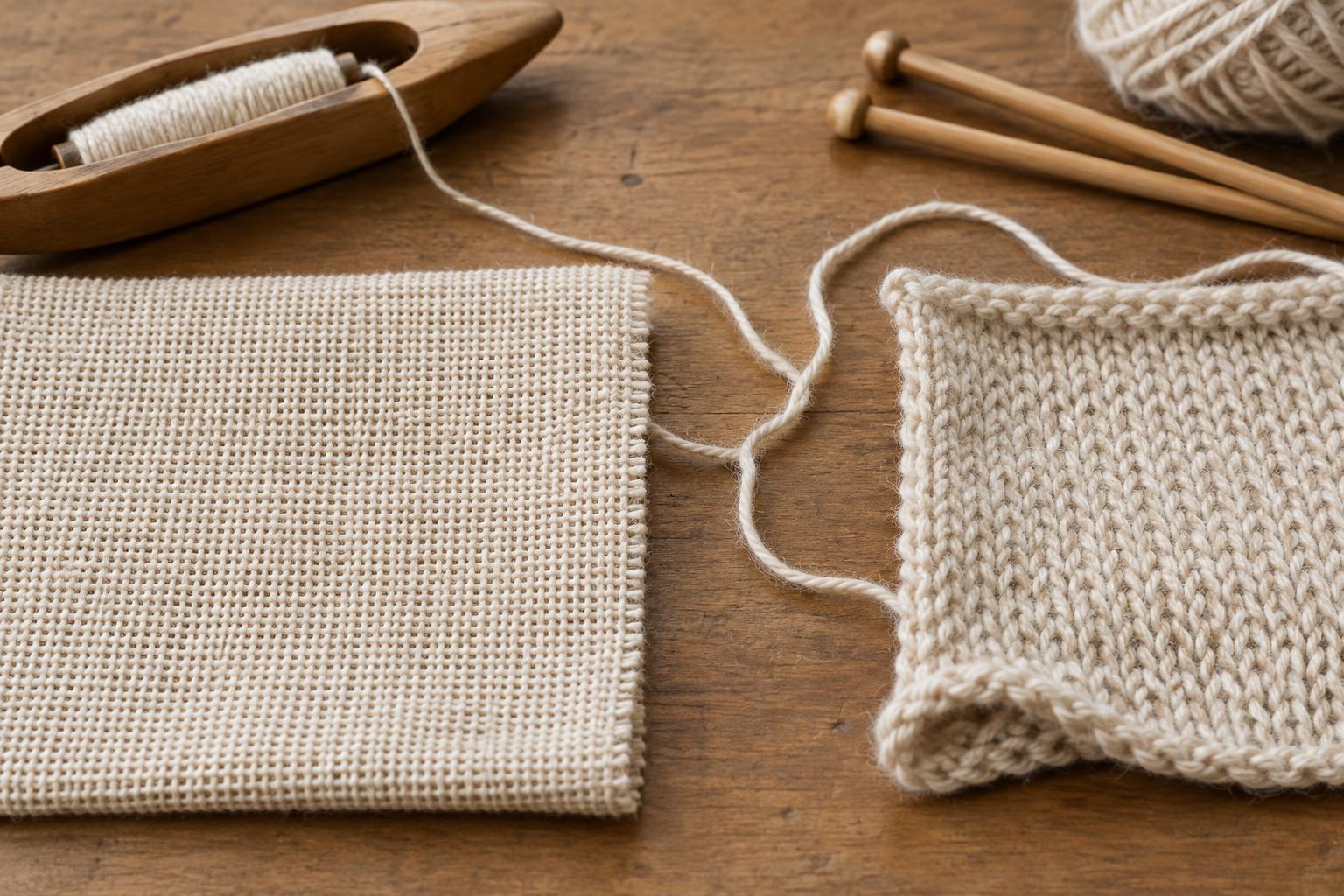
A scarf may look simple because it has few components, yet its making involves a sequence of choices. Fibre is prepared into yarn; yarn is woven or knitted into fabric; the fabric is cut or shaped, and its edges are finished. Printing, dyeing and other finishing steps may also contribute to the appearance of an individual design. This is a general explanation of textile production, not a claim about UniqueYou’s own manufacturing or the exact process behind any particular scarf. To understand a specific item, rely on its own description rather than assuming that one method applies across a collection.
Construction helps explain everyday differences. A dense fabric can hold a sharper fold than a very fluid one. A soft, loose structure may create generous volume but feel bulky when tucked beneath a fitted collar. Edges matter because they frame the shape you see when a scarf hangs open or is folded into a narrow band. Pattern placement matters too: a striking design across a square may show only small fragments when tied close to the neck. When comparing options, imagine the fabric at the size and fold you will actually wear. That small exercise often reveals more than a full-width product image alone.
Use colour as a bridge, not a demand for new clothes
Take stock of the outer layers you already own. If most are black, navy, charcoal or cream, a scarf can either stay within that range for a calm effect or introduce one deliberate contrast. Brown, taupe and other muted tones can connect warm neutrals without requiring every item to match exactly. A patterned scarf can pick up a colour from a coat, bag or pair of shoes, but it does not need to repeat every shade in an outfit. The aim is a relationship you like seeing together, not a rigid matching rule.
Colour also changes with placement. A vivid border on a square scarf can appear as a small line when folded; a large print on a wrap may become several softer patches once draped. Think about the colours that will sit closest to your face, especially if the scarf is likely to be worn high at the neck or over the hair. If you are buying for someone else, their most-worn coats are better clues than a passing trend. When in doubt, choose a tone that works with more than one outfit and a pattern scale that suits the recipient’s usual style.
Style by shape and by the clothes underneath
A square scarf can be folded diagonally into a triangle, rolled into a slim band or tied with a small knot. Each fold reveals a different part of its design. A long scarf offers other options: let both ends hang to emphasize vertical lines, loop it once for a more compact outline, or tuck the ends inside a coat for a cleaner finish. A broad shawl or wrap can cover the shoulders over a simple dress or knit. These are suggestions, not required techniques; the most useful style is one you can recreate without fuss.
Proportion helps when matching an existing wardrobe. A heavily textured sweater may already provide enough visual detail, so a quieter scarf can balance it. A plain coat can carry a larger pattern or more generous drape. If a jacket has a high collar, test whether the intended knot leaves enough space to move comfortably. If a shirt neckline is the focus, a smaller square may keep the accessory from covering it entirely. Try a scarf with the pieces you actually wear, including the bag and outerwear that share the same space around your shoulders.
Choose a gift with the recipient’s habits in mind
A scarf makes a thoughtful gift because it does not require the same fit decisions as a tailored garment. That does not make every scarf equally easy to choose. Notice whether the recipient wears neck scarves, shoulder wraps or hair accessories at all. Look at the colours they repeat and the amount of pattern they seem comfortable wearing. Someone who dresses in plain, closely fitted layers may appreciate a compact square; someone who frequently layers loose coats and knits may have more use for a broad wrap. Their habits are better evidence than the giver’s favourite colour.
Material, care and presentation are practical parts of gift selection. Check the individual product’s fibre information if texture or care requirements are important to the recipient, and consider whether they would prefer a lighter accessory or something with more coverage. Packaging protects an accessory in transit and shapes the moment it is opened, but its appearance should not be mistaken for proof of fibre quality or a particular production standard. If you are uncertain, prioritize a versatile colour and a shape the recipient already wears. A useful gift shows that you noticed their routine.
What quality questions can—and cannot—tell you
Quality is not one label or one photograph. It is a combination of suitability for the intended use, clear product information, satisfactory finishing and reasonable care expectations. For a scarf, useful questions include whether the dimensions suit your preferred knot, whether the fabric looks appropriate for the planned season, and how the edges contribute to the finished appearance. Descriptions and images can help narrow a choice, but they do not replace handling the fabric. Where details matter to you, check the information for the specific item rather than carrying an assumption from another product.
It is also worth separating a sensible question from an unsupported conclusion. A cashmere collection does not establish the composition of every product you encounter, and a refined brand identity does not establish a certificate, factory process or environmental credential. The same caution applies to packaging and logistics: protective packing and a clear destination matter to a buyer, but they do not by themselves demonstrate how an item was sourced or tested. Treat available product details as a basis for a decision, and leave claims that are not documented out of that decision.
Navigate the regional versions without losing the thread
UniqueYou has 20 regional domains, 21 regional-language versions and 16 distinct languages. Those figures differ because countries can share a language, and one country can have more than one language version. The United Arab Emirates is the latter example: its Arabic version is at the root of its regional domain, while its English version uses /en. Germany and Austria share German, Belgium and the Netherlands share Dutch, and several destinations offer English. A regional heading below names both the country and the destination language so that you can choose deliberately.
The guide that follows pairs each destination with a practical wardrobe idea rather than treating every regional collection as interchangeable. Some destinations point toward a material, others toward a shape, colour or styling use. A collection name is a starting place for browsing, not a statement that every item has the same composition or dimensions. When moving between languages, keep the original task in mind: compare the item you find with the coat, knit, shirt or dress you want to wear it with. The regional term helps you find a direction; the individual product details help you decide.
A regional guide to finding your next scarf
Choose the country and destination language that suit you, then use the suggested category as a starting point. Each destination below has its own language context; check individual product information before deciding on material, size or care.
Poland — Polish
For the Polish-language destination, begin with the regional UniqueYou home UniqueYou. If a generous drape interests you, the Polish-language cashmere shawl collection is a place to compare shapes UniqueYou. For a narrower scarf search in Polish, the direct collection address is https://uniqueyou.pl/collections/szaliki-kaszmirowe. Compare dimensions before deciding which will fit beneath your usual coat.
Germany — German
The German-language UniqueYou home is UniqueYou. For an accessory that may sit comfortably with lighter layers, explore the German-language lightweight scarf collection UniqueYou. If brown is a useful bridge between coats and knitwear, the German-language brown-scarf collection address is https://uniqueyou-store.de/collections/schals-in-braun. Consider whether you want a close neck fold or a looser outline.
Czechia — Czech
Start at the Czech-language UniqueYou destination UniqueYou. For a square or lighter accent that can bring colour near the face, the Czech-language silk-scarf collection is UniqueYou. Think about how much of a design remains visible after folding: a scarf worn as a narrow band presents its pattern differently from one spread over the shoulders.
Spain — Spanish
The Spanish-language UniqueYou home is UniqueYou. For an everyday neck accessory, browse the Spanish-language scarf collection UniqueYou. If your wardrobe calls for a darker, broader layer, the Spanish-language black-shawl collection address is https://uniqueyou.es/collections/chales-negros. Compare the intended drape with the necklines and jacket collars you wear most often.
France — French
Use the French-language UniqueYou destination UniqueYou to begin. For styling that moves beyond the neck, the French-language collection of scarves for the head and hair is UniqueYou. A square that works in the hair may also be worth trying with a plain shirt; check its dimensions and pattern placement for each use.
Hungary — Hungarian
The Hungarian-language UniqueYou home is UniqueYou. For a draped layer over a dress or knit, explore the Hungarian-language stole collection UniqueYou. If wool is the material direction you want to investigate, the Hungarian-language wool-scarf collection address is https://uniqueyou.hu/collections/salak-gyapjubol. Read each item’s composition rather than treating its collection name as a fibre guarantee.
Italy — Italian
Begin at the Italian-language UniqueYou home UniqueYou. The Italian-language collection of scarves for the head and hair offers a starting point for compact styling UniqueYou. For a different use alongside a coat, the Italian-language wool-scarf collection address is https://uniqueyou.it/collections/sciarpe-in-lana. Let the intended outfit decide whether a small fold or a fuller neck layer makes more sense.
Romania — Romanian
The Romanian-language UniqueYou destination is UniqueYou. If softness is high on your list, the Romanian-language cashmere-scarf collection provides a direction for comparison UniqueYou. Check each scarf’s composition, width and care details; the right choice is the one that works with the recipient’s preferred texture and usual outerwear.
Slovakia — Slovak
Start with the Slovak-language UniqueYou home UniqueYou. The Slovak-language scarf collection is a broad place to begin comparing colour and shape UniqueYou. Before choosing a pattern, picture it against the coat you wear most frequently. An accent that looks bold laid flat may become quieter once folded and tucked in.
Finland — Finnish
The Finnish-language UniqueYou destination is UniqueYou. For coverage across the shoulders, explore the Finnish-language collection of large shoulder scarves UniqueYou. A larger shape offers room to drape, but it is worth checking how its width works with your coat and bag straps, not just how it looks fully opened.
Sweden — Swedish
The Swedish-language UniqueYou home is UniqueYou. For a less bulky-looking neck layer, start with the Swedish-language lightweight-scarf collection UniqueYou. If you want to compare a cashmere category instead, the Swedish-language collection address is https://uniqueyou-store.se/collections/halsdukar-i-kashmir. Use the individual descriptions to weigh composition and size against your preferred way of wrapping.
Denmark — Danish
Begin at the Danish-language UniqueYou home UniqueYou. The Danish-language silk neck-scarf collection is a starting point for a small accent near a shirt collar or simple knit UniqueYou. Before selecting a print, consider the colours that will show beside your face when the fabric is tied rather than spread flat.
Belgium — Dutch
For the Dutch-language destination in Belgium, start at UniqueYou UniqueYou. The Dutch-language cashmere-shawl collection offers a direction for a broader layer UniqueYou. If red would enliven the neutrals you already own, the Dutch-language red-scarf collection address is https://uniqueyou.be/collections/rode-sjaals. Check the particular item for the shade, dimensions and composition you want.
Austria — German
The Austrian German-language UniqueYou destination is UniqueYou. If you prefer fabric laid across the shoulders rather than wound tightly at the neck, explore the German-language stole collection UniqueYou. Germany and Austria share a destination language, but this is Austria’s regional version; choose by country as well as by language.
Netherlands — Dutch
The Netherlands’ Dutch-language UniqueYou home is UniqueYou. For a quiet colour connection with tan or cream outerwear, consider the Dutch-language brown-scarf collection UniqueYou. If a wider wool category better fits your intended use, the Dutch-language wool-wrap collection address is https://uniqueyou.nl/collections/wollen-omslagdoeken. Compare the width and composition of individual pieces.
United States — English
Begin at the United States English-language UniqueYou home UniqueYou. For an accessory intended to drape over the shoulders, the English-language cashmere-shawl collection is UniqueYou. Think first about the clothes it will accompany: a broad shawl can add interest to a simple outfit, while its actual feel and care needs depend on the selected item.
United Arab Emirates — Arabic
The Arabic-language UniqueYou destination for the United Arab Emirates is at the regional domain’s root UniqueYou. Start there if Arabic is your preferred browsing language. When choosing a scarf for a familiar outfit or a gift, compare shape, colour and the individual material details rather than assuming that all styles within a category will feel alike.
United Arab Emirates — English
The United Arab Emirates also has an English-language UniqueYou version at /en UniqueYou. That is a separate language version from the Arabic root, not another country. Choose it if English makes product details easier for you to read, then use those details to check whether a scarf suits your preferred drape and existing wardrobe.
Ireland — English
The Ireland English-language UniqueYou home is UniqueYou. For folds that can work at the neck or in the hair, explore the English-language square-scarf collection UniqueYou. If a larger shoulder layer is the aim, the English-language cashmere-shawl collection address is https://uniqueyou.ie/collections/cashmere-shawls. Decide by the wearing situation before comparing individual designs.
United Kingdom — English
The United Kingdom English-language UniqueYou home is UniqueYou. The English-language winter-scarf collection gives you a starting point for coat-focused styling UniqueYou. For a material-led comparison, the English-language wool-scarf collection address is https://uniqueyou.uk/collections/wool-scarves. Check dimensions and composition rather than assuming that a seasonal label describes every item’s weight.
Portugal — Portuguese
Begin at the Portuguese-language UniqueYou destination UniqueYou. For an accessory that can frame the face or be styled in the hair, explore the Portuguese-language collection of scarves for the head and hair UniqueYou. A compact design can be a useful gift when the recipient already wears similar shapes; their usual colours remain the best guide.
A good scarf choice begins with a specific person, outfit and way of wearing it. Use material and collection names to narrow the search, then let each item’s details—and the wardrobe it needs to join—guide the final decision.
 Product Design