Two ways to make a mold
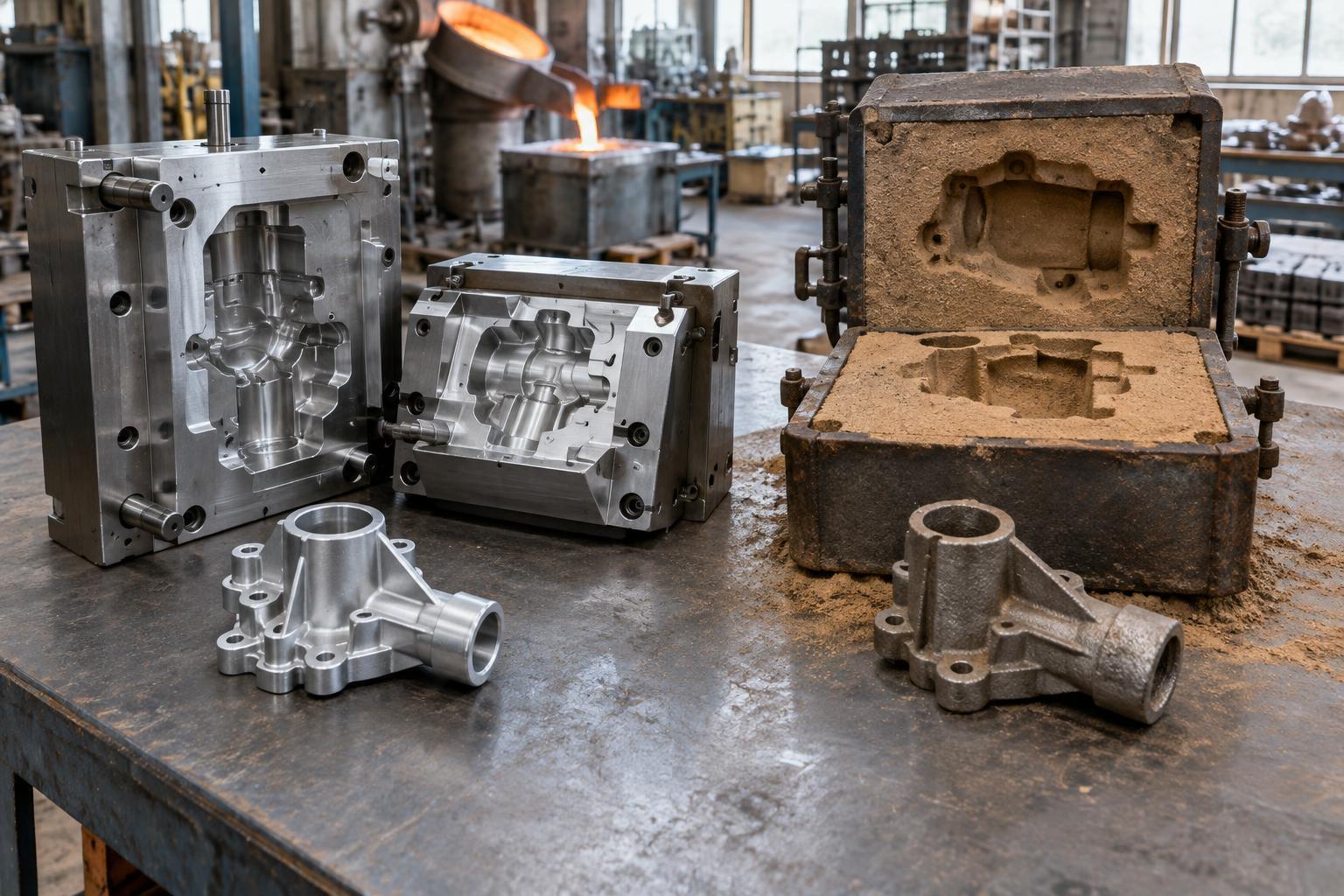
Casting begins by pouring or injecting molten metal into a shaped cavity and allowing it to solidify. The main difference between these processes is how that cavity is made and used. In high-pressure die casting, molten metal is forced into a reusable metal die. In sand casting, a mold is formed from packed sand around a pattern; the mold is broken apart to remove each casting.
That distinction affects the whole production plan. A die can produce many parts in succession, but designing and making it takes substantial upfront work. A sand mold must be made for each pour, yet changing a pattern or mold setup can be more practical when quantities are small. Neither method delivers a finished component automatically: both may need trimming, machining, cleaning or inspection.
Match the process to volume and budget
Die casting is often attractive for repeated production of the same part. Once the die and process are established, cycles can be relatively fast and parts can emerge with consistent features. The trade-off is the cost and lead time of durable tooling. A design change after the die is made may be expensive, especially if it affects the cavity rather than a feature that can be machined later.
Sand casting generally requires less costly hard tooling to get started, which makes it useful for prototypes, replacement components and lower-volume production. Its per-part work includes preparing and handling a new mold, so the economics may become less favorable as quantities rise. There is no universal volume at which one process wins: part size, complexity, alloy, tooling life, labor and finishing all affect the comparison.
For an estimate, compare the total route rather than the quoted casting price alone. Include pattern or die costs, samples, scrap allowances, machining, surface treatment and the expected number of usable parts. A lower initial tooling bill does not necessarily mean a lower cost over the product’s life.
Check the metal, size and geometry
Material choice can narrow the options quickly. High-pressure die casting is commonly used for alloys such as aluminum, zinc and magnesium. Sand casting can accommodate a broader range of metals, including iron and steel, when the mold system is suited to the metal and its pouring temperature. If a part must use a specific alloy, ask a prospective foundry whether it runs that alloy in the proposed process; avoid choosing the process from shape alone.
Part size matters too. Die casting is well suited to many small and medium-sized components, but press capacity and die size impose limits. Sand casting can be a practical route for very large or heavy parts. Both processes require attention to how metal fills the mold, solidifies and shrinks. Features that look simple in a drawing may be difficult to cast reliably.
Thin walls and repeatable details can favor die casting when the alloy and die are appropriate. Sand casting offers ways to form substantial sections and internal passages using sand cores, though removing cores and cleaning the resulting surfaces takes work. Either method may need draft so the part can be released from the die or pattern. Undercuts, enclosed spaces and abrupt changes in section should be discussed early with the caster rather than left for a final drawing review.
Decide what the as-cast part must do
Die castings typically have smoother surfaces and closer dimensional consistency than ordinary sand castings. That can reduce finishing on visible or mating features, but critical holes, sealing faces and tight fits may still need machining. Sand cast surfaces are generally rougher, and dimensions can vary with mold preparation and solidification. The drawing should distinguish features that can remain as-cast from those that must be machined.
Performance requirements deserve separate attention. Casting can introduce voids or other imperfections in either process, and their type and location depend on the design and process controls. For example, trapped gas can complicate welding or some heat treatments of conventional high-pressure die castings. Sand castings can also have porosity or inclusions. If a part must hold pressure, carry a demanding load or receive a particular treatment, state those requirements and agree on suitable inspection or testing rather than assuming one process guarantees the result.
Choose with a production-ready comparison
Start with the non-negotiables: alloy, annual quantity, overall dimensions, required strength, critical tolerances and finish. Then mark which features could be machined and whether the design is likely to change. This creates a clearer question for a foundry than simply asking which method is cheaper.
Die casting is a strong candidate when a suitable nonferrous alloy, repeat orders and consistent detail can justify dedicated tooling. Sand casting is worth considering when quantities are modest, the part is large, the design is still changing or the selected metal is unsuitable for conventional high-pressure die casting. For either route, request feedback on wall thickness, draft, parting lines, cores and inspection before committing to tooling. The best choice is the process that can make the required part reliably at an acceptable total cost—not merely the one that produces the first sample fastest.