The difference starts with the polymer
High-density polyethylene (HDPE) and low-density polyethylene (LDPE) belong to the same family of plastics. Both are made from ethylene and share useful traits such as low weight, resistance to moisture and the ability to be formed into many products. Their names describe a difference in density, but density is only a starting point for choosing between them.
LDPE has more branching along its polymer chains. Those branches make it harder for the chains to pack closely together. HDPE chains are less branched and can pack more tightly. As a result, HDPE is generally stiffer and holds its shape better, while LDPE is generally softer and more flexible. Neither description guarantees how a finished item will behave: grade, wall thickness, product shape and additives also matter.
Match the material to the job
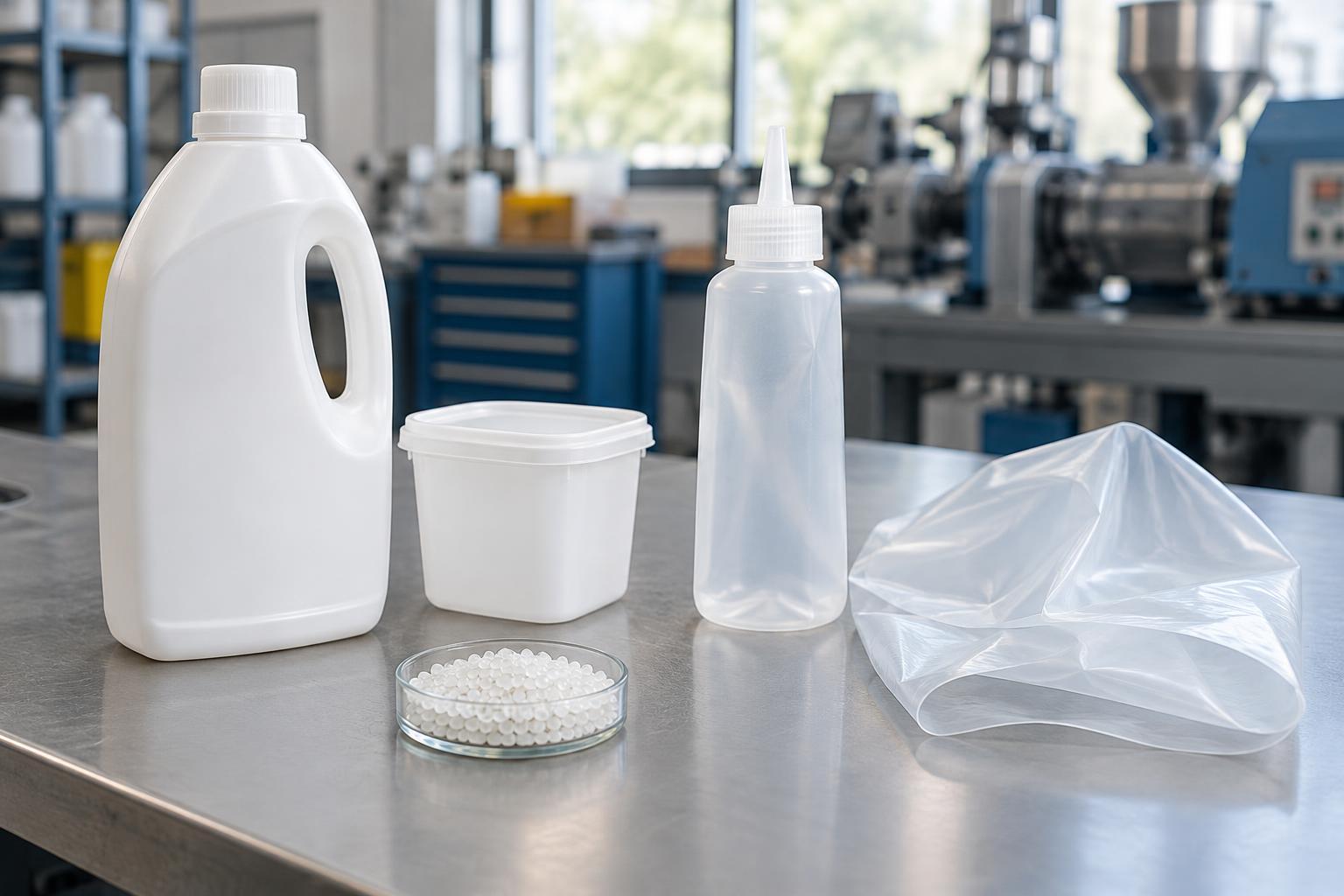
HDPE is often a good starting point when a product must stand upright, resist dents or carry a load without bending much. Typical uses include rigid bottles, containers, crates and some piping. Its stiffness can let a designer make a self-supporting shape, although the needed wall thickness still depends on the product’s geometry and expected use.
LDPE is useful when a product needs to bend, squeeze or fold repeatedly. It is commonly used for bags, films, flexible packaging and squeezable items. Compared with HDPE, it can be easier to turn into a soft, pliable film. If a package must lie flat, wrap around a product or be squeezed by hand, that flexibility may be more valuable than stiffness.
Consider appearance and protection separately from feel. LDPE can offer a clearer look than HDPE in some products, while HDPE is often more opaque. Both materials resist water well, but neither should be assumed to provide every barrier a package needs. For contents sensitive to oxygen, aroma loss or other exposures, the complete package structure needs evaluation.
Processing and design change the answer
A material choice has to suit the way the part will be made. HDPE is commonly used in processes such as blow molding and injection molding for rigid parts. LDPE is widely used in film extrusion and can also be processed into other shapes. These are tendencies, not exclusive rules: suppliers offer grades designed for particular processes, and equipment settings affect the result.
The finished design can outweigh a simple HDPE-versus-LDPE comparison. A thin HDPE container may flex, while a thick LDPE part may feel relatively firm. Ribs, corners, handles and seams can create weak points or add strength. Before committing to a grade, test samples made by the intended process. Check how they perform when filled, stacked, dropped, squeezed or sealed, depending on what users and distributors will actually do.
Temperature and contact with other substances also deserve attention. Both materials can change shape or performance when exposed to heat, and neither is suitable for every chemical or cleaning method. If the product will contact food, chemicals or hot contents, select a grade specified for that use and verify the requirements for the finished item rather than relying on the polymer name alone.
Think about disposal while designing
HDPE and LDPE are both recyclable in principle, but practical collection differs by product and location. Rigid HDPE items are often easier to sort in systems set up for bottles and containers. LDPE films and bags may need separate collection because loose film can interfere with equipment designed for rigid packaging. A recycling symbol or resin identification code does not guarantee that a particular item will be accepted locally.
Design choices can improve the chances that either material is handled effectively after use. Avoid unnecessary combinations of materials when a single-material design will do the job. Consider whether labels, adhesives, colorants and leftover contents could complicate sorting or reprocessing. It also helps to ask suppliers about available grades with recycled content, then test whether those grades meet the product’s performance needs.
Use a short selection checklist
Start by defining what the product must do: keep its shape, flex, seal, protect its contents or survive handling. Next, identify the planned manufacturing process and the conditions the item will face during filling, transport, storage and use. Compare suitable HDPE and LDPE grades against those requirements, not just against their names.
If stiffness and a self-supporting form are the priorities, investigate HDPE first. If easy bending, folding or squeezing is essential, investigate LDPE first. Then confirm the choice with prototypes and tests that reflect real use. Polyethylene grade selection is rarely a contest with one universal winner; it is a way to balance product performance, production and what happens after the product is used.