Start with what the product must do
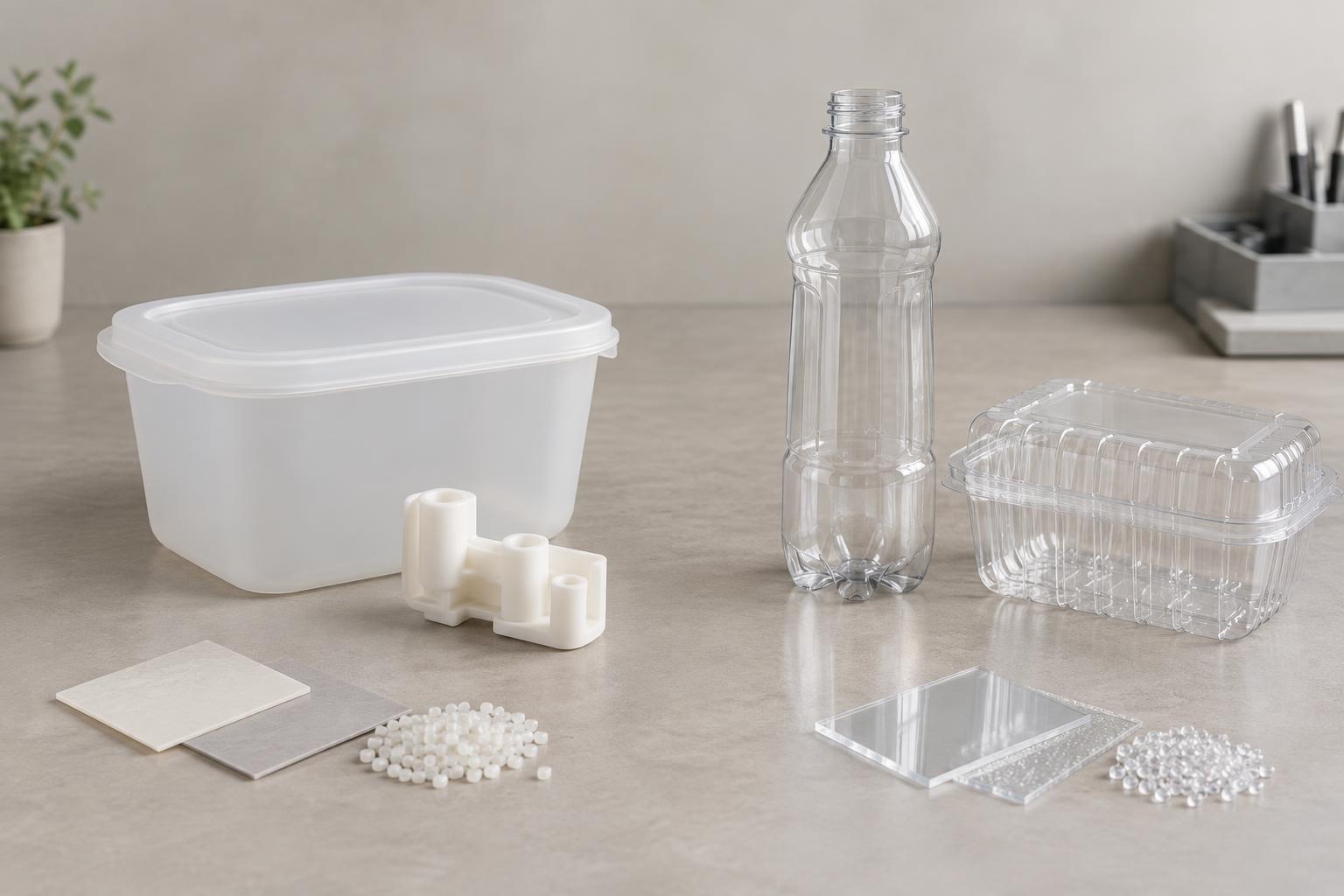
Polypropylene (PP) and polyethylene terephthalate (PET) appear in bottles, tubs, trays and molded components, but they are not interchangeable. The useful question is not which plastic is better overall. It is which material can meet the product’s requirements in the intended shape, at the planned production volume, with acceptable cost and waste.
Write down the requirements before comparing samples: Does the customer need to see the contents? Must the container resist moisture loss or keep oxygen out? Will it encounter warm filling, refrigeration, repeated opening or a drop during handling? For a product part, include stiffness, flexibility, surface appearance and how it will attach to other components. These details often matter more than a general material preference.
Appearance, strength and handling
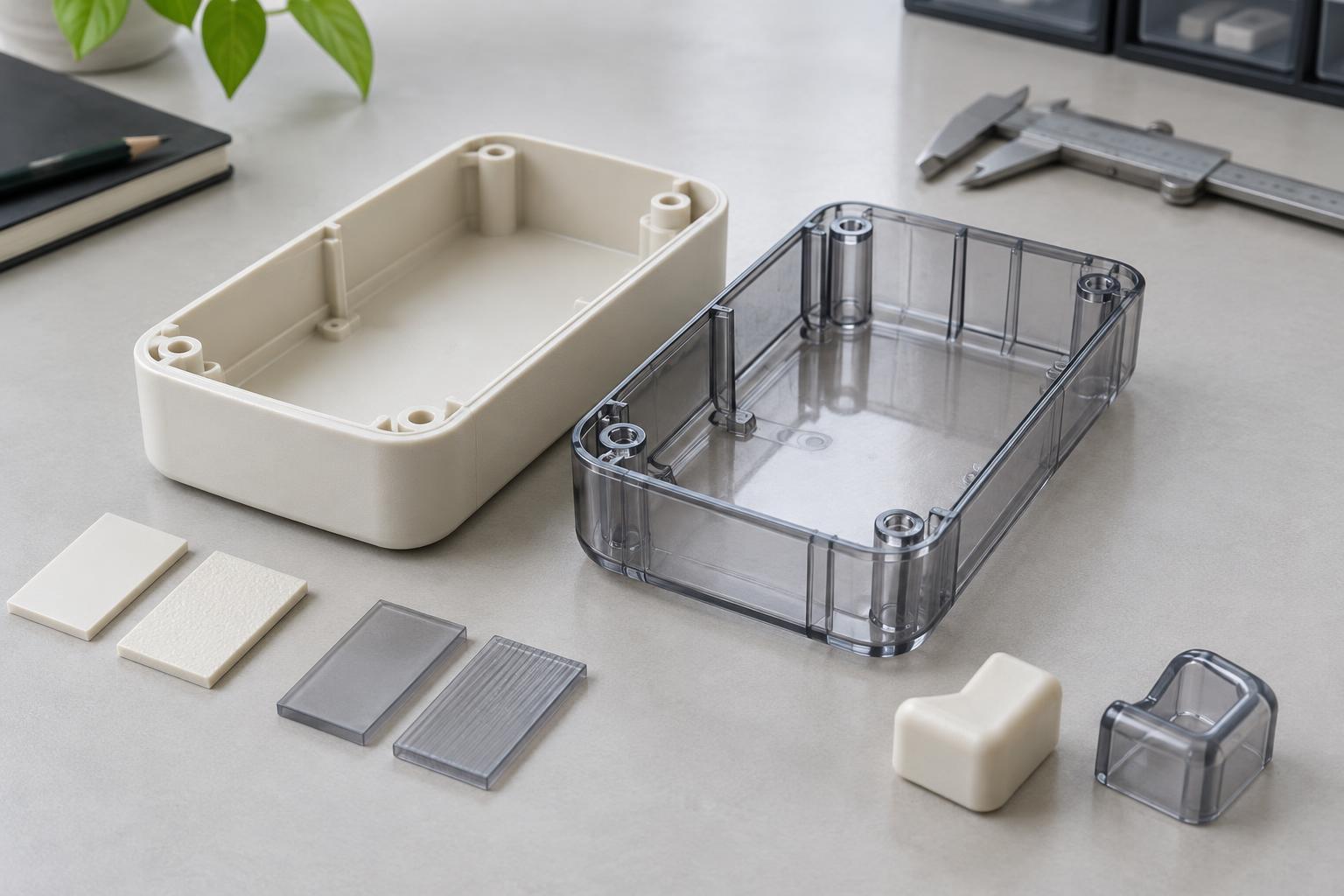
PET is a common choice when a clear, glossy container helps display its contents. Clear beverage bottles are a familiar example. PP is often naturally translucent rather than glass-clear, although formulation and processing can improve its appearance. If visibility is essential, compare finished samples at the intended wall thickness instead of judging the raw pellets.
Both materials can make durable products, but geometry and processing strongly affect performance. PP is useful for parts that need some flexibility, such as certain snap-fit features or living hinges designed for repeated bending. PET is often selected where a rigid, clear bottle or tray is wanted. A thin corner, an opening feature or a poorly placed attachment point can fail regardless of the resin. Test the actual part under the forces it will encounter rather than relying on a material label alone.
Barriers, contents and temperature
For packaging, the contents may decide the material. PET generally provides a better barrier to oxygen and carbon dioxide than ordinary PP, which can be useful for products sensitive to air or carbonation. PP often offers better resistance to water-vapor passage. Neither property should be treated as a guarantee of shelf life: wall thickness, closures, seals, coatings and storage conditions also influence what reaches the contents.
Temperature needs equally careful definition. PP is commonly used for some warm-fill and reheatable applications, but suitability depends on its grade, the container design and the time and temperature involved. Standard clear PET packaging may deform under heat that a purpose-designed PP container can tolerate. Specialized PET constructions can be made for hotter uses, so an everyday PET bottle is not a reliable guide to every PET product.
Contents can also interact with packaging. Oils, fragrances, cleaning ingredients and other formulations may affect appearance, strength or sealing over time. If the part touches food, a cosmetic formula or another regulated product, specify a grade suitable for that intended use and verify the finished package under realistic filling, storage and transport conditions. Do not assume that all items made from the same polymer have the same suitability.
Match the resin to the manufacturing method
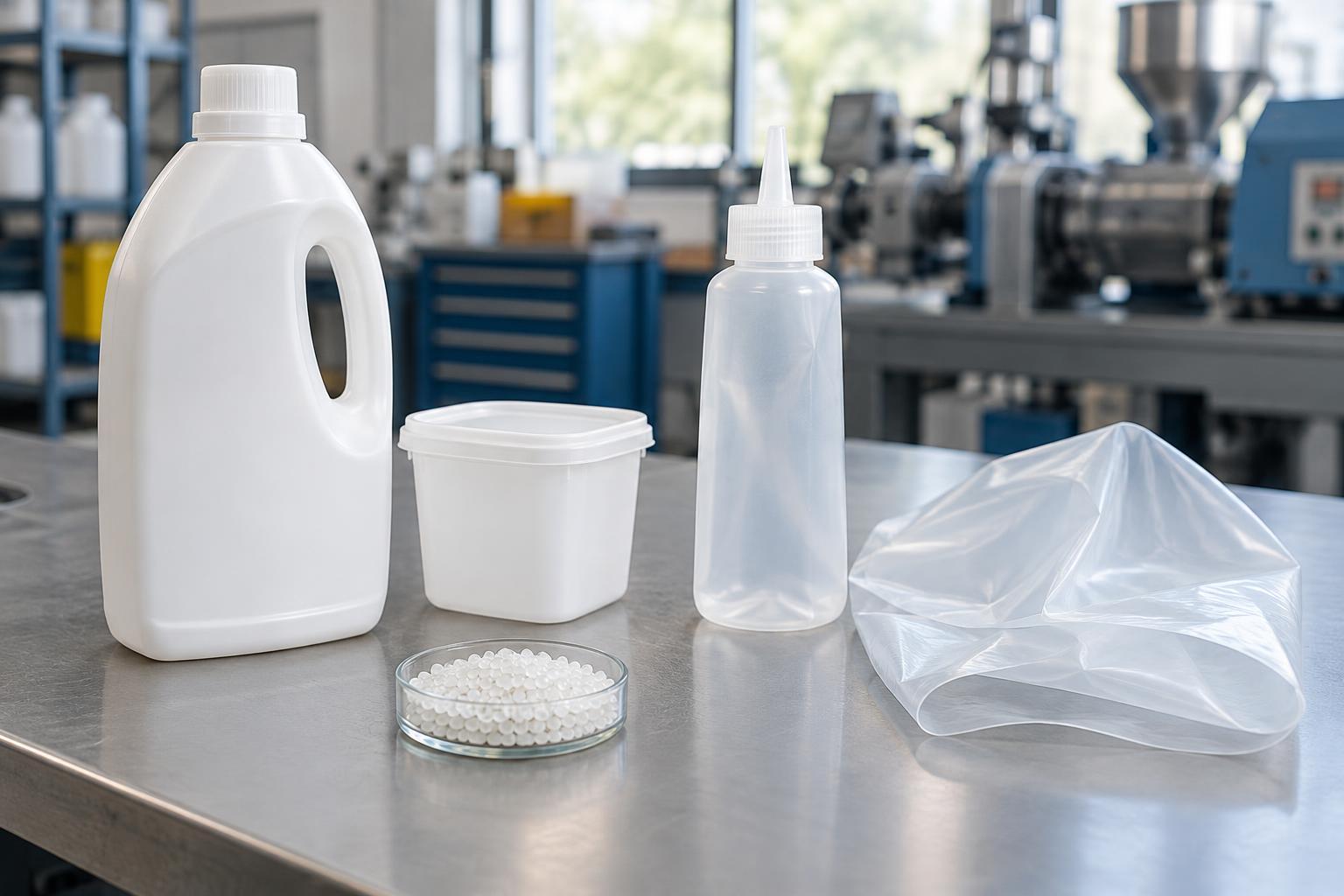
Manufacturing route changes what each plastic can do economically. PET bottles are often made by injection stretch blow molding: a molded preform is reheated and stretched into the bottle shape. PET sheet can also be thermoformed into trays. PP is used in processes including injection molding, thermoforming and blow molding, making it a candidate for tubs, lids, caps and many product components.
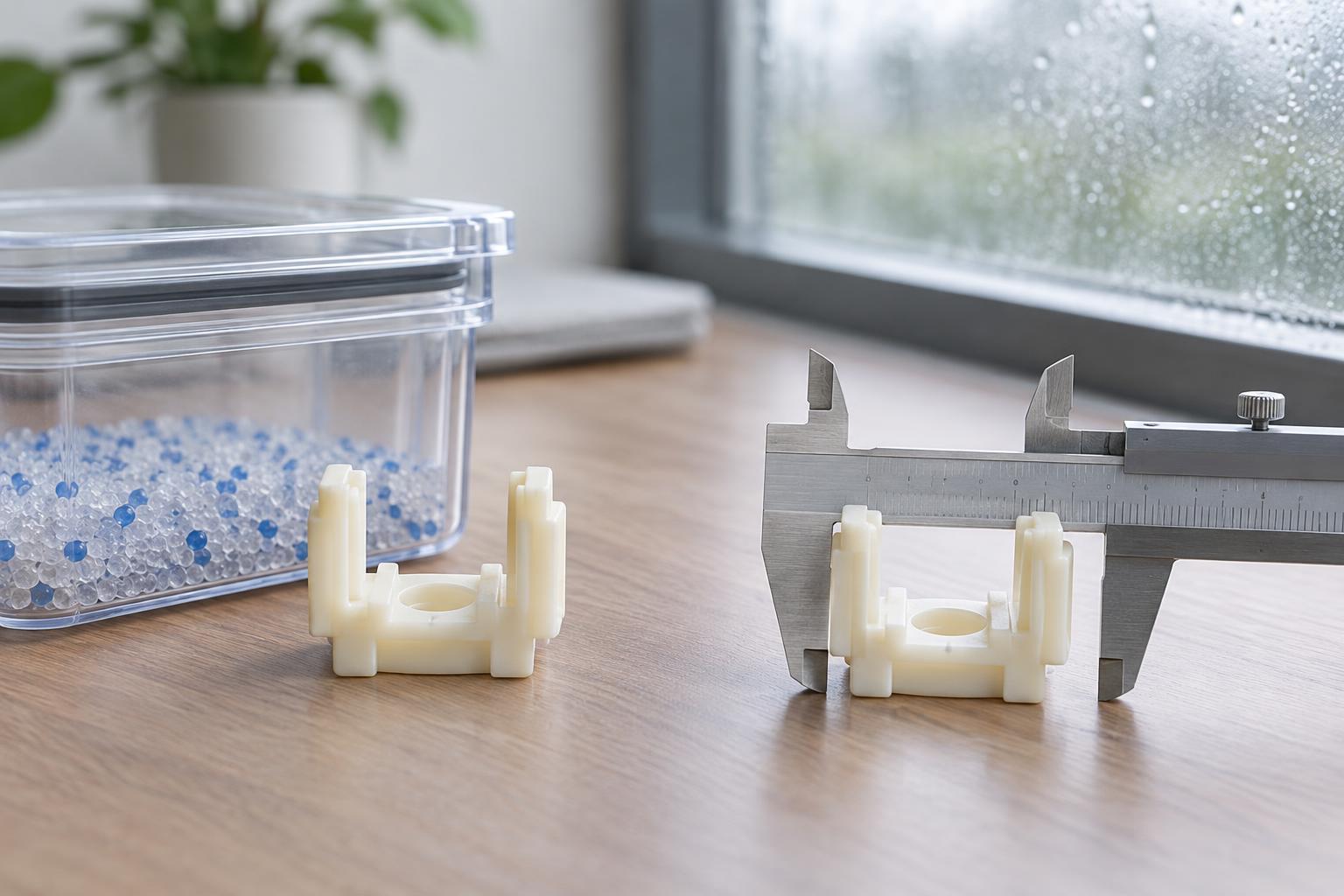
The shape should be developed alongside the material choice. Wall thickness affects cooling, stiffness, material use and cycle time. A closure must match the container’s sealing surface, not merely its nominal diameter. A clear tray that looks good before filling may behave differently once stacked or transported. Early prototypes made by a different process can reveal fit and handling issues, but production-method samples are more useful for confirming final performance.
Consider the whole package, not just its resin
A material choice also affects labeling, sorting and disposal. PET is commonly identified by resin code 1 and PP by code 5, but a code does not mean a particular item will be accepted by every collection program. Color, adhesives, sleeves, food residue, small components and packages made from multiple materials can complicate recovery. Check the requirements of the markets where the product will be sold before making recyclability claims.
A practical comparison uses complete alternatives: container, cap, label, seal and any protective packaging. PET may be the stronger candidate when clear display and gas barrier are priorities. PP may suit a flexible feature, a moisture-sensitive product or a design with higher temperature demands. When either could work, build representative samples and compare filling, sealing, handling and end-of-life options. The best choice is the one that meets the whole product brief, not the one with the most appealing single property.