Three ways to make a permanent metal joint
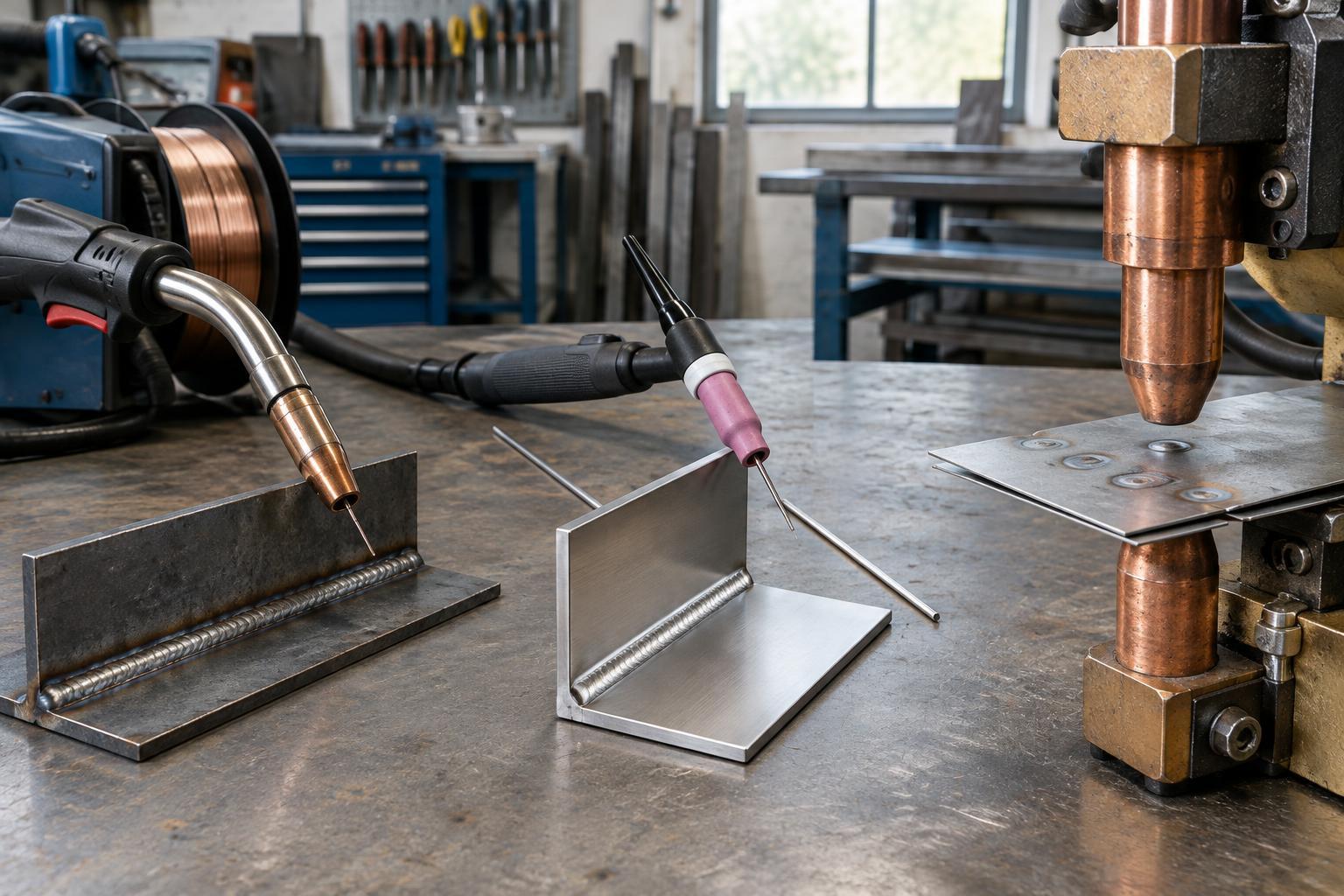
Welding joins metal parts by forming a bond at their meeting point. MIG and TIG welding use an electric arc to melt metal along a joint. Spot welding instead passes current through overlapping pieces held under pressure, concentrating heat at selected points. These differences affect not only the equipment on a factory floor but also how a product must be designed and inspected.
There is no single best method for every part. Material, thickness, joint shape, required appearance, production volume and access for tools all matter. A continuous seam around a frame calls for a different approach from a series of joins between two thin metal sheets.
MIG welding: feeding wire into the joint
MIG welding, often called gas metal arc welding, feeds a consumable wire electrode through a welding gun. An arc between the wire and the workpiece melts the wire and the edges of the parts, creating a weld as the gun moves. Shielding gas helps protect the molten metal from the surrounding air. The wire supplies filler metal continuously, so the operator does not usually need to add it separately.
This continuous feed can make MIG a practical choice for long seams and repeatable production work. It is used on many fabricated steel and aluminum parts, although the wire, gas and settings must suit the material. The process can be easier to automate than one that requires separate handling of filler. It does, however, need good control of joint fit and welding conditions. Air movement can disturb the shielding gas, while excessive heat or poor technique can leave defects.
TIG welding: close control over the weld pool
TIG welding, also called gas tungsten arc welding, creates an arc from a tungsten electrode that is not intended to melt into the joint. Shielding gas protects the weld area. Filler metal may be added separately when the joint needs it, but some joints can be fused without filler. Separating the heat source from the filler gives a skilled welder fine control over where material is added.
TIG is useful when a neat weld, precise heat control or work on thin material is important. It is used with a range of metals, including stainless steel and aluminum, provided the equipment and preparation are appropriate. The trade-off is pace: coordinating the torch and any filler generally takes more time than feeding wire continuously. A tidy-looking TIG weld can still contain flaws, so appearance alone is not proof of a sound joint.
Spot welding: joining sheets at discrete points
Resistance spot welding is different from the two arc processes. Two electrodes press overlapping metal sheets together and pass a high current through them. Electrical resistance generates heat near the contact between the sheets, forming a small fused region often called a weld nugget. The electrodes then hold the sheets while the joint solidifies. The process usually adds no filler metal.
Spot welding is well suited to repeated joints in sheet-metal assemblies. It can be fast, and the equipment can be arranged to place many spots in a consistent pattern. Its joint geometry is restrictive, though: the sheets must overlap, and conventional electrode arrangements need access to both sides. Spot welds also do not form a continuous sealed seam. Sheet thickness, coatings, surface condition and the spacing of nearby spots can influence the result.
Choosing a process starts with the part
A designer can narrow the choice by asking what the joint must do. Does it need to follow a continuous edge, carry a particular load, resist leakage or remain visible on a finished product? Can a torch reach the seam, or can spot-welding electrodes reach both faces? Is the part made from thick sections, thin sheet or a mix of materials? The answers may rule out a process before production speed is considered.
Quality planning belongs in the same discussion. MIG and TIG seams may be checked for continuity, shape and defects using methods suited to the product. Spot-weld checks may focus on whether each required location has formed an adequate joint, rather than how its surface looks. In all three cases, consistent preparation, appropriate process settings and a joint design matched to the method are more useful than choosing a process by reputation alone.