Two documents, two different jobs
A shipment can be described in several ways: as products ordered, cartons packed, cargo handed to a carrier, or goods delivered to a customer. The packing list and bill of lading describe different parts of that journey. They may show some of the same numbers, but one does not replace the other.
A packing list is prepared by the party packing or sending the goods. It tells the receiver what to expect inside the shipment and how to locate it. A bill of lading is a transport document issued by a carrier or its agent. It records cargo received for carriage and sets out key details of the transport arrangement. The term is commonly associated with sea freight; other modes may use documents with different names and rules.
What a packing list records
A useful packing list connects the shipment as a whole to its individual packages. It commonly identifies the sender and receiver, order or reference numbers, product descriptions, quantities, and the number and type of packages. It may also show carton numbers, pallet contents, weights and dimensions. The level of detail depends on the goods and on what the parties need to check.
For example, if an order contains two product models spread across six cartons, the packing list can show which model and quantity is in each numbered carton. That makes it easier for a warehouse to verify the delivery without opening every box at once. It also helps a customer investigate a missing item: the first question can be whether a particular carton arrived, rather than whether the entire order is short.
The packing list describes what the sender says was packed. It is not, by itself, proof that a carrier received every item inside a sealed carton. It is also distinct from an invoice, which records the sale and its prices. A packing list may include product identifiers and quantities without listing prices.
What a bill of lading records
A bill of lading focuses on the movement of cargo between named parties and places. It typically identifies the shipper, consignee, carrier, loading and discharge locations, and a description of the cargo presented for transport. It may state package counts, shipping marks, weight or volume, and freight-related terms. The exact fields and their significance depend on the form used and the transport arrangement.
The bill of lading serves as a carrier receipt and a record of the contract of carriage. Some forms can also function as documents of title, affecting how cargo is released; not every form works that way. Its description of the goods is often less detailed than a packing list. For sealed packages, a carrier may record the number of cartons or pallets it receives without verifying each product inside them.
This difference matters when checking a discrepancy. A bill of lading showing six cartons received helps establish what was handed to the carrier at the package level. A packing list showing the contents of cartons one through six helps identify what the sender intended those cartons to contain. Neither document alone answers every question about what was inside a package on arrival.
How to check them together
Before dispatch, compare the documents at the level where they overlap. Party names, shipment references, package counts, shipping marks, and stated weights should be consistent where they appear on both. Descriptions need not use identical wording, but they should refer to the same cargo without creating confusion. Check the packing list against the goods as packed, then check the transport document against the packages handed over.
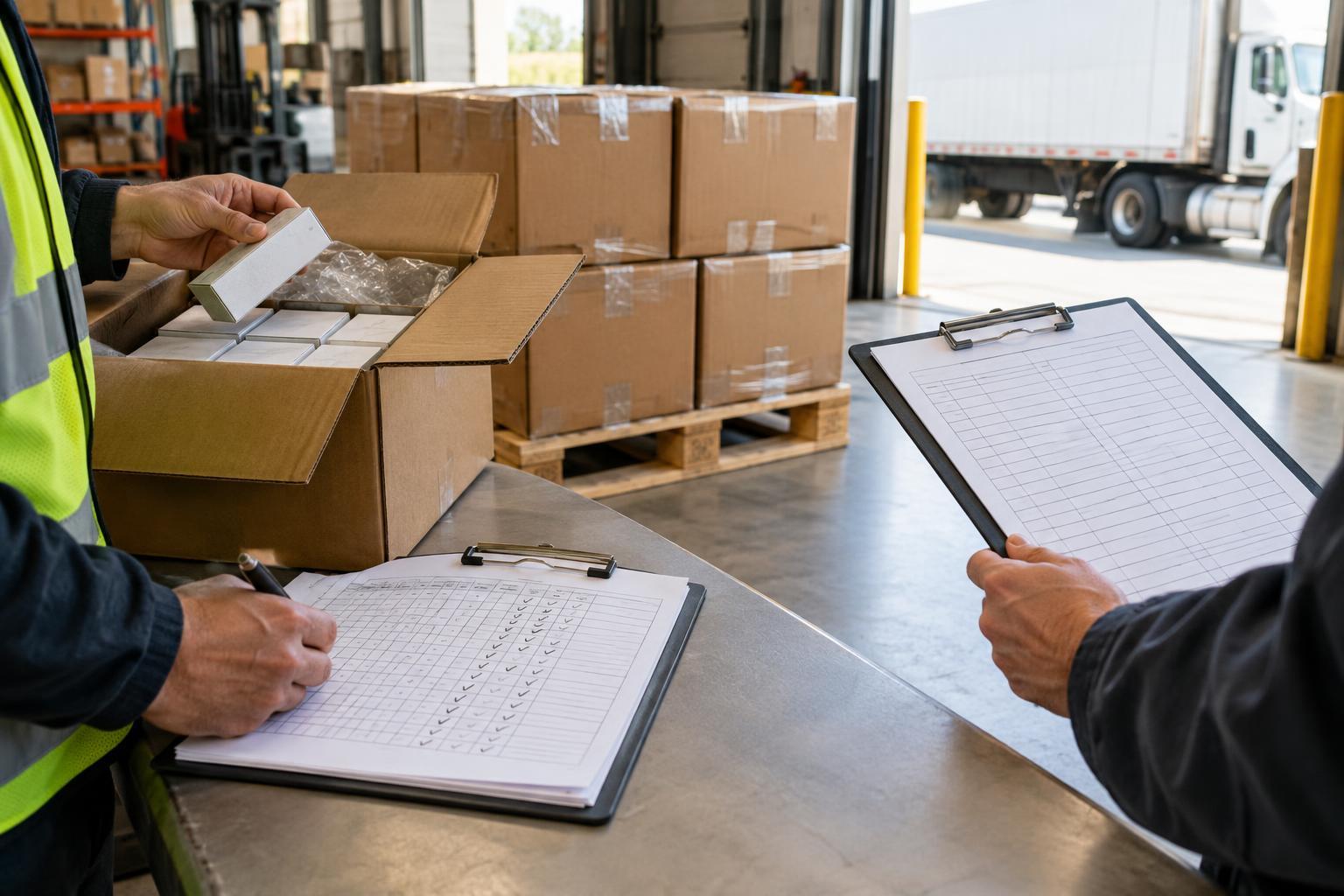
On receipt, begin with the outside of the shipment. Count the packages, match their marks or numbers, and note visible damage before using the packing list to check contents. If something differs, preserve the relevant documents and record what was observed. A mismatch could reflect a packing error, a document error, or a problem during transport; the documents help narrow down where to look.
The simplest distinction is this: the packing list answers “What did the sender pack, and where is it?” The bill of lading answers “What cargo did the carrier receive for transport, and under what recorded shipment details?” Keeping both questions in view makes shipment checks clearer without expecting either document to do the other’s job.