What an Incoterms rule does
A product may pass through a factory gate, a truck terminal, a port and a destination warehouse before the buyer can use it. At each stage, someone must arrange transport, pay charges and bear the risk if the goods are lost or damaged. Incoterms rules provide a shared vocabulary for dividing those obligations between a seller and a buyer.
Published by the International Chamber of Commerce, the rules work best when a contract states both the chosen rule and a precise named place, along with the applicable version, such as Incoterms 2020. “FCA seller’s warehouse” is more informative than “FCA” alone; an address or clearly identified terminal is better still. The place can affect where delivery occurs and which party takes on the next leg of the journey.
Separate the three questions
When reading any shipping term, ask three questions. First, who arranges each stage of transport? Second, who pays for it and for related tasks such as loading or customs formalities? Third, at what point does the risk of loss or damage shift from seller to buyer? These answers do not always change at the same moment.
For example, under CPT (Carriage Paid To), the seller pays for carriage to a named destination, but risk generally passes to the buyer when the goods are handed to the carrier, not when they arrive. A buyer who sees only that freight is included in the price could misunderstand who bears the risk during transit. CIP (Carriage and Insurance Paid To) follows a similar delivery pattern but also requires the seller to obtain cargo insurance under the rule.
A practical map of common terms
At one end of the range, EXW (Ex Works) places relatively little transport responsibility on the seller: the seller makes the goods available at the named place, and the buyer takes on much of what follows. That simplicity can be misleading in a cross-border purchase if the buyer cannot readily handle export formalities or collection at the seller’s site. FCA (Free Carrier) is often worth comparing because it defines a handover to a carrier or other party nominated by the buyer and assigns export clearance to the seller where applicable.
At the destination-oriented end, DAP (Delivered at Place) has the seller arrange carriage to a named destination, with the goods ready for unloading. Under DPU (Delivered at Place Unloaded), the seller also unloads them there. DDP (Delivered Duty Paid) places broad obligations on the seller, including import clearance and applicable import duties. Before choosing DDP, the parties should check whether the seller can actually carry out those import tasks in the destination country.
Some rules are limited to sea and inland waterway transport. FOB (Free On Board), for instance, addresses delivery on board a vessel at the named port of shipment. CIF (Cost, Insurance and Freight) requires the seller to pay for freight and obtain insurance to the named destination port, while risk passes once the goods are on board at shipment. For containerized goods handed over at a terminal before loading, an all-modes rule such as FCA may describe the handover more clearly than FOB.
What the term does not settle
An Incoterms rule does not, by itself, say when ownership transfers or when the buyer must pay. Those matters belong in the wider sales agreement. Nor does a rule replace decisions about product specifications, inspection, remedies for defects or which documents the buyer needs. Cargo insurance deserves its own check: a party bearing risk should not assume the other party has arranged cover unless the agreed term or contract calls for it.
The named place also needs operational detail. “DAP distribution center” may leave open which entrance accepts deliveries, what appointment is required and who handles delays at the dock. Likewise, a freight-inclusive price does not necessarily mean every local charge is included. Asking for a breakdown of expected transport, handling and customs costs can reveal gaps before goods move.
Choose the term around the actual handover
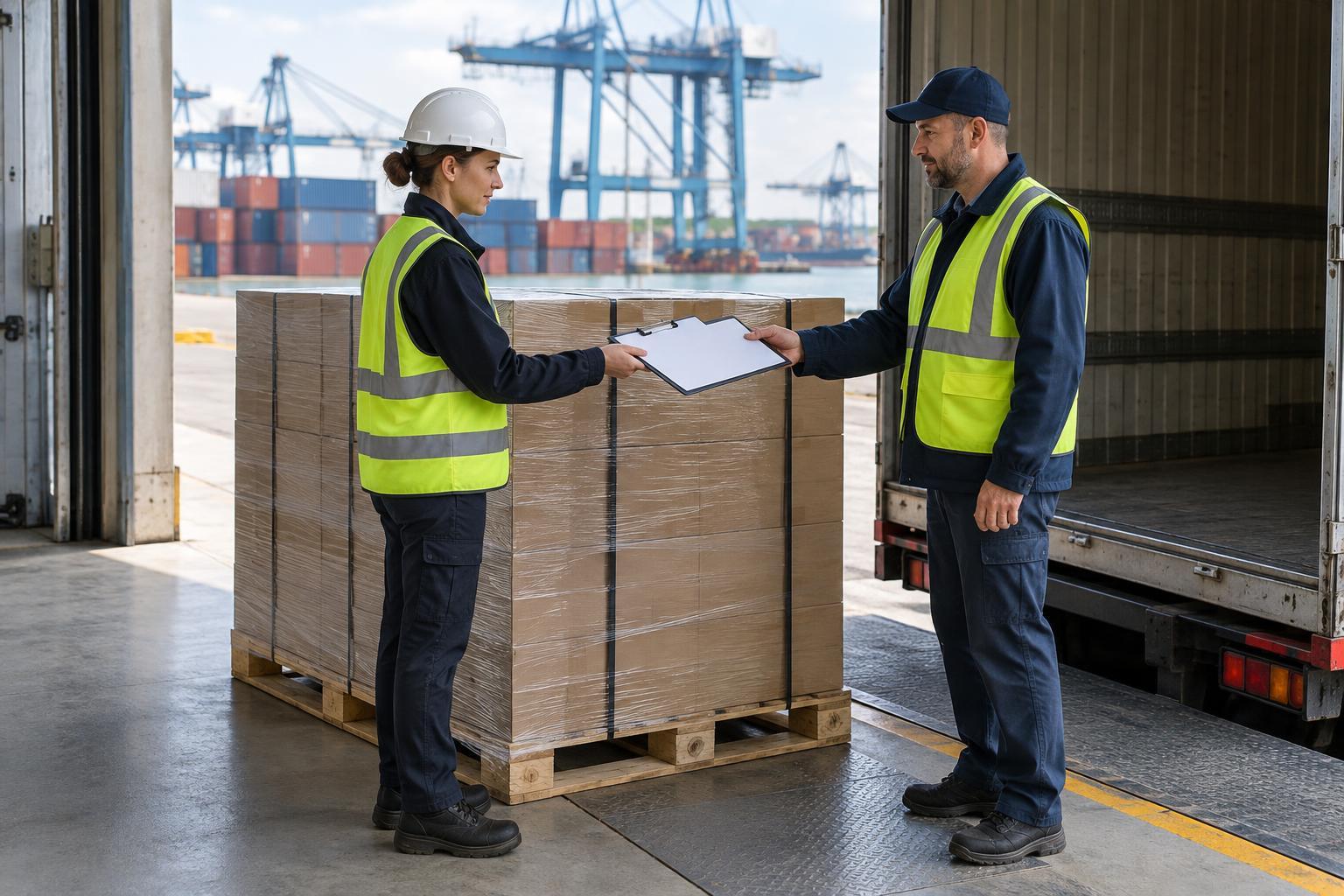
Start with a simple route map: where are the goods packed, where will a carrier first receive them, and where does the buyer expect delivery? Then identify which party can most reliably book each leg, prepare export or import documents and manage unloading. Match the rule to that practical division rather than selecting one because it sounds familiar.
Finally, record the rule, version and exact named place in the quotation and sales contract, and check that the transport booking and commercial documents use the same assumptions. Incoterms rules make responsibilities easier to describe, but they work only when both parties agree on the route and the handover they are describing.