Start with what the bag needs to carry
A reusable day bag might hold a water bottle, a light layer, a notebook and a few small purchases. Those contents create different demands: the bottle could leak, a book needs protection from scuffs, and a full bag puts strain on its straps. Before comparing materials, decide how heavy the usual load will be, whether the bag may get wet, and how often it will need cleaning.
The best material is not necessarily the strongest one available. A heavy fabric may last well but make an otherwise simple bag uncomfortable to carry. A smooth, coated surface may wipe clean easily but feel less pleasant against clothing. Thinking about actual use helps separate important properties from features that merely sound impressive.
Understand the outer fabric
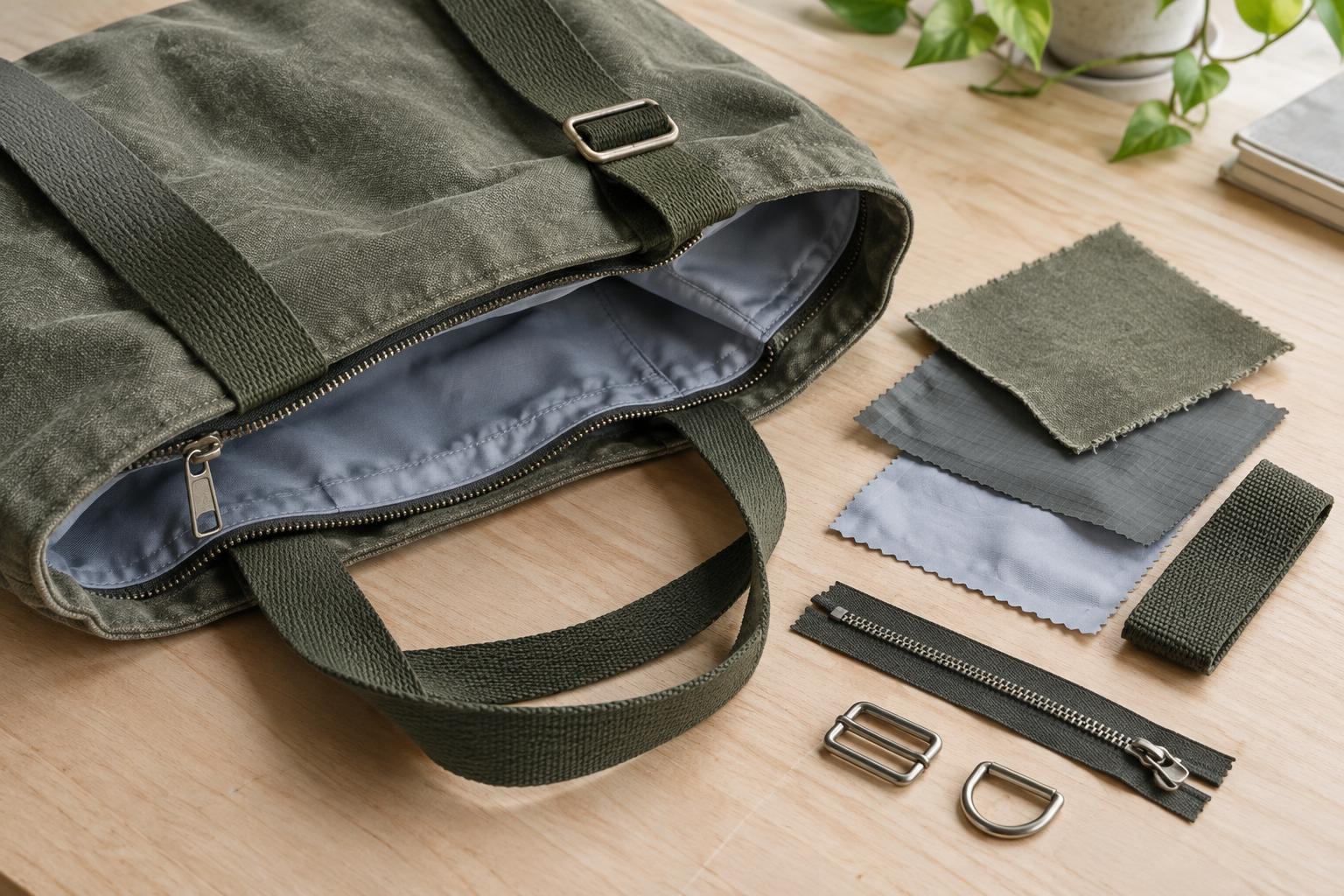
Cotton canvas has a familiar feel and can be washed or spot-cleaned according to its construction. It may absorb water readily unless treated, and a wet bag can take time to dry. Polyester and nylon fabrics generally absorb less water into their fibers, but the weave and any finish still affect how readily water passes through the bag. Fiber type alone cannot tell you whether a finished bag will keep its contents dry.
Fabric construction matters as much as the fiber name. A tightly woven material can better resist snagging and abrasion than a loose weave made from a similar fiber. Thicker fabric may offer more structure, but weight and stiffness can make a bag harder to fold or pack. Reinforced corners and strap attachment points may do more for useful life than adding thickness everywhere.
A coating or laminate can help limit water entry through the fabric and make some spills easier to wipe away. It does not automatically make the whole bag waterproof: seams, zippers and openings remain possible entry points. Coatings can also wear, crack or peel with use, particularly if the bag is repeatedly folded or cleaned in a way the material cannot tolerate.
Choose a lining that suits the contents
A lining gives the inside of a bag a separate working surface. For everyday items, a smooth lining can make it easier to find keys and remove dust. If the bag regularly carries snacks or reusable containers, a lining that can be wiped down may be more convenient than absorbent fabric. Check whether the lining is securely attached and whether crumbs can collect in inaccessible corners.
Insulation is a different feature from a wipe-clean lining. A padded or reflective-looking layer may slow temperature change, but its usefulness depends on the entire bag, including its closure and how long it stays shut. It should not be treated as a substitute for appropriate food storage or temperature control. For a general-purpose day bag, a removable pouch for messy items may be easier to clean than a permanently lined compartment.
The inside and outside need not use the same material. That can be an advantage, but it also creates more layers to dry after a spill. If ease of maintenance is a priority, look at the complete assembly rather than judging the lining from a small exposed sample.
Pay attention to straps, closures and repair
Straps carry the load, so their attachment is worth examining. Wide straps can spread pressure across a shoulder, while narrow straps may feel uncomfortable when the bag is full. Webbing, fabric handles and stitched reinforcements all behave differently; the quality of the connection to the bag matters more than the name of any single component.
A zipper helps contain small items, but it adds a part that can jam or wear. Snaps, buckles and open-top designs each trade security for speed of access. Metal hardware can feel substantial but adds weight; plastic hardware is lighter and comes in many grades. Neither choice guarantees durability without sound construction and suitable use.
Before buying or designing a bag, check whether worn components could be replaced. Accessible stitching, a standard zipper and simple straps may make repairs more practical. A bag that can be cleaned and maintained is more likely to remain useful than one built around a feature that is difficult to fix.
Match the material choices to a real outing
Imagine packing the bag for several hours away from home. Put the likely contents inside, then consider whether the straps feel comfortable, the opening gives enough access and the interior would be easy to clean after a spill. A weather-resistant outer fabric might matter most for frequent walks in rain; for short outings, low weight and a washable pouch might be more useful.
Travel plans offer a practical way to test that packing list. For ideas about an evening outing, browse New Orleans After Hours and consider whether the bag needs to carry an extra layer. For a day with several stops, browse Visitor Planning · New Orleans After Hours and think about access to essentials while moving around. If meals are part of the plan, browse Food Traditions · New Orleans After Hours and consider keeping food containers separate from items that are hard to clean. The goal is not one perfect bag material, but a combination that fits what the bag will actually do.