Start with the cleaning task
Cleaning is part of using many everyday products, yet it is easy to overlook during design. A handle that feels comfortable may collect residue where it meets the body. A textured surface may hide fingerprints but hold dust. Before refining the shape, consider what the product will encounter, where that material may settle and how a person is likely to remove it.
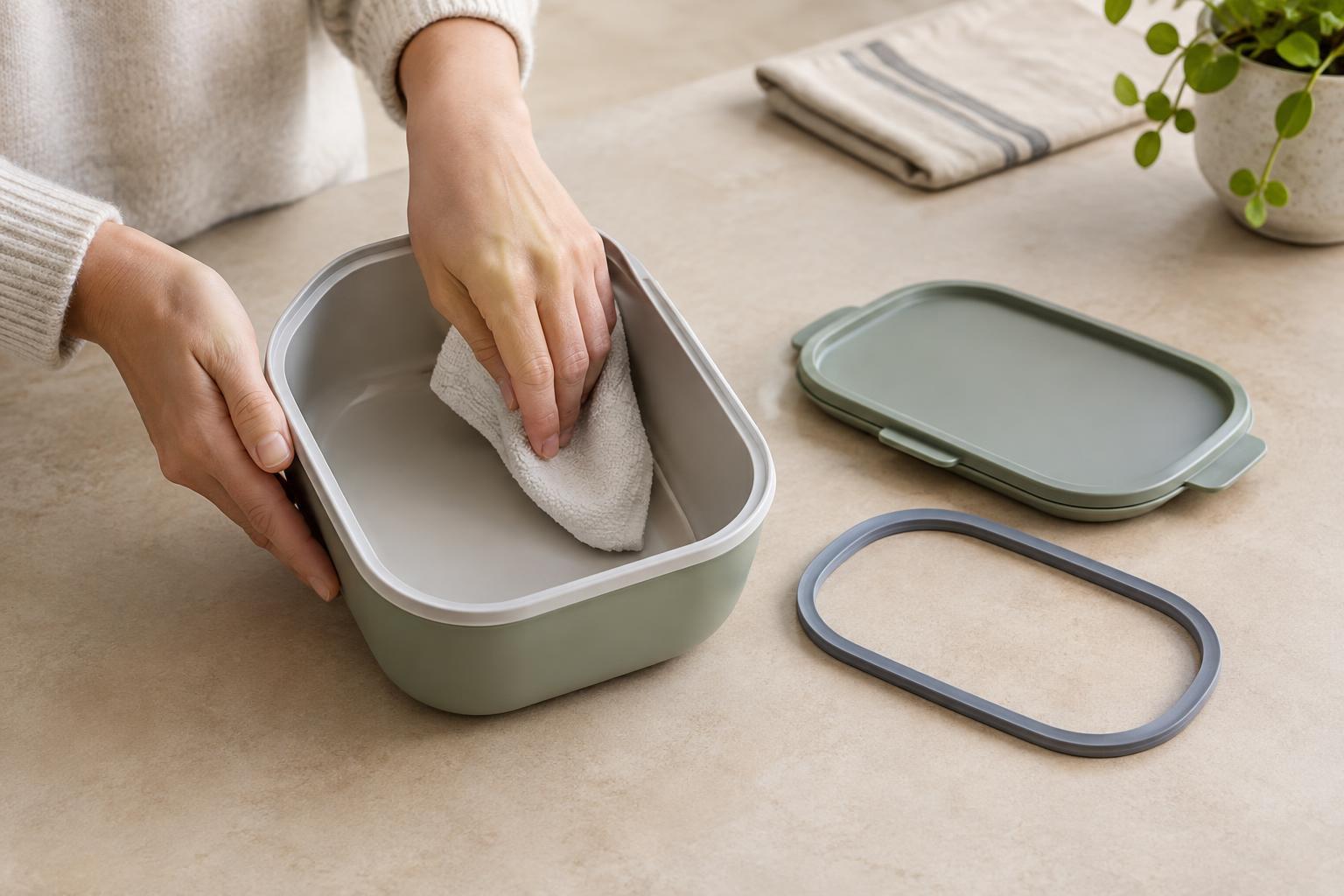
Define a realistic cleaning task rather than assuming the whole product needs the same treatment. A desk accessory may need an occasional wipe, while a reusable container needs access to surfaces that regularly touch its contents. Consider how often cleaning is likely, whether the product can be moved to a sink and which parts must stay dry. These questions help distinguish useful design requirements from unnecessary complexity.
Shape surfaces so they can be reached
Broad, accessible surfaces are generally easier to wipe than narrow recesses. Check corners, channels, ribs and decorative grooves for places where debris could collect. A gentle transition between surfaces can be easier to reach than a sharp internal corner, but it still needs to suit the product’s appearance and manufacturing process. If a recess serves a purpose, make it wide enough for the intended cleaning method.
Think about the product in its normal position. A horizontal ledge may catch dust even if it looks unobtrusive in a rendering. A control placed close to a raised rim may leave too little room to wipe around it. On a prototype, follow the path a hand and cloth would take. If cleaning requires unusual angles or repeated passes, the geometry may deserve another look.
Treat seams and removable parts as design decisions
A seam can be visually tidy while still trapping grime. Where two parts meet, consider whether the joint should be sealed, exposed for wiping or opened for cleaning. Each approach has a trade-off: a sealed joint can reduce access for servicing, while a removable part adds a step to use and may be misplaced. The right choice depends on what can enter the joint and how often the area needs attention.
If a part is meant to come off, make its removal understandable and its reassembly reliable. Provide a place to grip it without tools when appropriate, and avoid shapes that can be installed in a misleading position. Cleaning instructions should match what the design actually permits. A cover that is technically removable but difficult to release in ordinary use offers little practical benefit.
Choose finishes for real handling
Surface appearance and cleanability are related but not identical. A glossy finish can reveal smudges, while a heavily textured one may retain material in its low points. Consider the types of contact the product will receive and compare finish samples under ordinary lighting. A finish that looks appealing when new should also be assessed after repeated handling and wiping.
Material compatibility matters too. Some surfaces may change appearance or feel when cleaned with substances a user might reasonably choose. Rather than assuming a material is suitable because it looks durable, identify the expected cleaning method and check samples using that method. Any cleaning guidance supplied with the product should be clear about parts that must not be immersed or exposed to moisture.
Test cleaning with an ordinary prototype
A simple cleaning trial can reveal problems that a CAD model will not. Apply a small amount of representative, safe-to-handle residue to likely contact areas on a prototype or finish sample. Ask someone unfamiliar with the design to clean it using the intended method, then observe where they hesitate, what they cannot reach and whether they need to disassemble anything.
Use the observations to make specific changes. Widening a gap, moving a control or reducing an unnecessary groove may help more than changing the entire material. Repeat the trial after revisions, especially when a change affects both cleaning and another requirement such as grip, sealing or appearance. The goal is not a product that never gets dirty; it is one that people can restore to a usable condition without undue effort.