A liquid route to a shaped ceramic part
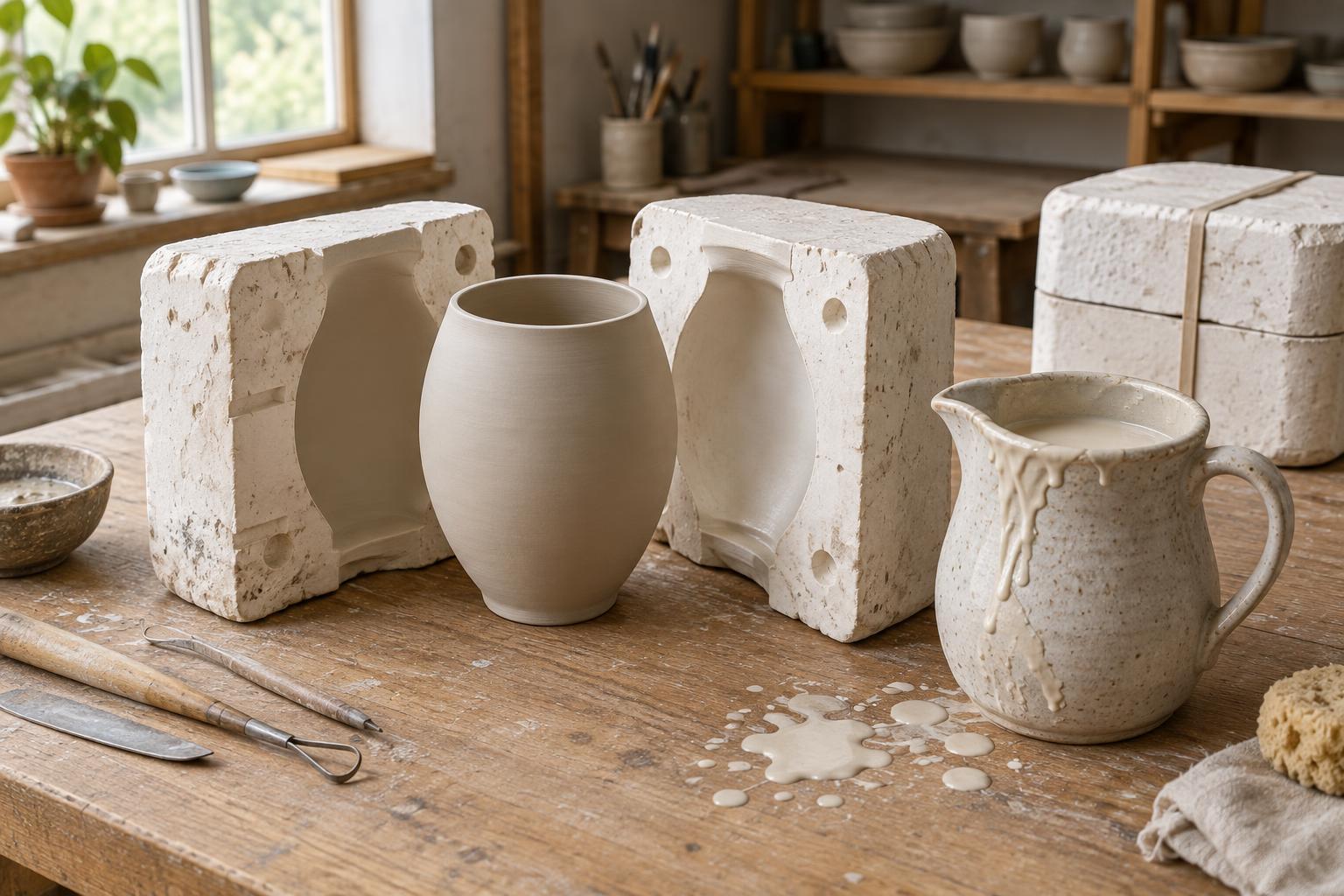
Slip casting begins with slip: ceramic particles suspended in water so the mixture can flow into a mold. Unlike throwing on a wheel or pressing relatively stiff clay, casting lets the mold define much of the shape. It is especially useful for vessels, sanitaryware and other forms with curves, repeated details or openings that would be awkward to build by hand.
The mold is commonly made from porous plaster. When slip touches its surface, the plaster draws water out of the suspension. Ceramic particles are left behind and begin to form a firm layer against the mold wall. The cast is not yet a finished ceramic object; it is a fragile, unfired shape that must be removed, dried and fired.
How a hollow cast forms
To make a hollow piece, a maker fills the assembled mold with slip and leaves it in place while a layer builds up along the inside surface. The longer the slip remains, the thicker that layer generally becomes. Once it is thick enough for the intended part, the maker pours out the still-liquid slip from the center. The layer left against the mold becomes the walls of the object.
The mold continues to absorb some moisture, helping the cast become firm enough to handle. After a suitable wait, the mold sections are separated and the piece is released. At this stage, seams where mold parts met and marks around the pouring opening may need careful trimming or smoothing. The process can produce a hollow shape without requiring a separate tool to carve out its interior.
Some parts are solid-cast instead. In that approach, slip remains in the mold rather than being drained. Whether solid casting is practical depends on factors such as part thickness and drying behavior: a thick mass of clay can dry unevenly and be harder to produce reliably.
Why mold design matters for complex shapes
A mold must do more than reproduce the outside appearance of a part. It needs a way to be filled, and a drain-cast mold needs a way to empty. It must also open so the fragile cast can be removed without damaging features that catch on the mold. A simple cup may need relatively few mold sections, while a shape with protrusions, recesses or a narrow neck may call for a more carefully planned multipart mold.
Parting lines—the boundaries between mold sections—are therefore a product-design decision as well as a production detail. Placing them where seams can be reached and cleaned makes finishing easier. The mold also needs enough strength for repeated handling and enough time to dry between uses. As a plaster mold becomes wetter, it may draw water from fresh slip less effectively, changing how quickly the cast wall forms.
Controlling the cast and finishing the piece
Consistent results depend on more than leaving slip in the mold for a set period. The slip must flow into details and pour back out without leaving unwanted pools. Its water content and the way its particles remain suspended affect how it behaves. Mold dryness, casting time, room conditions and the position of the mold can also influence wall thickness. In repeat production, makers use consistent preparation and check the resulting pieces rather than assuming every pour will behave identically.
After removal, a cast must dry thoroughly and as evenly as its shape allows before firing. Rims, handles and changes in wall thickness can lose moisture at different rates, creating stresses that may lead to warping or cracks. Firing then turns the dried, unfired shape into a durable ceramic body. The body shrinks during drying and firing, so the mold is made larger than the desired finished part by an amount appropriate to the particular clay body and process.
Typical faults offer clues about where to look. Thin or incomplete areas may point to poor filling, trapped air or inadequate wall buildup. Heavy areas can form where slip collects instead of draining cleanly. Visible seams call for attention to mold fit or finishing. Slip casting is effective because it separates shape-making from much of the hand-forming work, but sound molds, controlled casting and patient drying remain essential to a reliable result.