Start with the ways a product could lose balance
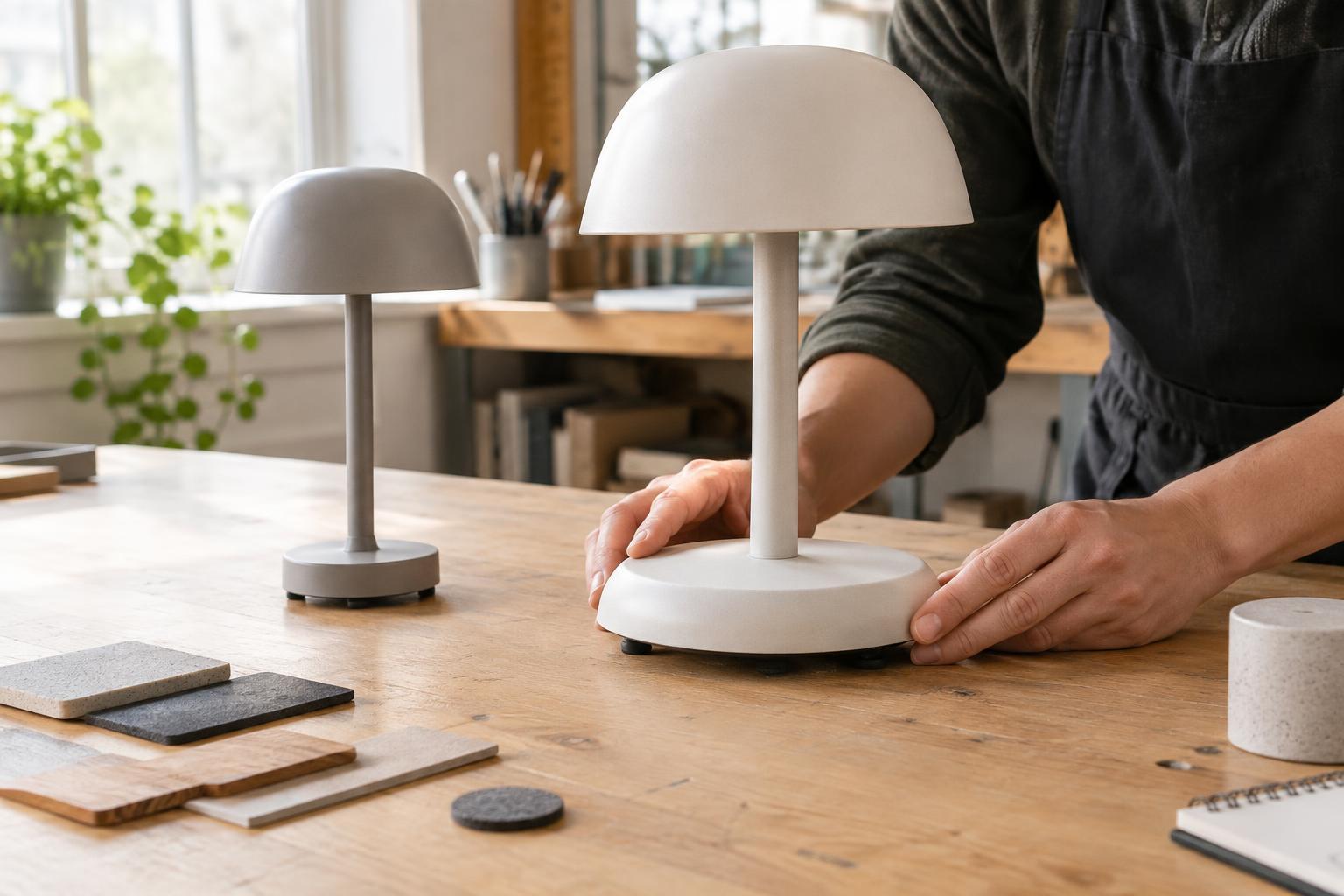
A tabletop lamp, storage container or freestanding appliance may appear stable while sitting untouched. Stability becomes more complicated when someone opens a lid, pulls a drawer, presses a button or bumps a corner. Before changing dimensions, list the actions and conditions that could make the product rock, slide or tip. This turns “make it stable” into a set of design questions that can be explored with prototypes.
Consider where the product will sit and how it may be handled. A firm worktop, a slightly uneven floor and a soft shelf liner do not provide the same support. Include plausible variations in loading, such as an empty container and one filled unevenly. The aim is not to imagine every possible accident; it is to identify the ordinary conditions most likely to reveal a weakness.
Understand the footprint and the center of mass
A product rests on an effective support area formed by its points of contact with the surface. A wider footprint generally gives it more room to resist tipping, but width alone is not enough. The location of the product’s mass matters too: a heavy top can make a narrow base feel precarious, while placing heavier components lower may improve stability without changing the outside dimensions.
Think about stability in every direction, not just from the front. A long, narrow base may resist a push from one side but tip readily when pushed from the end. Handles, open doors and extended drawers can shift where forces act or move weight away from the base. Sketch the product in several positions and mark its contact points, heavier parts and likely push or pull locations. This simple exercise can expose problems before a detailed model is built.
Design the points of contact deliberately
The shape of the base determines which parts actually touch the supporting surface. Four rigid feet can wobble if the feet or the surface are slightly uneven; a three-point arrangement can sit without rocking, though it may not suit every product. Flexible feet or pads may help accommodate small variations, but their compression and attachment need to be considered as part of the design.
Stability also involves sliding. A product that does not tip may still move unexpectedly when a user operates it. Base materials, surface texture and the direction of applied force all affect that behavior. Rather than assuming a grippy-looking finish will solve the problem, try representative surfaces and loads. If a pad is expected to provide friction, check what happens when it wears, becomes dirty or is installed imperfectly.
Account for the product in use, not only at rest
The most demanding configuration may be temporary. An open lid can change balance; pulling on a handle can apply leverage well above the base; a cable can tug on a light product from an unexpected direction. Observe the full sequence of use, including setup, loading, cleaning and storage. A design that works only in its preferred position may need a different base, a lower placement for heavy parts or a limit on how far a component extends.
Trade-offs deserve attention. Adding weight can make an object harder to move, and enlarging its base can consume valuable counter space. A projecting foot might improve resistance to tipping but create a trip or snag point. Compare changes against the product’s other requirements instead of treating maximum stability as the only goal. Where misuse could cause injury, seek appropriate specialist review and applicable testing rather than relying on informal checks alone.
Test early, then test the revised design
A rough physical mock-up can answer questions that are difficult to settle from a rendering. Place it on the surfaces the product is likely to encounter, try expected loads and operate moving parts. Watch for rocking, sliding and the point at which a push begins to lift one edge. Record the setup so that later versions can be compared under similar conditions. These observations are more useful than an unqualified judgment that a prototype “feels stable.”
Change one design feature at a time when practical: foot spacing, weight placement, pad material or handle position. Then repeat the relevant checks. Early tests help narrow options, but a lightweight mock-up may behave differently from a production version made with different materials and components. Revisit stability as the design becomes more representative, particularly after changes to internal parts, attachments or packaging that affect how the product is handled.