Start with the purpose and scope
A packaging specification describes the approved way to pack a particular product or product family. It gives suppliers, packing teams and inspectors a shared reference instead of leaving them to interpret a sample pack. A useful specification covers more than how the finished package looks: it identifies its components, explains how they fit together and states what a completed pack must do.
Begin by naming the product and the pack configuration. Record which product variants the specification covers, how many units go in each package and whether the instructions apply to a retail pack, a shipping carton or both. If different destinations or sales channels require different packs, give each configuration a distinct identifier. Otherwise, two teams may follow the same document while building different packages.
Define components in measurable terms
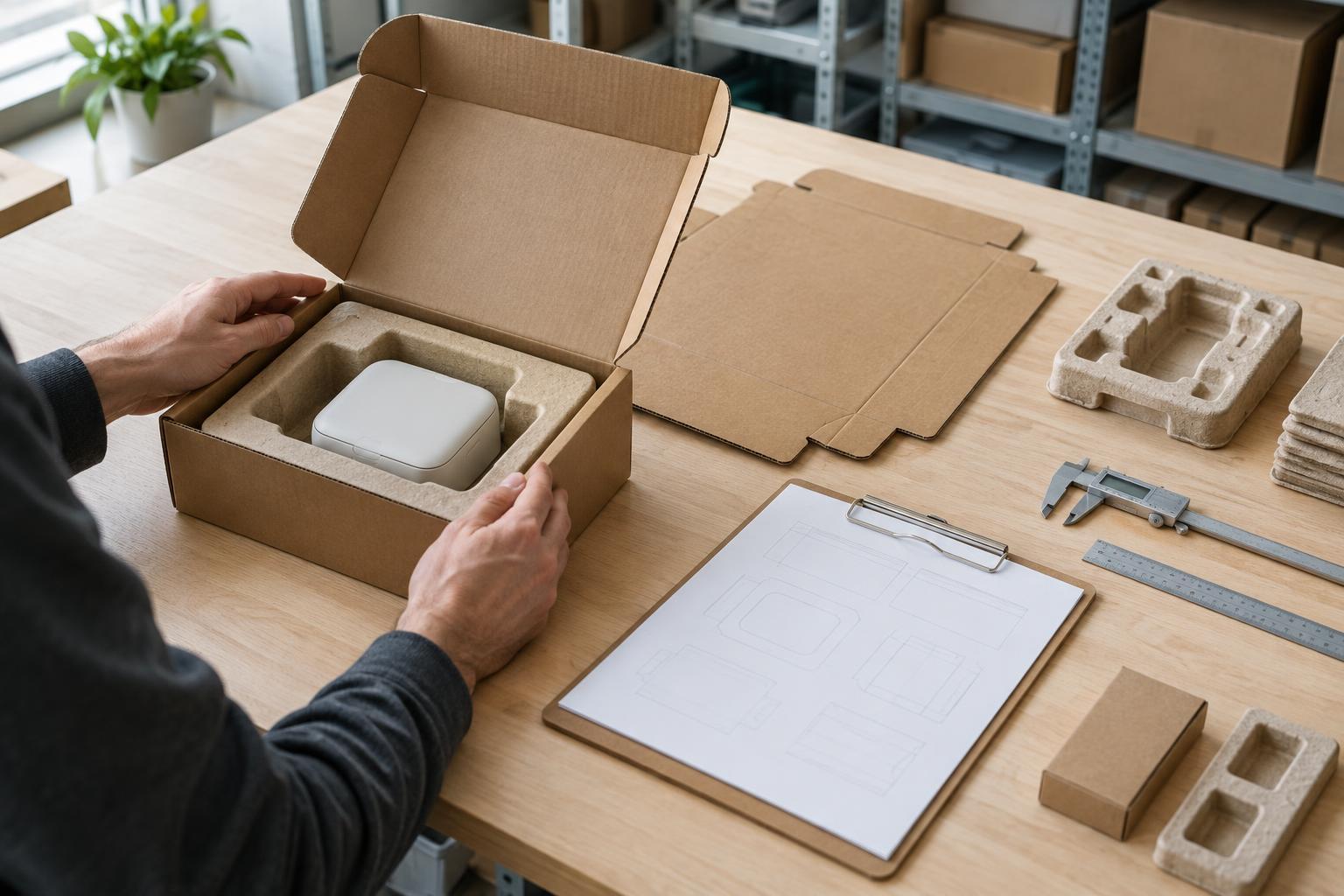
List every required component, including containers, inserts, cushioning, closures and printed items. Give each one a consistent name or part number so purchasing and packing teams can identify it. Record the characteristics that affect fit or performance, such as material type, dimensions, thickness or finish. Where a dimension can vary, state an acceptable range rather than relying on a single nominal measurement.
Be selective about detail. A box supplier may need a drawing that defines folds and cutouts, while a packing operator may need only the approved box identifier. Reference a controlled drawing where precise geometry matters, but put enough information in the main specification to identify the correct part. If substitutions are allowed, describe the approval process rather than calling components interchangeable without a check.
Describe the packing sequence
Write assembly instructions in the order someone will perform them. Explain how the product is oriented, where protective materials go and how the package is closed. Include details that are easy to miss but consequential in practice, such as whether an accessory must be bagged separately or a closure must avoid a printed area. Plain language usually serves operators better than a long narrative about the design’s intent.
State the quantity and arrangement at each packaging level. For example, distinguish units per inner pack from inner packs per shipping carton. If package weight or outer dimensions matter for handling, record the expected values and how they will be checked. A photograph or diagram can help show orientation, but the written instructions should still identify the required components and steps if the image is unavailable.
Make acceptance checks observable
A specification is easier to apply when its requirements can be checked on a finished pack. Replace vague directions such as “close securely” with observable conditions: the intended closure is applied in the stated position, the package remains closed during normal handling and no product is exposed. State where labels belong and which information must remain legible, without relying on an operator to infer placement from an example.
Separate checks made during packing from those made on a completed carton. An operator might confirm that all accessories are present before closing a box; an inspector might later check the carton identifier, quantity and visible damage. For requirements that need a formal test, name the approved test procedure and acceptance criteria in the specification or a controlled companion document. The specification should not imply that a visual check proves performance it cannot establish.
Control changes and test the instructions in use
Give the specification an owner, a revision identifier and an effective point for use. When a component changes, check whether its dimensions, assembly steps or inspection criteria need updating too. Keep obsolete versions out of routine use, and make clear how existing stock will be handled during a transition. This helps prevent a packing team from combining an old insert with a revised carton simply because both are on hand.
Before releasing a new specification, ask someone unfamiliar with the design to pack a unit using only the stated instructions and approved components. Note every point where they must guess, then revise the document. Repeat that check when products or materials change. The goal is not to make the specification as long as possible; it is to give each team enough precise information to produce and recognize the intended pack consistently.