The basic idea: shape a hollow form with air
A bottle needs walls thin enough to keep material use reasonable, yet strong enough to survive filling, handling and transport. Blow molding makes that hollow shape by enclosing softened plastic in a mold and using pressurized air to push it against the mold’s inner surface. The plastic cools, holds its shape and is removed as a container.
The starting plastic is not a flat sheet. Depending on the process, it is either a warm tube called a parison or a smaller, test-tube-shaped piece called a preform. The mold defines features such as the body, shoulder and base. Air forms the cavity inside. This combination makes blow molding well suited to many bottles, jugs and other hollow products, though the best method depends on the material and the design.
Extrusion blow molding: starting with a tube
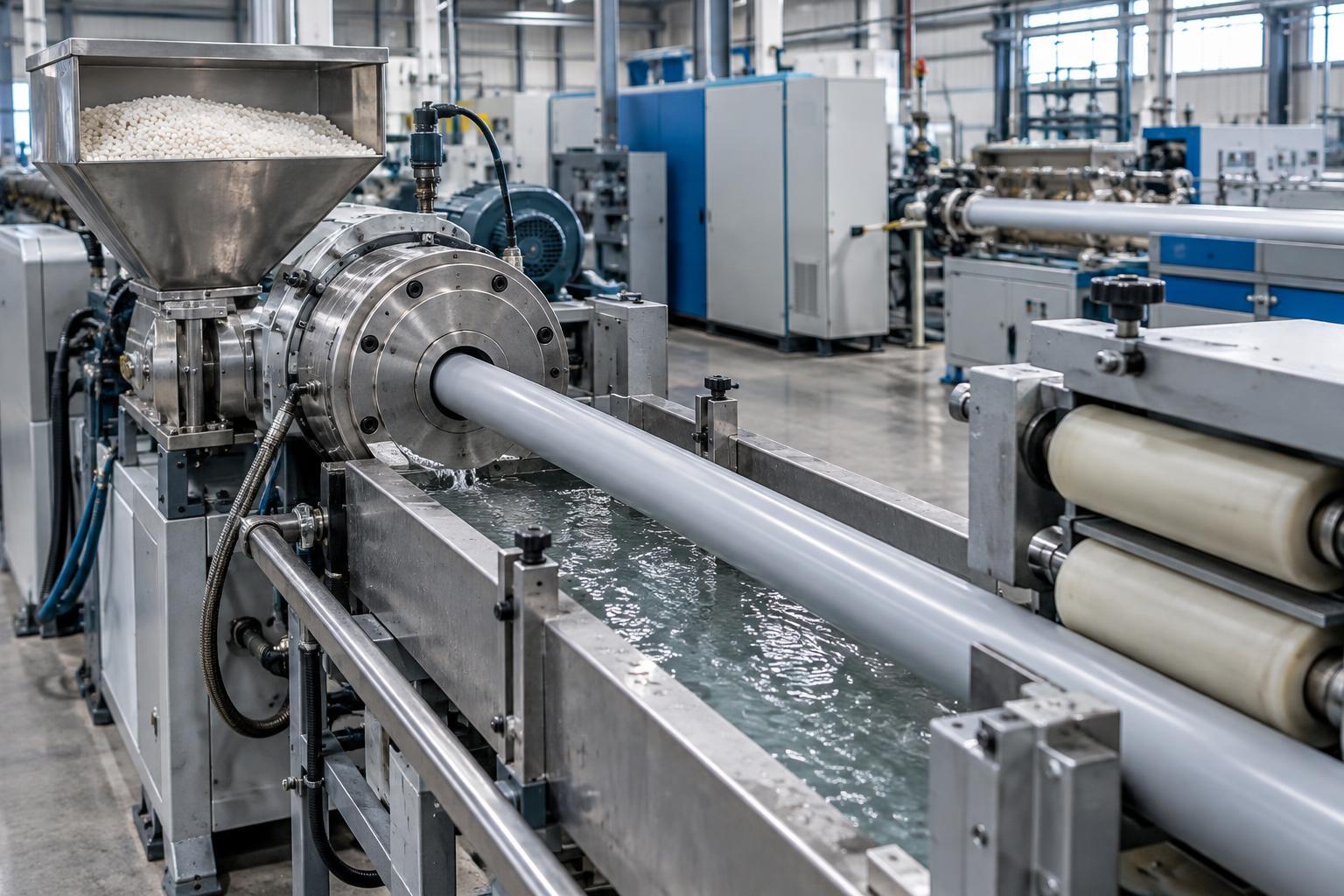
In extrusion blow molding, an extruder heats plastic pellets and pushes the softened material through a die to form a hanging tube. A mold closes around the tube, pinching it shut at one end. Air enters through an opening at the other end and expands the tube until it contacts the mold walls. After the plastic has cooled enough to keep its shape, the mold opens.
The process often leaves extra material where the mold pinched the tube and around the opening. That material, called flash, is trimmed away. Extrusion blow molding can produce containers with handles and other shapes that are difficult to make from a narrow preform. It is commonly used with plastics such as high-density polyethylene, but a suitable material and process setup depend on the container’s intended use.
Injection-based methods: starting with a preform
Injection blow molding starts by injecting melted plastic into a mold around a core, creating a preform with a formed neck. The preform moves to a blow mold, where air expands it into the final shape. Because the neck is made in the injection step, this method can offer good control over its dimensions and finish. It is useful when the fit between a container and its closure matters.
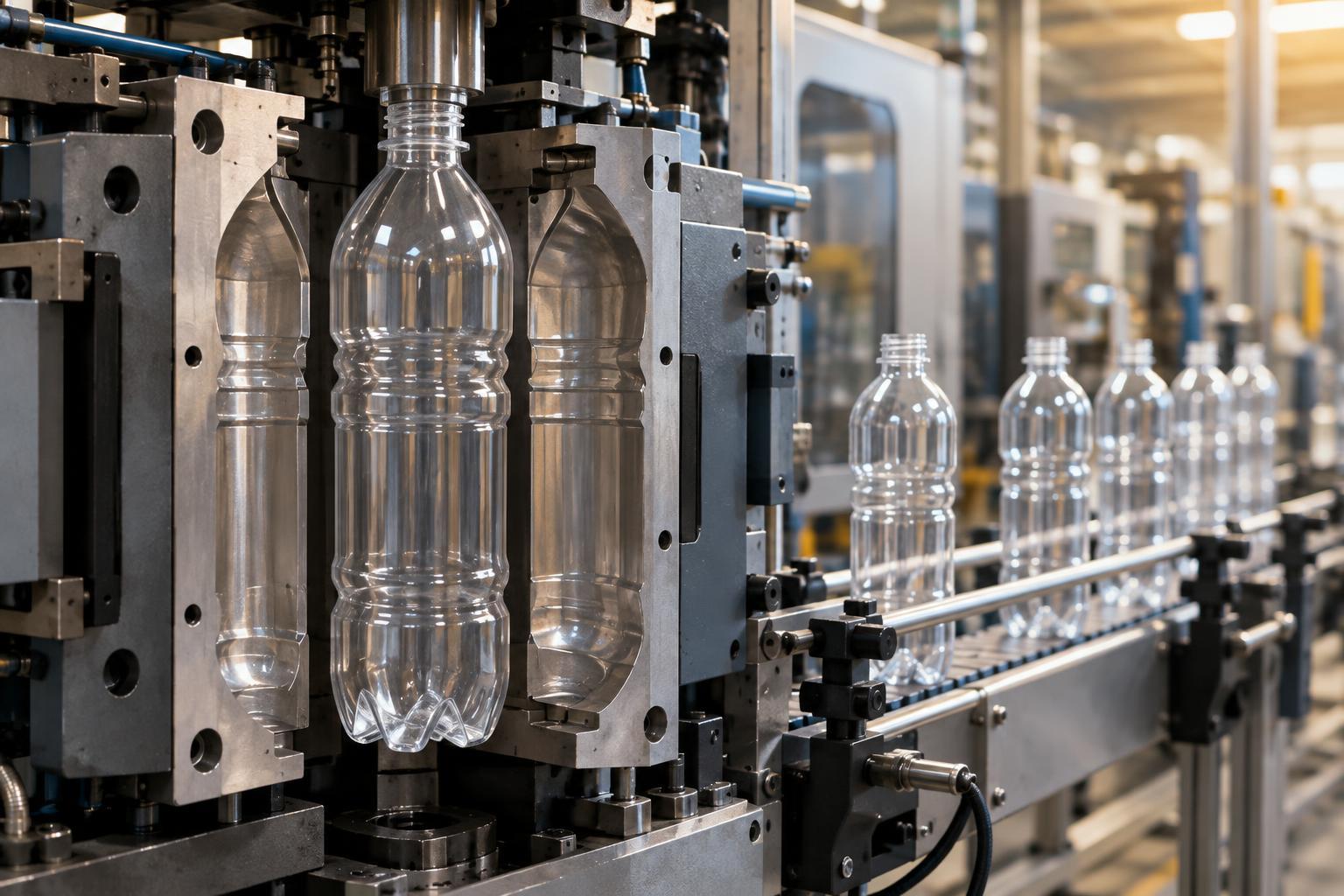
Injection stretch blow molding adds a stretching step. A preform is heated to a suitable forming temperature, then stretched lengthwise by a rod while air expands it outward. Stretching helps distribute the material and can improve certain properties when the material and process are suited to it. This method is widely associated with PET beverage bottles. Some production lines make preforms and blow them in one connected process; others make preforms separately and blow them later.
What determines the finished bottle
The mold sets the outside shape, but it does not guarantee evenly distributed walls. Temperature, air pressure, timing and the starting shape all influence where the plastic stretches and how thick it remains. In extrusion blow molding, the tube’s thickness can be adjusted as it is formed to put more material where the final part needs it. In preform-based processes, the preform design and heating pattern help control how material spreads into the shoulder, body and base.
Cooling matters too. A container removed too early may distort; excessive cooling time can slow production. Designers must also consider whether the base can stand steadily, whether the walls resist squeezing or buckling as required, and whether the neck works with the intended cap. Deep details and abrupt shape changes may be harder to form consistently than smooth transitions. These choices are usually tested with the intended material and equipment rather than settled by appearance alone.
Checks, scrap and practical trade-offs
Manufacturers may check dimensions, weight, wall thickness and the quality of the opening. A leak test can reveal holes or poor sealing where the plastic was pinched together. Visual inspection may catch uneven surfaces or unwanted deformation. The relevant checks depend on what the container must hold and how it will be filled, closed and transported.
Every method balances shape freedom, material choice, equipment needs and production steps. Trimming flash creates scrap in many extrusion-blown parts, while preform-based methods add a separate forming stage for the starting piece. Suitable production scrap may be reprocessed in some applications, subject to material and product requirements. Understanding the starting form—tube or preform—is a useful first step in understanding why two hollow containers that look alike might be made in different ways.