Three layers, three different jobs
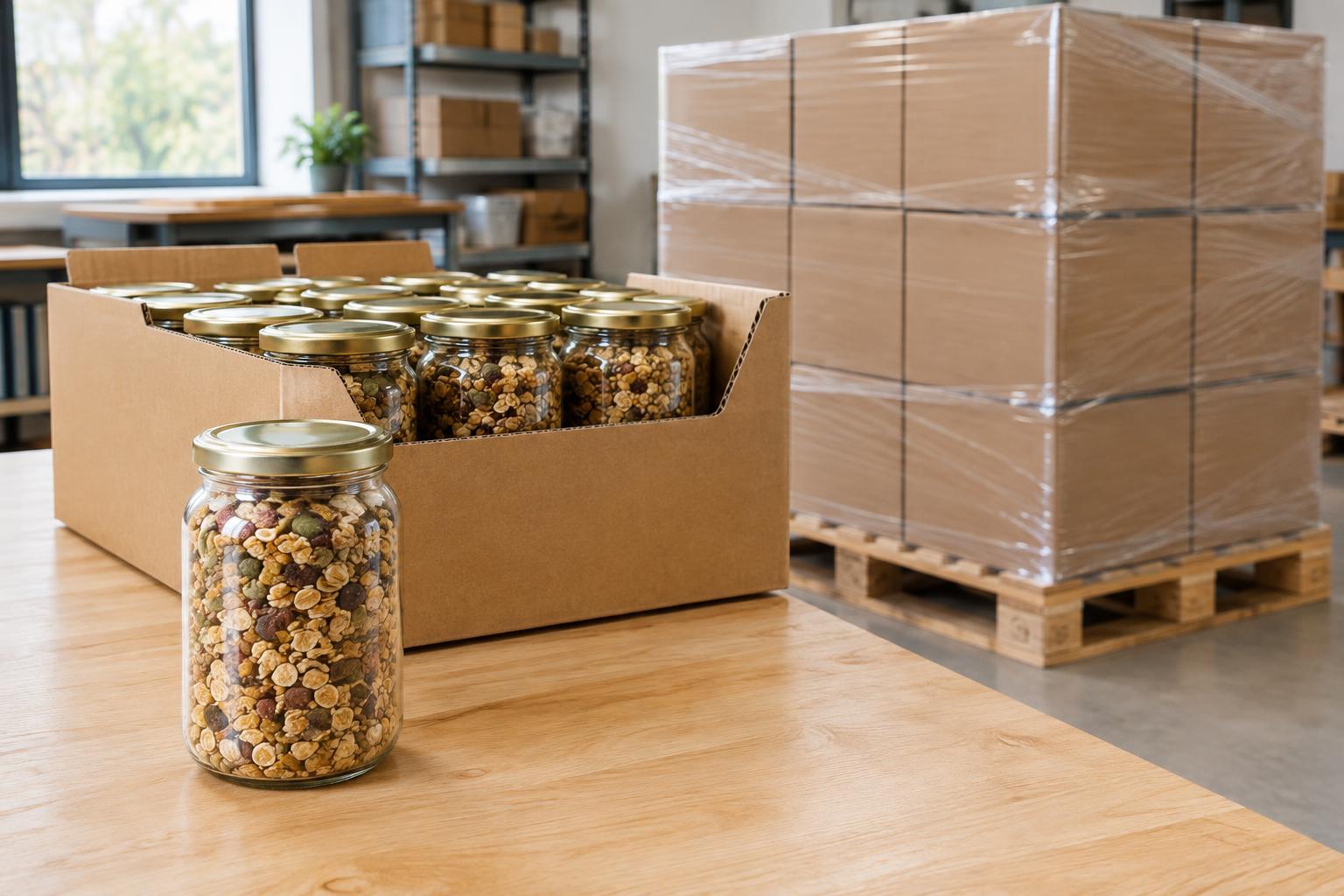
A product rarely travels from a factory to a customer in just one container. A bottle may sit inside a printed carton; several cartons may be packed into a shipping case; cases may be stacked on a pallet and wrapped for transport. Describing these as primary, secondary and tertiary packaging helps teams discuss what each part must do.
The terms describe a package’s role, not its material or appearance. Primary packaging is closest to the product. Secondary packaging groups or presents one or more primary packs. Tertiary packaging combines units for handling, storage and transport. Not every product needs a separate, visible example of all three. The useful question is what the package protects or organizes, and at which stage of the journey.
Primary packaging: containing and protecting the product
Primary packaging directly contains the product or forms its immediate barrier. Examples include the bottle holding shampoo, the pouch holding coffee, or the tray and film enclosing a ready-to-eat item. For some products, this layer must resist leaks, moisture or contamination. For others, it mainly keeps small parts together and provides a convenient way to use the contents.
Because it is closest to the product, primary packaging must suit what is inside. A liquid needs a reliable closure; a fragile item may need support; a product sensitive to air or light may need an appropriate barrier. The pack also affects everyday use: whether it is easy to open, dispense from, close again or empty. Material choices should therefore be considered alongside the product’s properties, expected handling and how it will be filled.
Primary does not necessarily mean smallest. A large bag of pet food may be the primary pack if the food is held directly inside it. A decorative box around that sealed bag has a different role, even if it is the first thing a shopper notices.
Secondary packaging: grouping and presentation
Secondary packaging holds or groups primary packages. A carton around a toothpaste tube, a sleeve around several cans, or a box of individually wrapped items can serve this purpose. It can add space for identification and instructions, create a shelf-ready shape, and protect primary packs from rubbing or light impacts during handling.
This layer may be designed for shoppers, warehouse staff or both. A retail multipack helps a customer carry several units together. A case containing multiple saleable units helps a store receive, count and replenish stock. In either setting, a good secondary pack makes its contents clear and keeps them secure without making access needlessly difficult.
The distinction can depend on how an item is sold. If a box directly contains loose parts, it may be the primary package. If the same style of box holds individually packaged parts, it may be secondary. Rather than classifying a box by its shape alone, look at its relationship to the product and to the units being handled.
Tertiary packaging: moving larger loads
Tertiary packaging brings multiple packaged units together for distribution. Pallets, stretch wrap, straps and protective corner pieces are common examples. A shipping case may also be considered tertiary when it groups retail-ready packs into a unit intended mainly for transport rather than individual sale.
Its job is to make loads practical to lift, stack, store and move while limiting damage along the way. Stability matters: a well-protected product can still arrive damaged if cases shift or collapse under a load. Dimensions matter too. Cases that stack predictably and fit the intended handling equipment can make packing and storage simpler.
Tertiary materials are usually removed before a product reaches the final user. That does not make them an afterthought. If a load is difficult to handle or secure, problems may appear well before anyone opens a retail pack.
Design the layers as one system
Each layer should solve a distinct problem, but the layers also need to work together. A sturdy primary container might need less cushioning in the outer case. A delicate primary pack might rely on dividers or a close-fitting secondary carton. Adding material at every level without considering the complete pack can increase bulk while doing little to address the most likely sources of damage.
A useful review starts with the product’s journey. How is it filled and sealed? Will units be displayed individually or in a group? How will cases be picked up, stacked and opened? Which surfaces need labels, and which packaging components will the customer handle or discard? Simple handling and packing trials can reveal issues that are easy to miss when examining a single layer on its own.
The three-layer model is a guide, not a requirement to add three separate packages. The aim is to give the product enough containment, usability and protection at each stage, with no layer doing work that another could do more effectively.