Two tests, two different questions
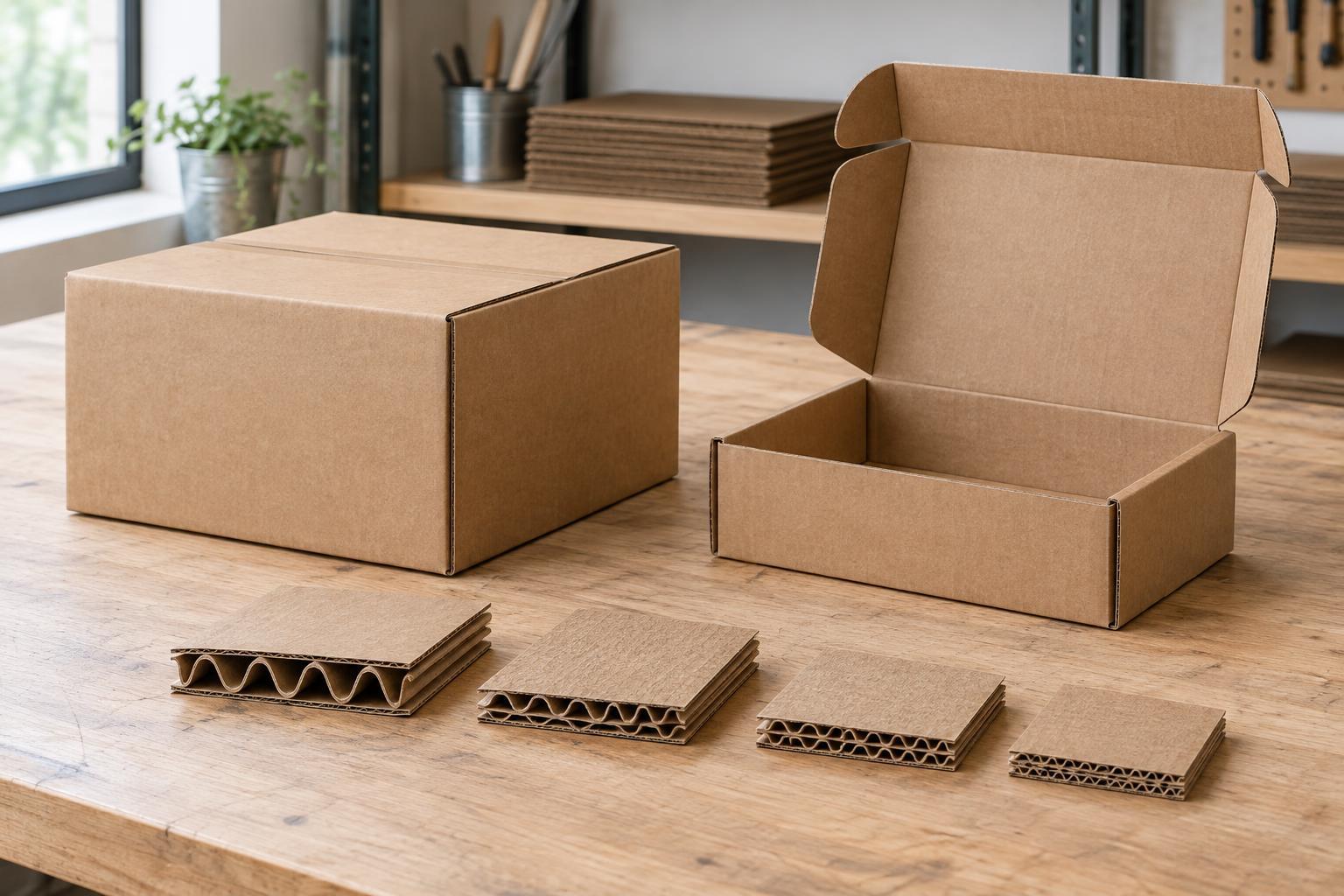
A corrugated box must do more than hold its contents. It may need to support other boxes in a stack, remain stable on a pallet and protect its contents after handling. Two common measures of its strength are ECT, or Edge Crush Test, and BCT, or Box Compression Test. They are related, but they are not interchangeable.
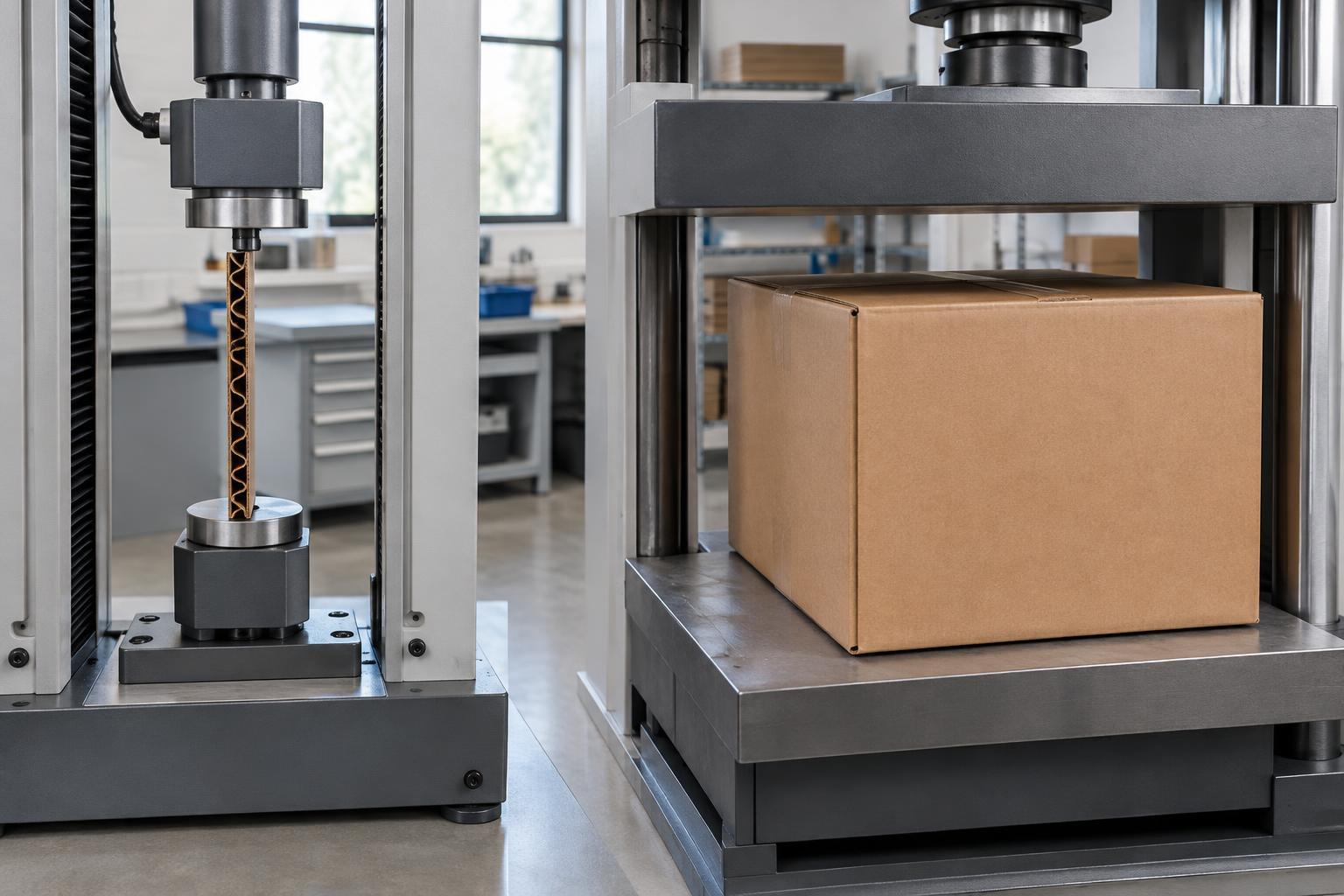
ECT asks how much compressive force a sample of corrugated board can withstand along its edge before it crushes. BCT asks how much top-to-bottom compressive force an assembled box can withstand before it fails under the test conditions. One describes a property of the board; the other describes the performance of a box made from that board. That distinction matters when comparing packaging options.
What ECT tells you about the board
In an Edge Crush Test, a small board specimen is stood on its edge and compressed. The result expresses force per unit length of the specimen’s loaded edge, commonly in pounds per inch or kilonewtons per metre. A higher result generally indicates greater resistance to edgewise crushing.
ECT is useful because a corrugated box carries much of a vertical stacking load through its walls. Board with greater edge crush resistance can therefore help make a box stronger in compression. The test also gives buyers and converters a way to specify and compare board grades before a particular box design is finalized.
An ECT value does not, however, describe every feature of a finished carton. It does not by itself account for the box’s dimensions, panel proportions, score lines, openings or assembly. Nor does it measure how well the box cushions its contents or resists punctures. A board grade is an input to packaging design, not a complete verdict on the package.
What BCT tells you about the assembled box
A Box Compression Test applies a load to a box, typically between two plates, until a specified failure point is reached. The result is a force, commonly reported in pounds-force or newtons. Unlike ECT, BCT captures the combined effect of board properties and box construction for the tested sample.
Two boxes made from board with the same ECT rating can produce different BCT results. Their height and footprint may differ, or one may have a cutout, an uneven score or a weakly formed corner. The way a box is closed and the condition of its panels can matter too. Conversely, changing the board grade does not guarantee a proportional change in finished-box compression strength.
BCT is especially relevant when boxes will be stacked, but a laboratory result is not a promise of safe stacking in every setting. Storage time, moisture, pallet support, load alignment and handling damage can all affect performance. A box loaded off-centre or overhanging a pallet may behave differently from a box compressed evenly in a test.
Why test conditions and units matter
When reviewing a result, check what was tested. For ECT, confirm the specified board and how its specimen was prepared and conditioned. For BCT, confirm the box size, construction and condition, whether it was empty or packed, and how it was closed. Results from differently prepared samples may not offer a fair comparison.
Also check the units. An ECT value is force per length; a BCT value is total force. Because the measures describe different objects and use different units, there is no simple one-to-one conversion. Board strength can be used as part of an estimate of box compression strength, but an estimate depends on assumptions about the box and should not be mistaken for a test of the finished design.
Using ECT and BCT together
Start with the job the package must do. Consider the product’s weight, whether other cartons will be stacked above it, the intended pallet pattern and the handling it is likely to encounter. ECT can help narrow the choice of board. BCT can then help evaluate a representative box built from that board, particularly when stacking strength is important.
If a box underperforms, the answer is not always to specify stronger board. A change in dimensions, panel layout or pallet arrangement may improve compression performance. Likewise, a box that passes a compression test still needs to meet other requirements, such as protecting the product and fitting the packing process. Treat ECT as a useful description of the material and BCT as evidence about a particular box. Used together, they support a more informed packaging choice than either number alone.