What end-of-line testing is for
A product can contain the correct parts and still fail to work. A connector may not be fully seated, a switch may be installed incorrectly, or a moving part may rub against its housing. End-of-line functional testing, often shortened to EOL testing, checks an assembled product against selected operating requirements before it moves to packaging or shipment.
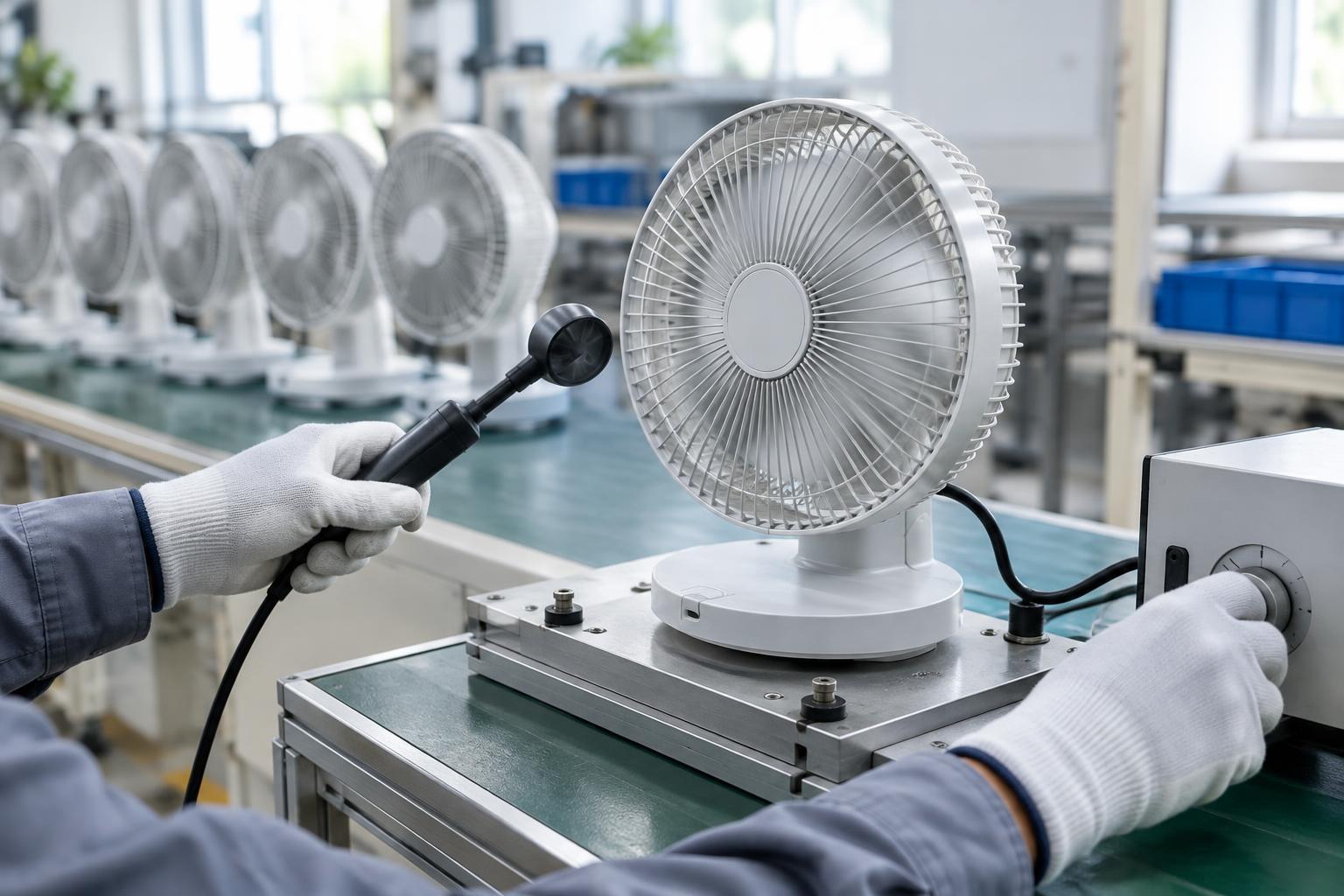
The test is meant to answer a practical question: does this unit do what it is expected to do under the conditions being checked? For a small appliance, that might mean confirming that controls respond and a motor runs. For a mechanical assembly, it might mean checking that a latch engages and releases. The exact checks depend on the product. EOL testing complements inspection of parts and assembly steps; it does not replace them.
Choose checks that reflect real failures
A useful test plan starts with the product’s essential functions and the assembly mistakes most likely to prevent them. The team can map each requirement to an observable result: pressing a button produces the expected response, a valve changes state when commanded, or an indicator displays the correct status. This keeps the test focused on outcomes rather than on whether the unit merely powers on.
Checks should also be practical on a production line. A test that takes too long, needs frequent adjustment, or depends on an operator’s subjective judgment may be difficult to repeat consistently. Fixtures can help by holding the product in the same position and making connections in a controlled way. Where automated measurement is appropriate, the equipment should record the relevant result rather than just display a pass light.
Not every important property can be verified in a short final test. Long-term wear, performance under every environment, and some internal defects may require separate design validation, process controls, or sample-based testing. A good EOL plan is explicit about what it checks and what it does not.
Define pass and fail before testing
A functional check needs a clear acceptance rule. “Sounds right” or “moves smoothly” may be useful observations during development, but production testing is stronger when operators can apply a defined method. A procedure can state how to prepare the unit, which input to apply, what output to observe, and which results count as passing. For measured outputs, it should specify an acceptable range and the conditions under which the measurement is taken.
Limits need care. If they are too loose, defective units may pass; if they are too tight, acceptable units may be rejected because of ordinary variation or measurement noise. The product’s requirements and the capability of the test equipment should inform the limits. Periodic checks of the equipment and fixture help reveal worn contacts, drifting sensors, or setup errors that could make results unreliable.
Make the result traceable
A test is more useful when the result can be connected to the unit or production batch. A record might include a serial or batch identifier, the test performed, the outcome, and the equipment used. The amount of detail should suit the product and the risks involved, but a simple, consistent record can help a team investigate a failure found later.
A failed unit needs a defined route, not just a second attempt until it passes. It may be set aside for diagnosis, repaired under an approved process, or rejected. After rework, the relevant checks should be repeated. Tracking failure types can expose patterns: repeated connection faults, for example, may point toward an assembly step or fixture that needs attention. Recording an initial failure separately from a later pass preserves that useful information.
Treat a pass as evidence, not a guarantee
End-of-line testing provides evidence that a unit performed selected functions at a particular moment and under particular conditions. It cannot prove that the product will work indefinitely or that every requirement has been met. A unit may pass a brief test yet have a weakness that appears only after extended use; conversely, a poor connection in the test fixture may cause a good unit to fail.
The strongest approach connects EOL testing with earlier quality work. Clear product requirements guide the checks, stable assembly processes reduce defects, and failure records help improve the process. When the test is repeatable, its limits are understood, and failed units are handled consistently, it becomes a useful final checkpoint rather than a substitute for making the product well in the first place.