Why a sound metal part can fail at a joint
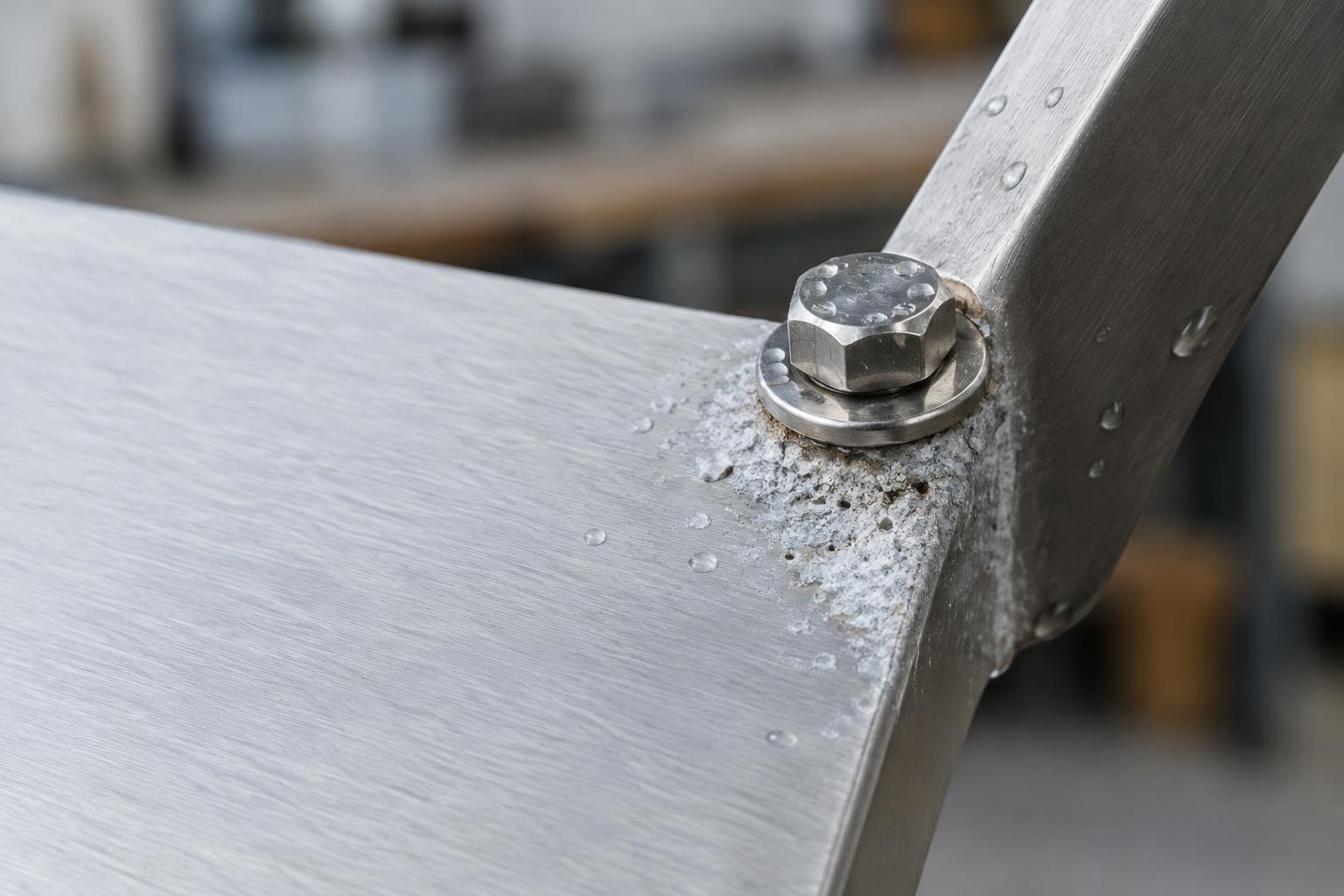
A product may need different metals for different jobs. A lightweight aluminum panel might be held by steel fasteners, or a copper fitting might join a steel assembly. Each material can be a sensible choice in isolation. Trouble can begin where they meet, especially if the joint is repeatedly wet. Corrosion concentrated around a fastener may be a sign that the combination, rather than either metal alone, needs attention.
This interaction is called galvanic corrosion. It is not inevitable whenever metals touch: the conditions around the joint matter. Understanding those conditions helps designers decide whether to change a material, separate the metals or keep moisture away.
The three conditions that make it possible
Galvanic corrosion requires two metals with different electrochemical behavior, an electrical path between them and a conductive liquid bridging their exposed surfaces. Water containing dissolved salts can provide that liquid path. One metal then tends to corrode preferentially, while the other is relatively protected. If the joint stays dry, or if a reliable insulating barrier breaks the electrical path, this particular corrosion mechanism cannot operate.
The names of the metals alone do not predict how quickly damage will develop. Their specific alloys and surface conditions, the liquid present, how long it remains, and the joint geometry all affect the outcome. A sheltered indoor fitting and an exposed outdoor fitting made from the same parts may therefore behave differently. Galvanic corrosion is also only one possible cause of deterioration; a single metal can corrode without being coupled to a different one.
Why size and shape of the exposed surfaces matter
The relative area of the two exposed metals can make a joint more or less vulnerable. A small area of the metal that corrodes preferentially, coupled to a large area of the other metal, can concentrate attack on that small region. This is worth considering when a small fastener connects a broad panel, or when a protective finish leaves only a small patch of underlying metal exposed.
Shape matters because it influences how long moisture stays at the contact. Tight gaps, overlapping sheets and recessed fastener heads can trap liquid and deposits. A joint that sheds water and can dry between exposures generally offers less opportunity for sustained galvanic action than one that remains damp. In practice, a sketch of the assembled product is often more useful than a list of materials: it shows where the metals touch, which surfaces are exposed and where water might collect.
Ways to reduce risk during material and product design
One approach is to select metals whose behavior in the expected environment is more compatible. Another is to interrupt the electrical connection with a suitable nonconductive washer, sleeve, gasket or coating. The barrier must cover the relevant contact points and remain intact through assembly and use. A washer beneath a fastener head, for example, may not isolate the metal shank from the sides of its hole.
Coatings can help by limiting exposure to moisture, but their placement and durability matter. A scratch, cut edge or damaged thread may expose bare metal precisely where liquid collects. Likewise, sealants can be useful only if the joint design and application keep them continuous. Designers should consider assembly tolerances, wear, cleaning and future repairs rather than assuming a perfect barrier will last forever.
Reducing trapped moisture is another practical measure. Drainage, accessible cleaning paths and joints that can dry may lower exposure without changing the core materials. When separation or sealing is difficult, it may be more robust to choose a different fastener or redesign the connection than to rely on a fragile coating alone.
How to check a mixed-metal choice
Start with the actual use conditions: Will the product see rain, washing, condensation or salty deposits? Identify every conductive contact, including fasteners and hidden brackets, then consider which exposed surfaces could be linked by moisture. Check whether an insulating feature stays in place after tightening and whether water can reach cut edges or crevices.
A prototype or representative joint can reveal problems that a material list misses. Inspect it after exposure conditions that reasonably resemble use, paying particular attention to fastener holes, coating damage and trapped-liquid areas. Accelerated corrosion tests may help compare design options, but their results do not automatically predict service life. The aim is to assess the assembled joint as a system, then make its protection practical to manufacture and maintain.