Start with the question, not the fabrication method
A prototype is an early physical version of a product or part. It might be a rough shape made in an afternoon or a carefully finished assembly that resembles the intended product. Neither is inherently better. The useful choice depends on what you need to learn before spending time and money on the next design step.
Begin by writing down the decision the prototype must support. Are you choosing between two handle shapes? Checking whether a cover clears an internal component? Seeing whether a latch survives repeated use? These questions call for different materials, levels of detail and tests. If the team cannot name the question, a polished model may create confidence without providing much evidence.
Use appearance prototypes for visual and handling decisions
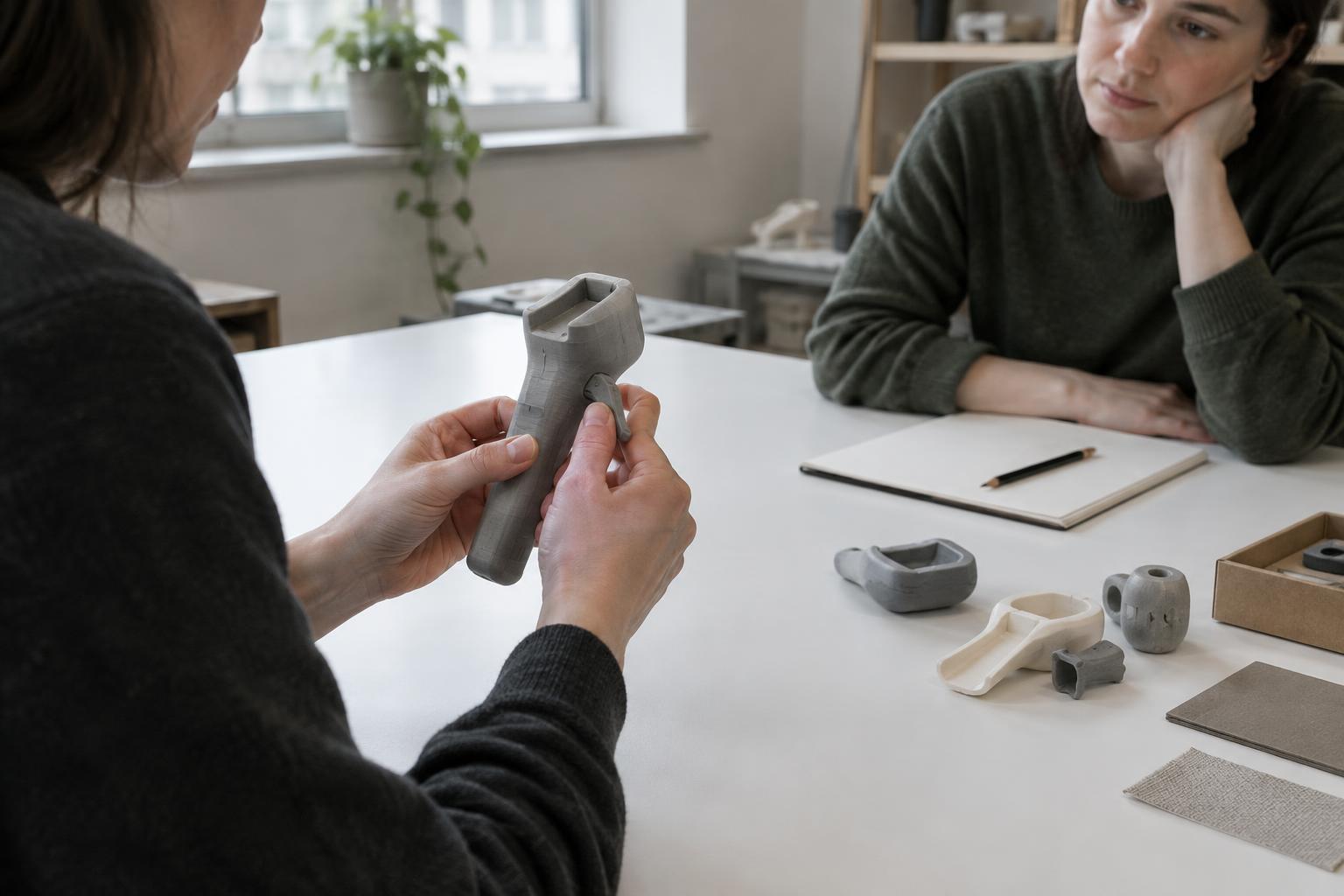
An appearance prototype helps people judge proportions, shape, color, surface finish and the way a product feels in the hand. It may be built from foam, printed parts or other easy-to-shape materials, then painted or coated to suggest the intended result. Its job is to make a design visible and tangible, not necessarily to behave like a finished product.
Decide which visual details matter before commissioning a high-finish model. A simple full-size form can reveal that a grip feels bulky or that a control is hard to reach. A more refined model may be worthwhile when comparing seam placement, textures or color combinations. Label any simulated features clearly: a painted surface can suggest a production finish, but it cannot prove that the chosen manufacturing process will reproduce it.
Use fit prototypes to check space and assembly
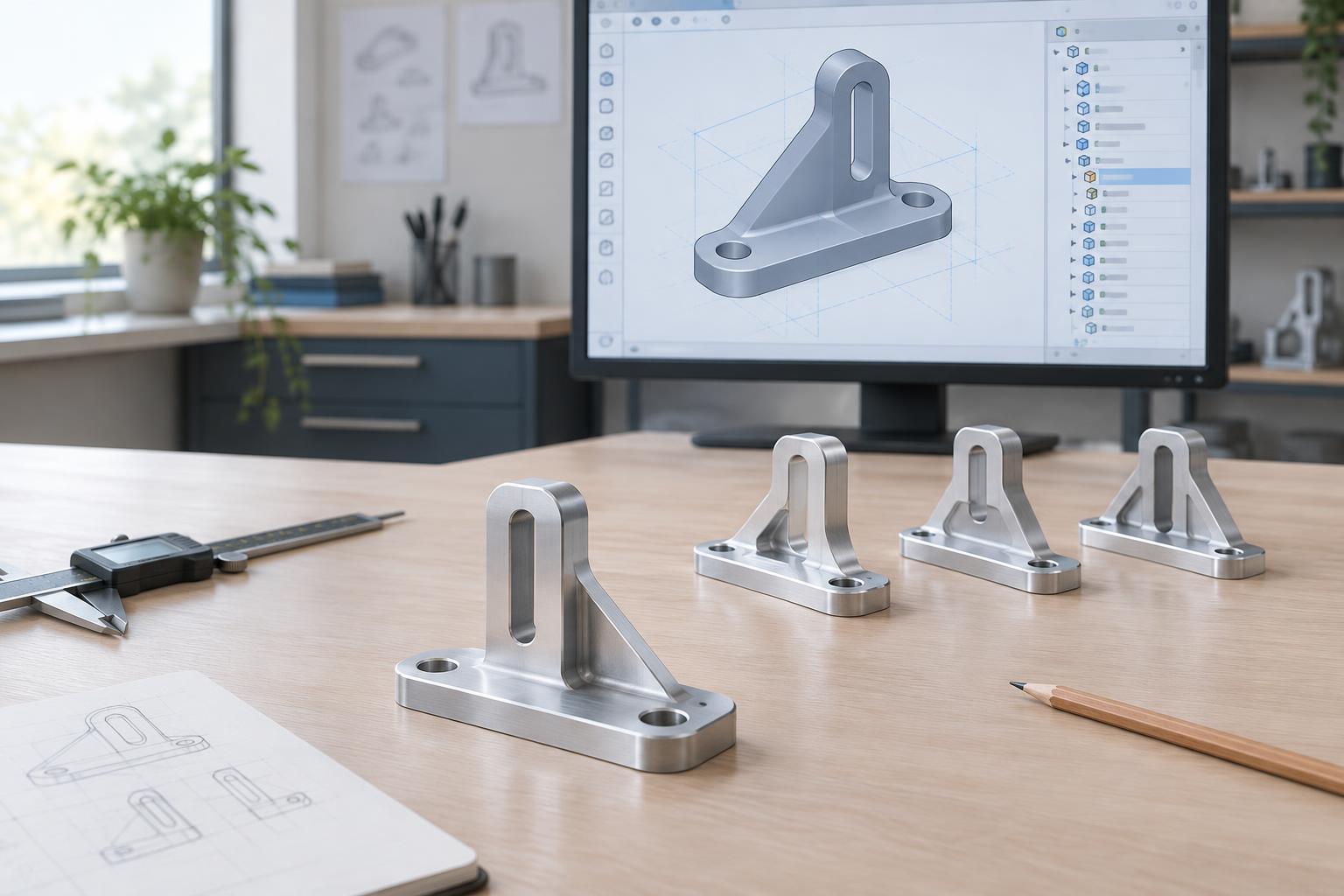
A fit prototype focuses on whether parts occupy the intended space and connect as expected. Typical questions include whether holes align, a cable has enough room to bend, or an enclosure can be assembled without blocking a fastener. For these checks, accurate dimensions at the relevant interfaces often matter more than cosmetic finish.
Identify the critical surfaces and clearances rather than assuming every dimension needs equal precision. A quick model may be adequate to discover a major collision, while a close-fitting clip or seal may require a more representative process and careful measurement. Prototype parts also have their own dimensional variation. If a printed component fits, that alone does not establish that parts made by a different production process will fit the same way.
Use functional prototypes to test behavior
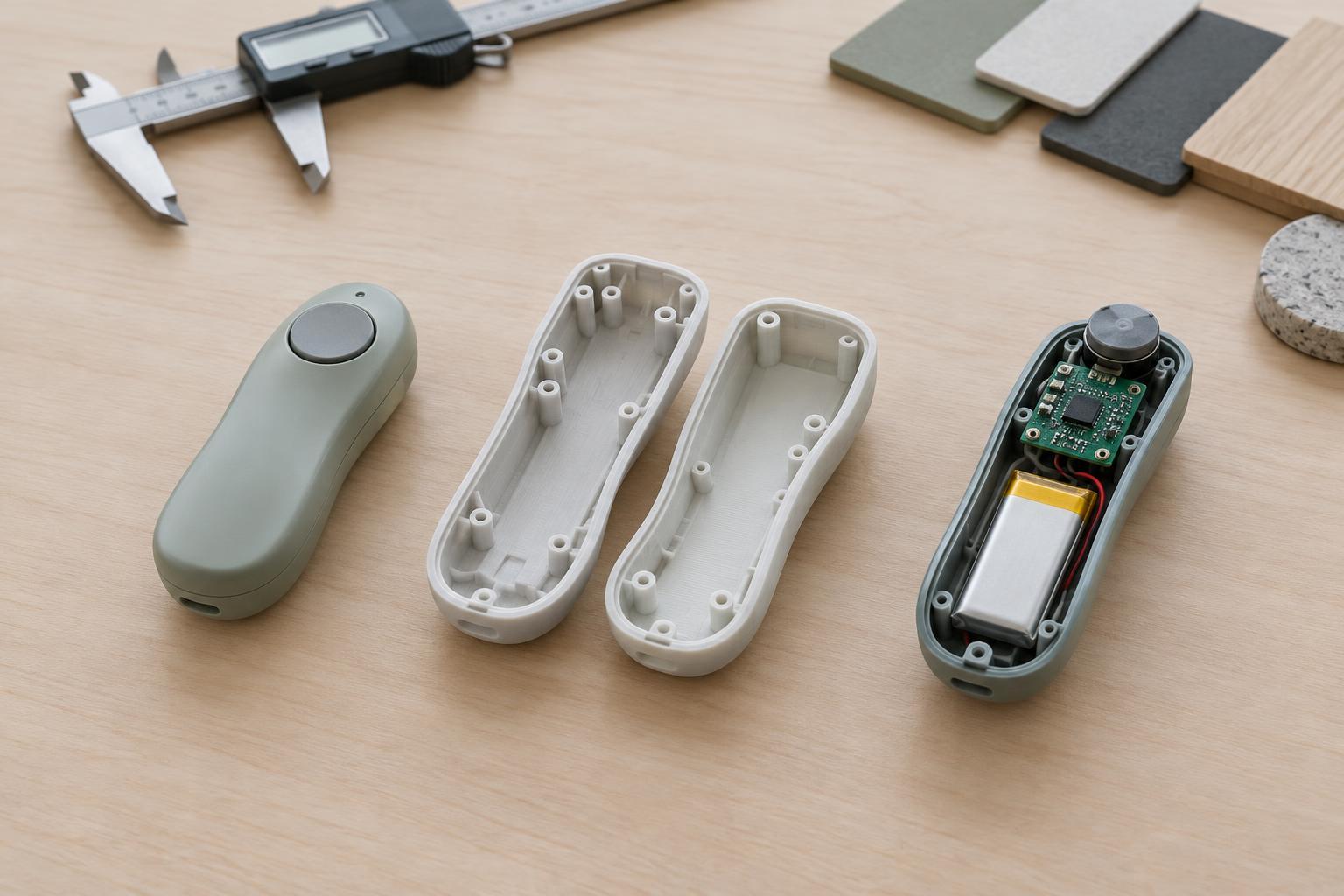
A functional prototype is built to investigate what a product does. It might test the force needed to press a button, how a hinge moves, whether an enclosure protects a mechanism, or how easily a component can be serviced. Sometimes the working mechanism is exposed or placed in a plain housing so it can be changed quickly. Looking finished is optional; producing useful observations is the priority.
Material and manufacturing method become especially important when they affect the behavior under test. A flexible printed hinge, for example, may not behave like a hinge made from the intended material. State what the prototype represents and what it does not. Record the test conditions and the result, including failures, so a later revision can be compared with it. A successful demonstration under one set of conditions is not proof of reliable performance in every setting.
Plan a sequence instead of asking one model to do everything
Appearance, fit and function often overlap, but combining them can make a prototype slower to build and harder to revise. A practical sequence might start with inexpensive shape studies, move to dimensionally focused assembly parts, and then test the most uncertain mechanisms. The order can change: if a mechanism is the greatest risk, test it before refining the exterior.
For each version, note the question, the features that must be representative, and the observations that would prompt a design change. Keep a list of known differences from the intended product, such as substitute materials or simplified joints. This makes feedback easier to interpret and helps prevent a convincing model from being mistaken for a validated design. The right prototype is not the most complete one; it is the simplest one that gives a trustworthy answer to the next important question.