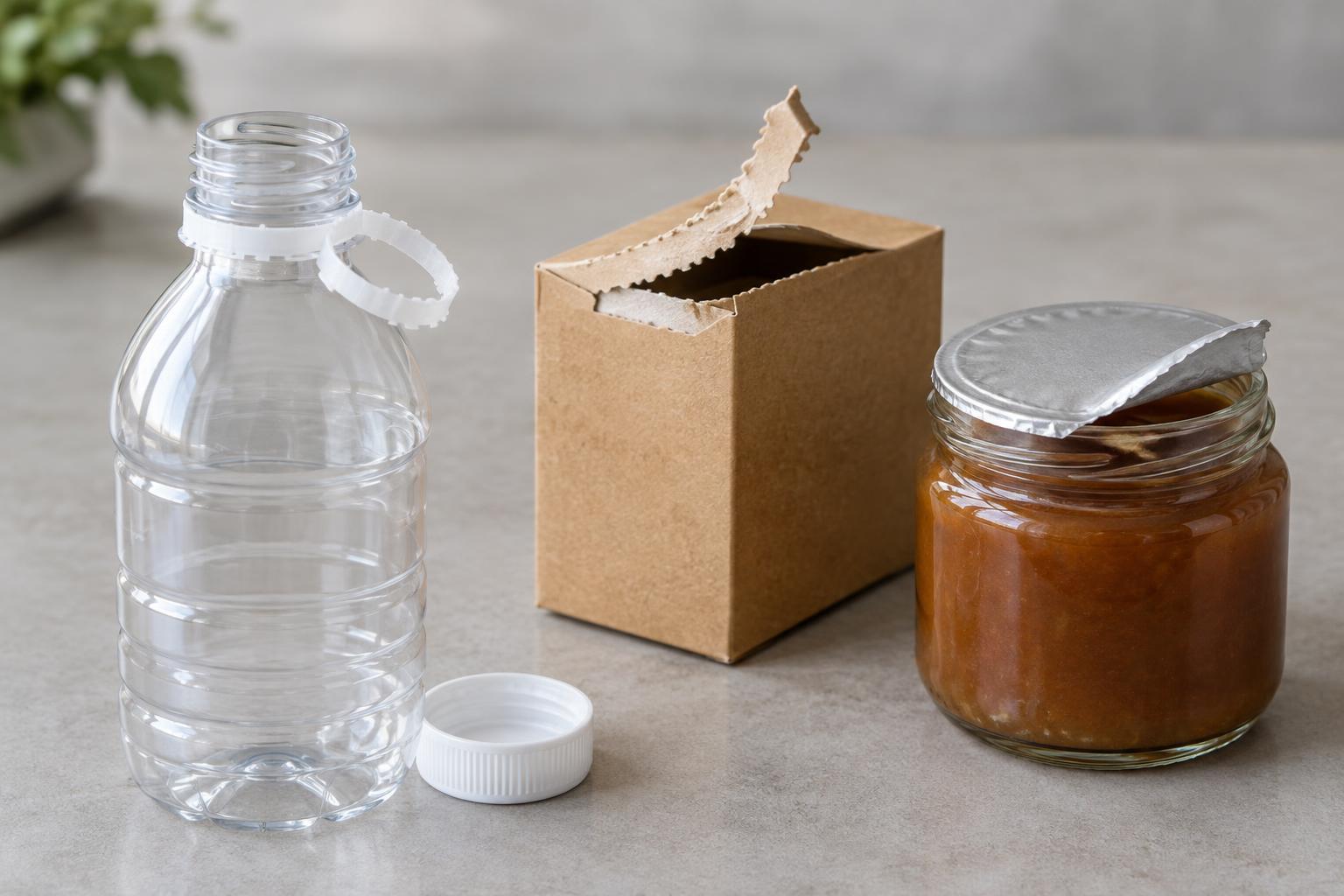
What a tamper-evident feature actually does
Tamper-evident packaging is designed to leave a visible sign when someone opens or disturbs a package. A cap ring that separates, a strip that tears or a seal that cannot be lifted cleanly gives the next person a reason to inspect the product before using it. The feature is an indicator, not a guarantee: it does not prove what happened to the contents, and an intact feature does not prove that every part of the package is secure.
That distinction matters during product development. A closure can be difficult to open without being tamper-evident, while an easy-to-open package can still show clearly that it has been opened. Teams should start by identifying which access point they want to reveal. Is the concern opening an outer carton, removing a lid, or reaching the contents through another part of the container? A seal over one opening cannot indicate interference through a different route.
Common methods and how they signal opening
Breakaway bands are familiar on bottles and jars. A ring attached to the cap by small bridges stays behind when the cap is first unscrewed. It is easy to understand at a glance, but its usefulness depends on the ring and bridges being visible and on the container offering no simpler route to the contents. Damage from rough handling can also make the indicator harder to interpret.
Inner seals, including heat-sealed films and induction-sealed liners, cover the mouth of a container beneath its cap. Removing or puncturing the material leaves a visible change. These seals can provide a second point of inspection after the cap is removed, although the user must know to look for one. Seal performance depends on the container rim, liner and sealing process working together; a poorly applied seal may lift for reasons unrelated to interference.
Shrink bands and sleeves wrap around a cap, neck or lid and must usually be torn or cut to open the package. Tear strips perform a similar role on some cartons and flexible packs. Adhesive labels or tapes placed across an opening may split, leave a pattern or show disturbed adhesive when lifted. These options can be useful where changing the main container is impractical, but placement and material choice are critical. A label that peels away cleanly, or a strip that can be bypassed, offers a weak signal.
Why visible evidence is not the same as security
No single indicator can account for every way a package might be handled. A conspicuous band may deter casual opening, yet it may not protect against access through a seam, base or flexible wall. Conversely, a seal may be strong but difficult for a buyer to recognize or inspect. Tamper evidence works best when the expected unopened condition is obvious and the feature sits directly across the relevant access point.
False alarms are another limit. Transport vibration, temperature changes, moisture, surface contamination and ordinary scuffing can affect some closures or labels. If packages regularly arrive with loose bands or damaged seals, people may stop treating those signs as meaningful. The goal is not simply to make opening leave a mark; it is to make normal packing, shipping and shelf handling unlikely to create the same mark.
Choosing a feature for the product and its journey
Selection begins with the container and filling process. A rigid bottle, folding carton and flexible pouch present different sealing surfaces and opening paths. The feature must fit the equipment that applies it and the materials it contacts. It should also allow the intended user to open the product without excessive force or confusing steps. A seal hidden under several layers may be technically effective but easily missed.
Consider the full journey from packing to first use. Packages may be stacked, rubbed against one another, exposed to varying conditions and handled by several people. A feature on the outside needs to survive that journey while remaining easy to inspect. Clear, restrained wording on the package can help users understand what an unopened feature should look like and what to do if it appears disturbed.
Testing for clear, consistent evidence
Before committing to a design, make sample packages using the intended materials and process. Open some as a user would, try other plausible access points, and compare the results with samples subjected to routine handling. Look for ambiguous outcomes: seals that sometimes detach without tearing, bands that break during packing, or labels whose residue is hard to see on a printed surface.
Production checks matter as much as the design itself. If application pressure, heat, alignment or container dimensions vary, the resulting evidence may vary too. A useful tamper-evident system combines a recognizable feature, consistent application and an opening signal that remains distinct from ordinary wear. It helps a person notice a problem; it should never be treated as a substitute for sound packaging design and handling.