Start with the job the seal must do
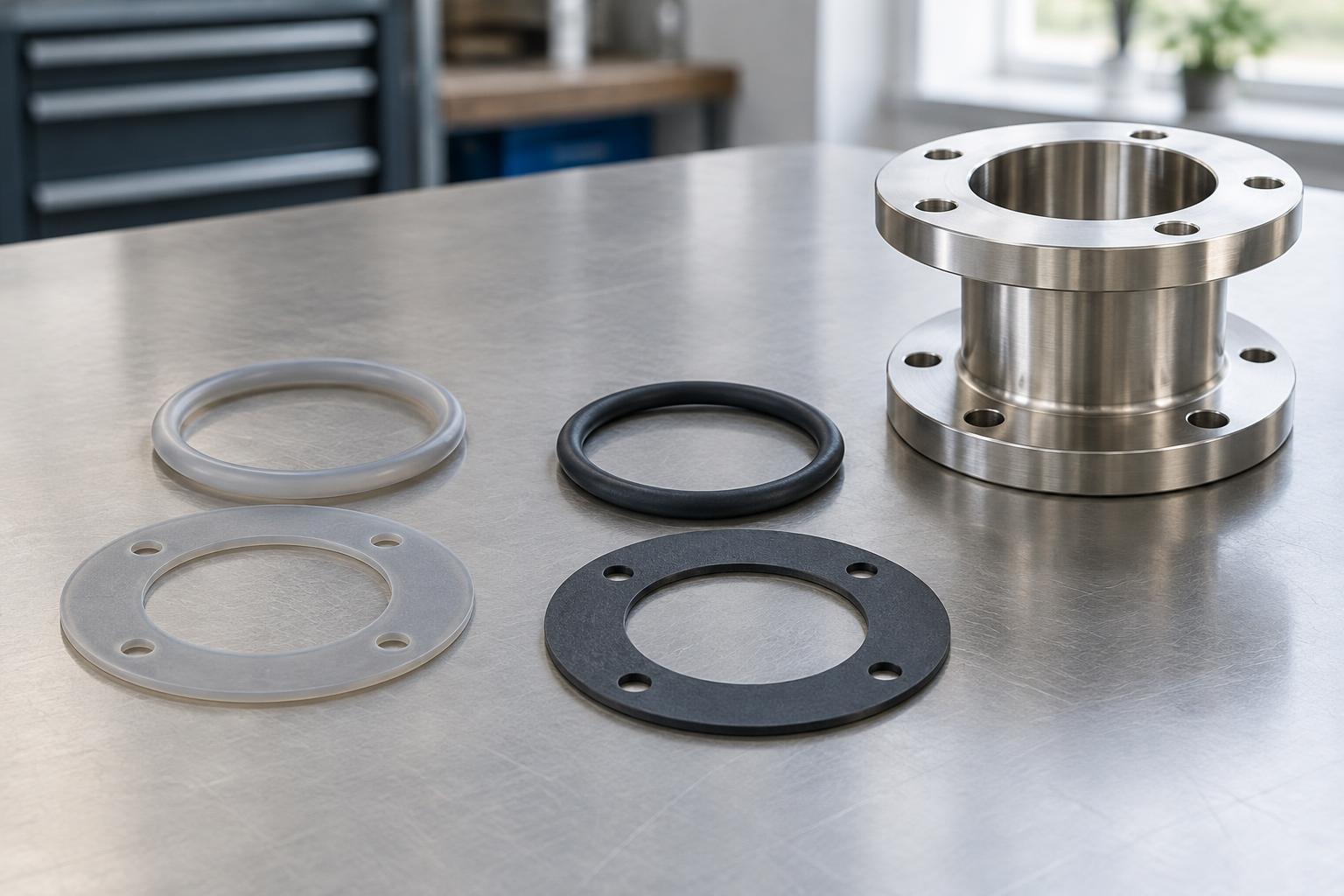
A gasket prevents material from passing between two surfaces; a seal may also work around a moving part. Either one succeeds only if it maintains contact under the conditions it actually encounters. Before comparing rubber names, describe the joint: What is being contained or excluded? How hot or cold does it get? Is the seal compressed once and left in place, or repeatedly assembled, flexed or rubbed?
Silicone and EPDM are families of elastomers, not single materials with fixed properties. Their formulations, hardness and curing methods vary. A useful first pass is to compare their general strengths, then evaluate candidate grades against the drawing and service conditions. Neither material is a universal substitute for the other.
Where silicone tends to fit
Silicone rubber is often considered when a seal must remain flexible across a wide temperature range, especially where elevated heat or cold makes other elastomers less convenient. It also offers good resistance to outdoor weathering and ozone. These traits can make it useful for static enclosure gaskets, lighting assemblies and equipment exposed to changing temperatures.
Its limitations matter just as much. Many standard silicone grades have relatively modest tear and abrasion resistance, so a thin gasket can be damaged during installation or a seal may wear in a sliding joint. Silicone also allows some gases to pass through it more readily than other elastomers; a soft, well-fitting silicone gasket should not automatically be treated as a gas barrier. Compatibility with oils, fuels, solvents and cleaning chemicals depends on the formulation and exposure, and should be checked rather than assumed.
Silicone parts may be molded, extruded or cut from sheet, depending on their shape and production volume. Its material and processing costs may be higher than EPDM’s for a comparable part, but the meaningful comparison is the cost of a seal that lasts and can be assembled reliably.
Where EPDM tends to fit
EPDM, short for ethylene propylene diene monomer, is a common choice for seals exposed to water and outdoor conditions. It generally resists ozone and weathering well, and suitable grades can perform in hot-water or steam applications. Door seals, weatherstripping and water-system gaskets are examples of uses where its properties may align with the job.
A major screening question is whether the seal will contact petroleum-based oils, fuels or similar hydrocarbons. Conventional EPDM is generally a poor choice for those fluids because swelling and loss of sealing performance may result. EPDM is not automatically compatible with every coolant, cleaner or additive, either. Temperature limits also depend on the compound and on whether exposure is continuous or brief.
EPDM can be supplied in a range of hardnesses and made into molded, extruded or sheet gaskets. That flexibility makes it practical for many shapes, but a familiar material name does not guarantee a particular fit, surface finish or resistance to permanent deformation.
Compare the joint, not just the datasheets
A material can resist the surrounding environment yet still make a poor seal if the joint is badly designed. Check the gap, surface finish, fastening method and expected amount of compression. Too little compression may leave a leak path; too much can damage the part or increase how much it stays flattened after release. Compression set describes that tendency to retain deformation, but test results depend on time, temperature and test conditions.
Consider what happens during assembly and maintenance. Will a gasket be stretched over a flange, pinched by a cover or removed repeatedly? Will an O-ring see motion? A design that risks cutting or rubbing the seal deserves a closer look at tear and abrasion performance, not just temperature ratings. Dimensional tolerances also matter: even a suitable rubber cannot compensate for every variation in the mating parts.
For either material, compare data for the proposed grade under conditions that resemble service. Fluid exposure, hardness, compression set and aging results are more informative when their test temperatures and durations are known. If a seal is critical, testing a sample in the intended joint can reveal problems that a generic material comparison misses.
Make a defensible selection
As a starting point, silicone is worth investigating for a mostly static seal facing demanding temperature swings. EPDM is worth investigating for a water-facing or outdoor seal when petroleum oils and fuels are absent. Those are screening rules, not final specifications: either choice can fail if the particular compound, geometry or assembly method is wrong.
Write a short requirement list before requesting samples or quotations. Include the contacting fluids, operating and short-term temperatures, exposure duration, movement, target service life, dimensions and assembly method. If the application calls for a particular regulatory or industry approval, identify it explicitly and verify that the specific grade and finished part meet the requirement. A clear description of the job makes it easier to choose between silicone and EPDM—and to recognize when neither is the right material.