Why wood packaging has its own standard
A product may be ready to cross a border while the pallet beneath it is not. Solid wood can carry insects or other pests in or under the wood, even when it is being used only to support a shipment. International Standard for Phytosanitary Measures No. 15, usually called ISPM 15, sets out a way to reduce that risk for wood packaging material moving in international trade.
The standard concerns the packaging, not the goods packed inside it. It covers items such as solid-wood pallets, crates, boxes, packing blocks and dunnage used to brace cargo. Its core approach is to require approved treatment and an official mark that lets inspectors identify compliant packaging. ISPM 15 does not make a shipment immune from inspection, and destination countries may have additional entry requirements.
Which materials are covered?
The distinction is how the packaging is made. Ordinary solid-wood components generally fall within ISPM 15, including wooden runners or braces added around a load. A small unmarked block can create a problem even if the main pallet carries a valid mark, so it is worth considering every piece of wood used to support or secure the goods.
Packaging made wholly from processed wood, such as plywood, particle board or oriented strand board, is generally outside the standard when its manufacture uses glue, heat or pressure in a way that addresses pest risk. Wood that is 6 mm thick or less is also excluded. These exceptions should not be assumed for a mixed-material crate: any solid-wood members may still need to comply. The rules for a wood product being shipped as merchandise are a separate question from the rules for wood used as its packaging.
Treatment and the ISPM 15 mark
Covered wood must undergo a treatment recognized by the standard. Heat treatment is a common route: one specified schedule requires the wood to reach 56°C throughout its profile, including the core, for at least 30 continuous minutes. The standard also provides for other approved treatment methods with their own conditions. Simply drying wood, painting it or calling it “heat treated” is not enough to establish compliance.
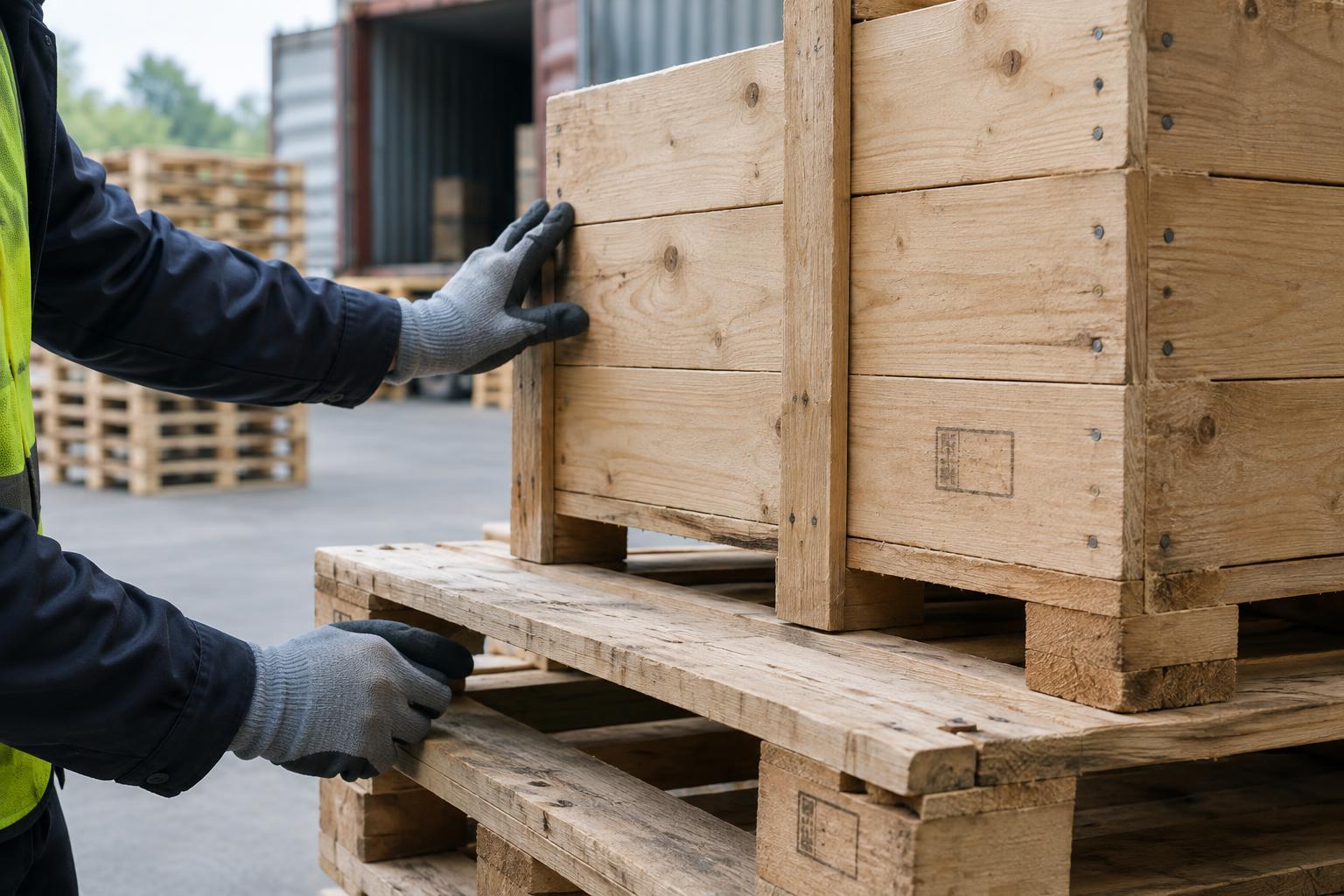
Compliant packaging is identified by a prescribed mark applied under a national authorization system. It includes the IPPC symbol, a two-letter country code, an identifier for the producer or treatment provider, and a treatment code, such as HT for conventional heat treatment. The mark should be legible and durable. It serves as the recognized indication that the wood packaging has met ISPM 15 requirements; a supplier’s informal statement is not a substitute for an authorized mark.
Debarking is also part of the standard’s requirements, although it does not necessarily mean that every trace of bark must be absent. Treatment and marking address pest risk; they do not replace sensible checks for visible infestation, damage or packaging that is unsuitable for the load.
What changes when a pallet is reused or repaired?
A compliant pallet can be reused if it remains suitable and has not been altered in a way that affects compliance. Repairs deserve closer attention. Replacing a broken board with an unmarked piece of solid wood can leave a pallet with a compliant-looking mark but a component whose status cannot be established. Repairers need to follow the applicable ISPM 15 rules for replacement wood and marking.
More extensive rebuilding can make old marks misleading. Where packaging is remanufactured rather than simply reused or repaired, the standard calls for previous marks to be removed or obliterated and the packaging to be treated and marked again. For a shipper, the practical lesson is to ask how repaired pallets are controlled rather than relying only on a mark visible on one original board.
A practical check before dispatch
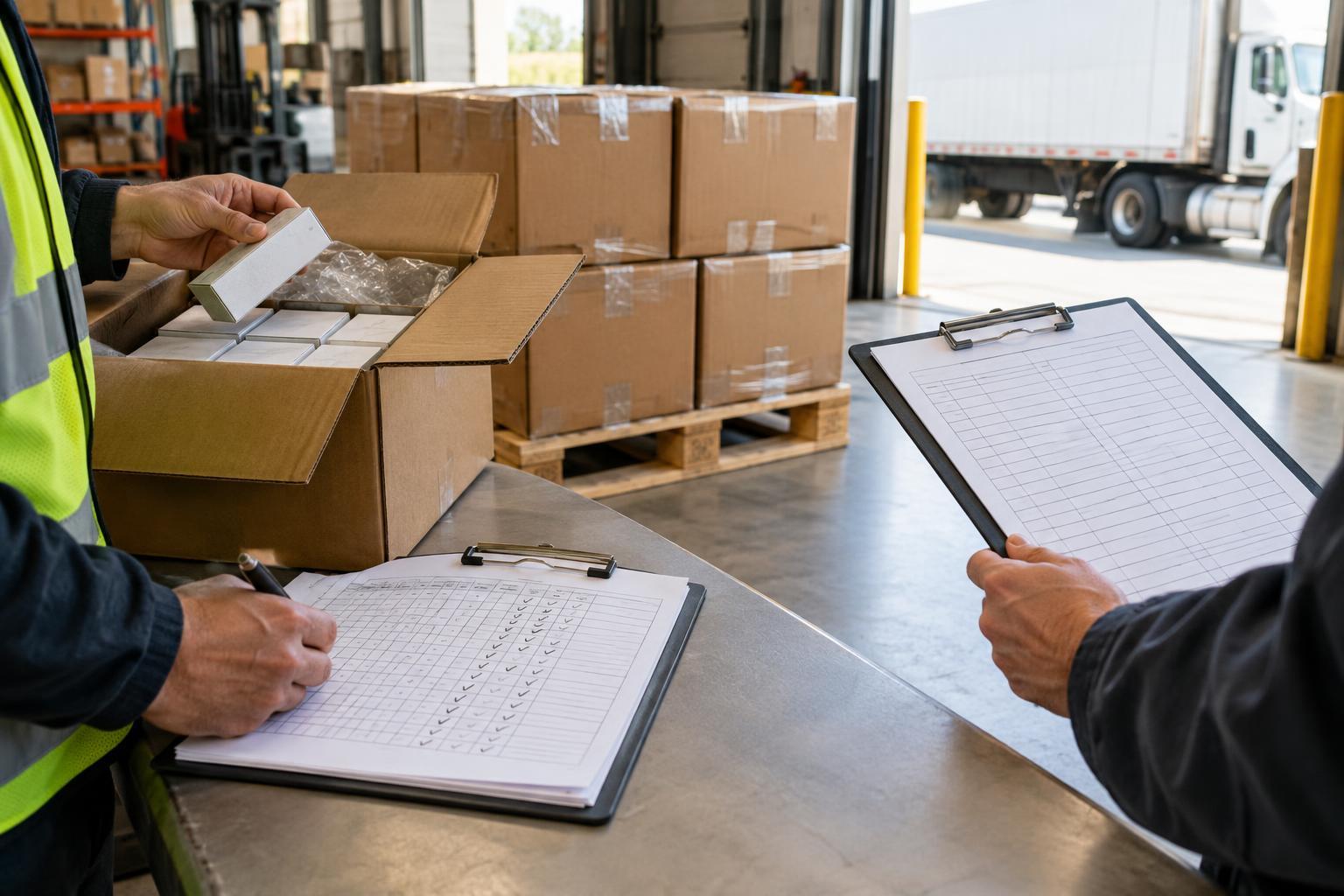
Start by listing the packaging that will travel with the goods, including loose dunnage and last-minute bracing. Identify any solid-wood parts, then obtain suitable packaging from a supplier operating within an authorized ISPM 15 program. Before loading, check that marks are readable and that added wood has not been overlooked. If pallets have been repaired, confirm how the replacement components were handled.
Finally, check the destination’s import requirements with the carrier, importer or appropriate authority before shipping. ISPM 15 provides a common framework, but the way shipments are checked and any additional requirements can vary by destination. Building these checks into packing and purchasing is usually simpler than trying to replace a pallet after cargo has been loaded.