The basic distinction is composition
Brass and bronze are families of copper alloys, not single materials with fixed properties. Brass is primarily copper alloyed with zinc. Traditional bronze is primarily copper alloyed with tin, though the bronze family also includes alloys made with elements such as aluminum or silicon. Other elements may be added in small amounts to change how an alloy casts, machines, wears or resists corrosion.
That family distinction is a useful starting point, but it cannot tell you exactly how a finished part will perform. The proportions of the elements matter, as do the way the metal is formed and any subsequent processing. If a design depends on a particular strength, finish or service life, the alloy grade and manufacturing specification are more useful than a label that says only “brass” or “bronze.”
Color and surface finish offer clues, not proof
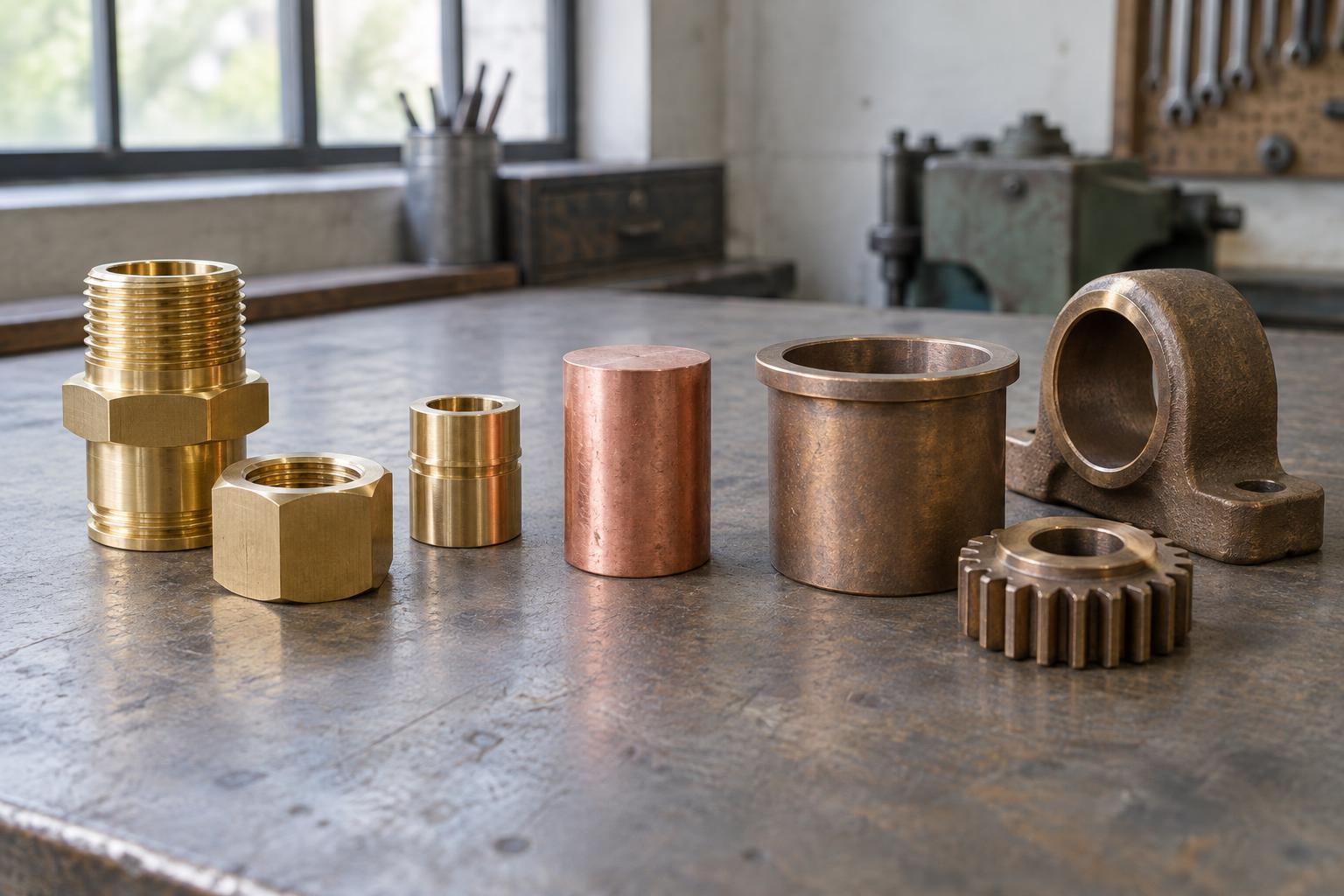
Brass is often associated with a bright yellow or golden appearance. Bronze is commonly described as reddish brown or darker gold. Those descriptions can help when comparing familiar examples, but copper alloy colors overlap. Composition, polishing, coatings, oxidation and lighting can all change what a part looks like. A photograph or an aged surface is therefore a poor way to identify an alloy confidently.
Both materials can develop a patina as their surfaces react with their surroundings. Some products are allowed to age visibly; others receive a protective finish to preserve a chosen appearance or make cleaning easier. A coating can change the maintenance needs of a part without changing the metal underneath. For a product where appearance matters, it helps to specify both the alloy and the intended surface treatment, then review a sample finished by the proposed process.
Their useful properties depend on the grade
Many brasses are selected because they can be formed or machined into fittings, hardware and decorative parts. Some grades are particularly convenient for cutting precise features, while others are better suited to bending or drawing. Bronze alloys are often considered for cast components, bearings and other parts where wear behavior or corrosion resistance may be important. These are common tendencies, not promises that every brass is easy to machine or every bronze is suitable for a bearing.
The environment can also change the comparison. In certain conditions, some brasses are vulnerable to dezincification: zinc is preferentially removed, leaving a weakened, copper-rich structure. Other brass grades are designed with that risk in mind. Bronze is not immune to corrosion, and the suitability of any copper alloy depends on the specific exposure, the part’s geometry and its intended lifetime. For a demanding application, the relevant question is how a particular grade performs under the expected conditions, rather than which family sounds more durable.
Manufacturing choices shape the finished part
A designer may encounter brass as sheet, rod or tube for processes such as stamping, bending, machining and joining. Bronze is often associated with casting, but bronze grades are also available in forms suitable for other processes. Either family may offer several routes to a similar-looking component. The practical choice depends on the shape, production volume, required tolerances and available finishing methods.
Processing affects more than cost. A cast surface may need machining where parts must fit closely; a formed part may need allowances for bend behavior. Joining and finishing plans also deserve attention because an attractive sample is not necessarily easy to reproduce consistently. Early conversations with a supplier should cover the proposed alloy grade, stock form, production process and any properties that must be checked on finished parts.
How to choose between brass and bronze
Start with the job the component must do. Is its main purpose visual, structural, electrical or related to movement and wear? Will it be handled frequently, exposed to moisture or expected to keep a consistent finish? Then identify the process likely to produce its shape. These questions narrow the field more effectively than asking whether brass or bronze is “better” in general.
Finally, compare candidate grades against requirements you can describe or test: dimensions, appearance, surface finish, expected exposure and any relevant wear or strength needs. Ask for the actual alloy designation rather than accepting a broad family name, especially when ordering replacement parts or comparing suppliers. Brass and bronze are both versatile choices; understanding their compositions and specifying the details turns a familiar material label into a workable product decision.