Why speed up a life test?
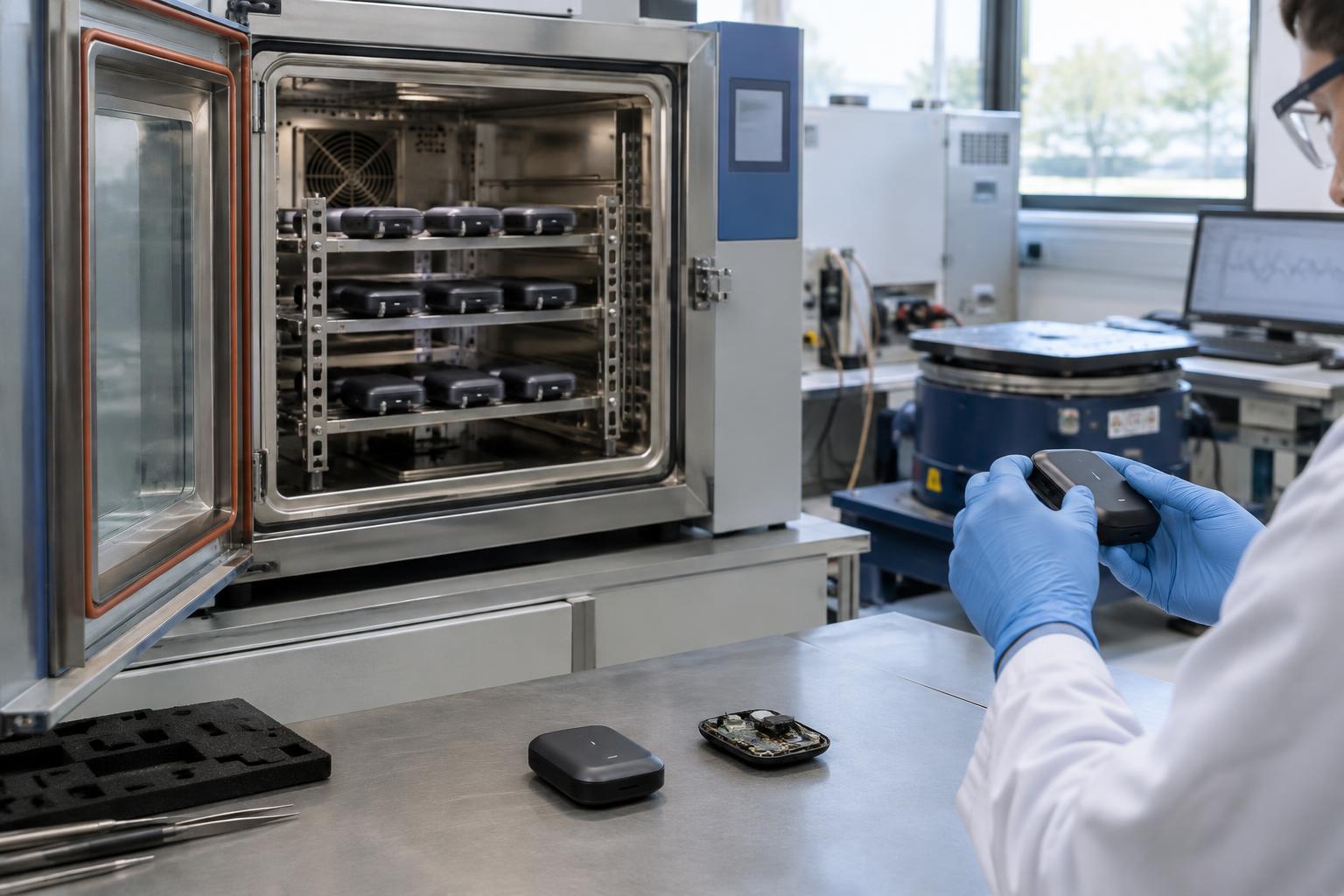
A product may be expected to work for years, while a development team has only weeks or months to evaluate it. Accelerated life testing addresses that mismatch by exposing samples to conditions intended to make relevant failures appear sooner. A manufacturer might raise temperature to study the aging of an electronic component, increase the frequency of a mechanical cycle, or run a seal under repeated pressure changes.
The aim is not simply to break things quickly. A useful test speeds up the same degradation that could occur during normal use. If a plastic part gradually becomes brittle in service, a test that produces the same kind of brittleness may offer useful evidence. If the test instead melts the part, it has revealed a limit, but not necessarily its expected life in ordinary conditions.
How an accelerated test is built
The starting point is a clear question: which product, use conditions and failure count as the subject of the test? A team might want to estimate how long a connector maintains acceptable contact resistance, or compare two hinge materials for wear. It then chooses measurable stresses that plausibly affect that failure. Temperature, humidity, load, vibration and operating frequency are common examples, but the right choice depends on the product.
Test planners also define a failure criterion before examining results. A hinge might fail when it can no longer support a specified load, rather than only when it snaps. Samples are tested at one or more stress levels, with observations recorded over time or over a number of cycles. Including a less severe condition can help the team check whether the failures seen at high stress resemble those expected in service.
To translate test results into an estimate for ordinary conditions, the team needs a model relating stress to the rate of damage. Some models describe temperature-sensitive chemical processes; others address fatigue from repeated loading. The model is an assumption to examine, not a universal conversion factor. Increasing stress does not always make life shorter in a predictable way.
What the results can tell you
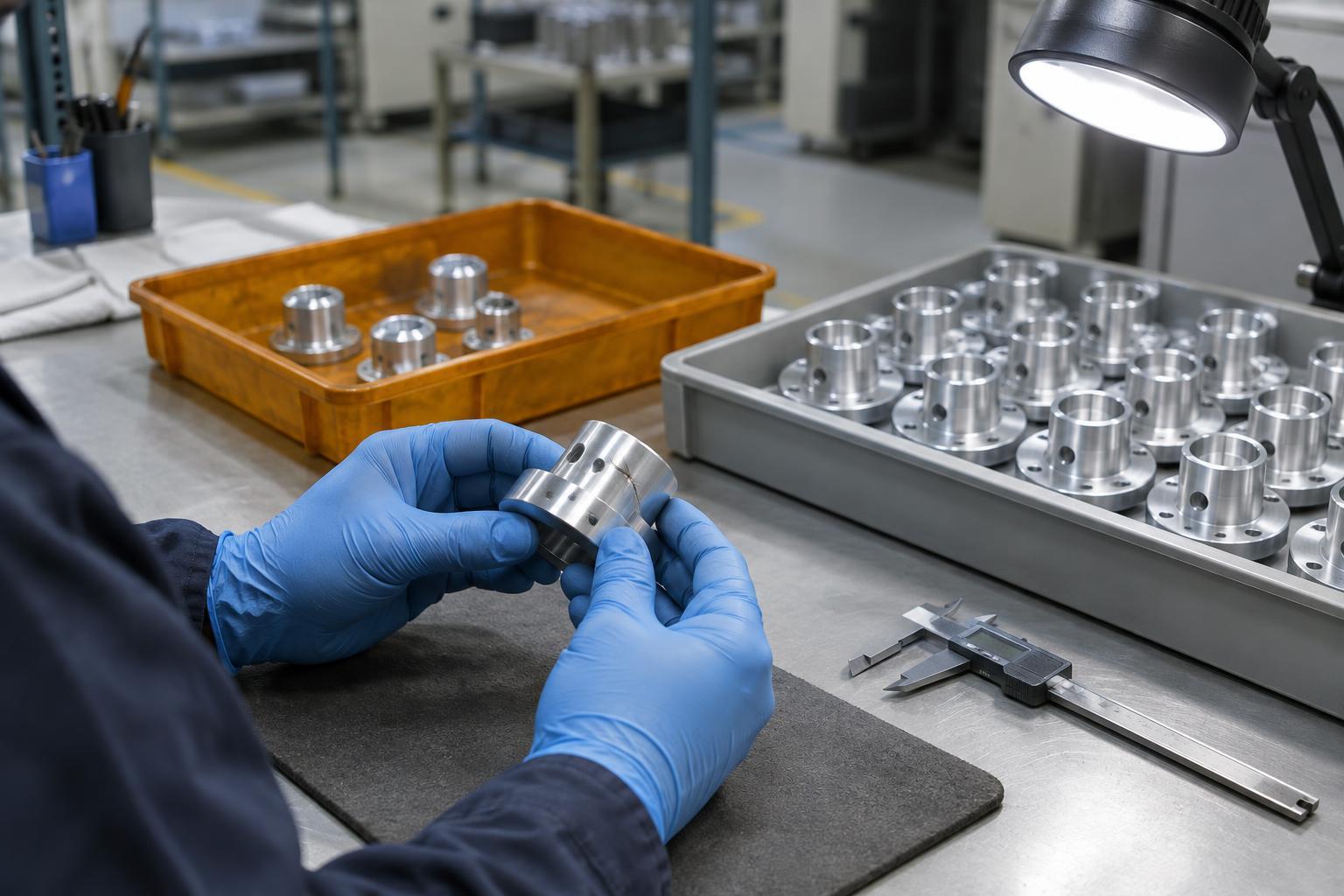
Well-designed accelerated testing can reveal weak points while there is still time to change a design. It can show whether a revised adhesive lasts longer than an earlier version under the same test conditions, or whether a particular assembly step is associated with premature failures. Examining failed samples matters as much as counting them: the location and physical character of damage help establish whether the test is exercising the intended failure mechanism.
Results may also support a life estimate for a defined set of operating conditions. Such an estimate is conditional on the samples representing production, the use conditions being reasonably described, and the chosen model fitting the relevant failure process. A report should make those conditions visible. It is more informative to state what was tested and how failures were defined than to offer a single life figure without context.
Samples that have not failed by the end of a test still provide information, but they do not prove unlimited life. The number of samples, variation between them and the duration of the test all affect how strongly the result supports a conclusion. A comparison that appears clear with a few samples may become less certain when normal manufacturing variation is considered.
What acceleration cannot settle
Severe conditions can create failures that would be unlikely in normal use. Excess heat might soften a housing before its intended wear mechanism becomes visible; an unusually rapid cycle might prevent a component from cooling between operations. When the dominant failure mechanism changes, extrapolating back to everyday use can be misleading. Testing at several stress levels and comparing failed parts can help identify this problem, though neither step removes every uncertainty.
A test also covers only the stresses it includes. It may miss damage caused by cleaning products, storage conditions, shipping impacts or the ways people handle a product. Likewise, carefully made test samples may not capture variation introduced by suppliers or full-scale production. Accelerated life testing is therefore not a substitute for appropriate material checks, production controls and testing under realistic use conditions.
Most importantly, it cannot guarantee that an individual item will survive for a stated period. Reliability describes uncertainty across products and conditions. Even a sound estimate has boundaries, and those boundaries should be stated whenever the result guides a design or quality decision.
Using the evidence wisely
A practical approach is to pair accelerated testing with real-use trials, inspection of failed parts and a review of how products are made. When results disagree, investigate before treating either test as definitive. The question may be whether the accelerated stress was too severe, whether the real-use trial missed an important condition, or whether samples differed in an unnoticed way.
Accelerated life testing is most valuable as a way to learn sooner and make better-informed choices. Its strength lies in clearly defined failures, plausible test conditions and explanations that connect observed damage to actual use. Its limit is equally important: a faster test produces evidence, not certainty.