Start with the decision you need to make
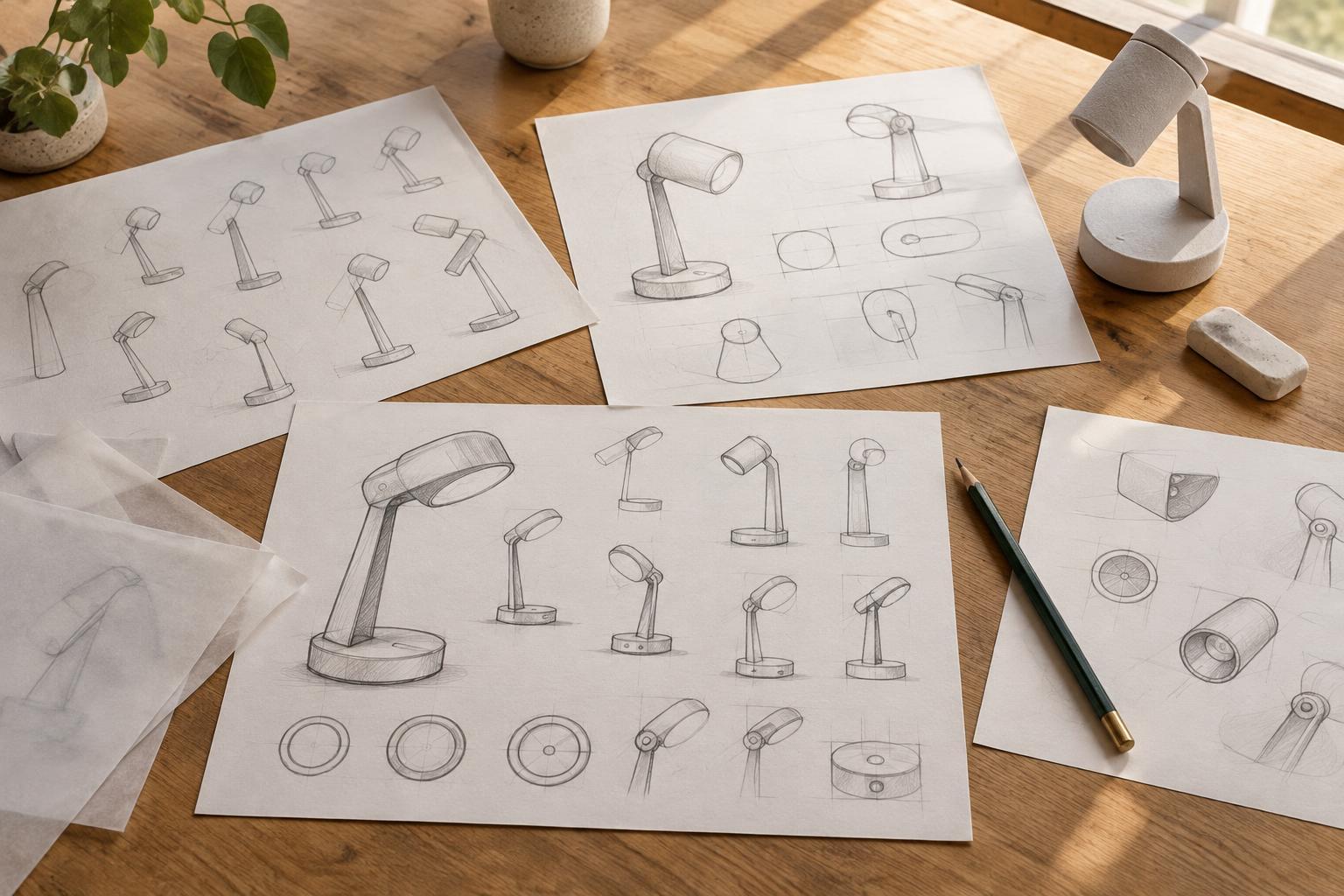
Early product concepts often have different strengths. One may be easier to assemble, while another is more comfortable to use. A decision matrix puts those trade-offs in one place. It lists the concepts across the top, the criteria down the side and a score for each pairing. The matrix does not discover the best design on its own; it makes the team's assumptions visible so they can be discussed and tested.
Before making the table, define the decision. Are you choosing one concept to develop, selecting two for prototyping or looking for features worth combining? Write down the intended user, the product's main job and any firm constraints, such as a required package size or an available production process. A concept that cannot meet a non-negotiable requirement should be revised or set aside before scoring. Otherwise, a high total in less important areas could disguise a basic problem.
Choose criteria that describe a good outcome
Use a short list of criteria that matter to this product and this stage of development. For a handheld household product, these might include ease of use, durability, ease of cleaning, assembly complexity, material suitability and packaging efficiency. Define each criterion in observable terms. “Easy to assemble” could mean few assembly steps and straightforward access for tools; “durable” could mean that the concept avoids thin, exposed features likely to break in normal use.
Keep separate criteria from counting the same benefit twice. For example, part count and assembly time may be closely related. You can still include both if they capture distinct concerns, but explain the distinction. Invite people who understand design, production, quality and packaging to review the list. Their input can reveal requirements that a sketch alone does not show.
Set weights and a consistent scoring scale
Weights express how much each criterion matters for this decision. A simple method is to assign percentages that add to 100. If ease of use is central to the product, it might receive more weight than packaging efficiency. Agree on weights before scoring concepts; changing them afterward just to favor a preferred idea undermines the comparison. Record why each weight was chosen so the team can revisit it when requirements change.
Next, define a scale, such as 1 to 5, where 1 means poor support for the criterion, 3 means acceptable and 5 means strong support. Add a brief description of what those levels mean for each criterion. A score should reflect the evidence available, not how polished a rendering looks. Where evidence is thin, mark the score as provisional and note what would help confirm it, such as a handling mock-up or an assembly trial.
Score concepts and inspect the trade-offs
Score each concept against the same definitions. Multiply each score by its criterion weight, then add the weighted scores for a total. For example, if ease of use has a weight of 40% and a concept scores 4 out of 5, it contributes 1.6 points to a total out of 5. Showing the individual scores alongside the total is essential: two concepts can have similar totals for very different reasons.
Discuss large gaps and surprising scores rather than accepting every number immediately. A concept may score well for ease of use but poorly for assembly because its shape requires several parts. Another may be simple to produce but uncomfortable to hold. Record the reason for each score in a few words. This turns the matrix into a record of design reasoning and makes disagreements easier to resolve than a conversation about which concept simply “feels better.”
Use the result to plan the next test
A close result is useful information, not a failure of the method. Check whether small, reasonable changes to the weights reverse the ranking. If they do, the team may need to clarify its priorities. Also look for low scores on critical criteria even when a concept's total is high. The matrix summarizes trade-offs; it should not override a known safety concern, an unmet requirement or an issue that needs specialist review.
Finally, connect uncertain scores to specific next steps. Build a simple mock-up to compare grip comfort, try an assembly sequence with sample parts or review how each concept fits its proposed package. Update the matrix as evidence improves, keeping earlier assumptions visible. The most valuable outcome is not necessarily a winning number. It is a clearer explanation of what each concept offers, what remains unknown and which design work should happen next.