Start with the load, not the pattern
A pallet pattern is the arrangement of packages within each layer and the relationship between one layer and the next. Its job is to make a load that fits the pallet, supports the goods and remains manageable during storage and transport. The pattern with the fewest gaps is not automatically the best: a densely packed load can still lean, crush its lower cartons or shift when a forklift turns.
Before drawing a layout, note the pallet’s usable dimensions and condition, the carton’s outside dimensions, weight and orientation requirements, and the equipment that will handle the load. Find out whether cartons may be turned onto another face, whether their contents tolerate pressure and whether the load will be stacked beneath another pallet. These constraints narrow the available patterns before space efficiency enters the discussion.
Column stacking and interlocking layers
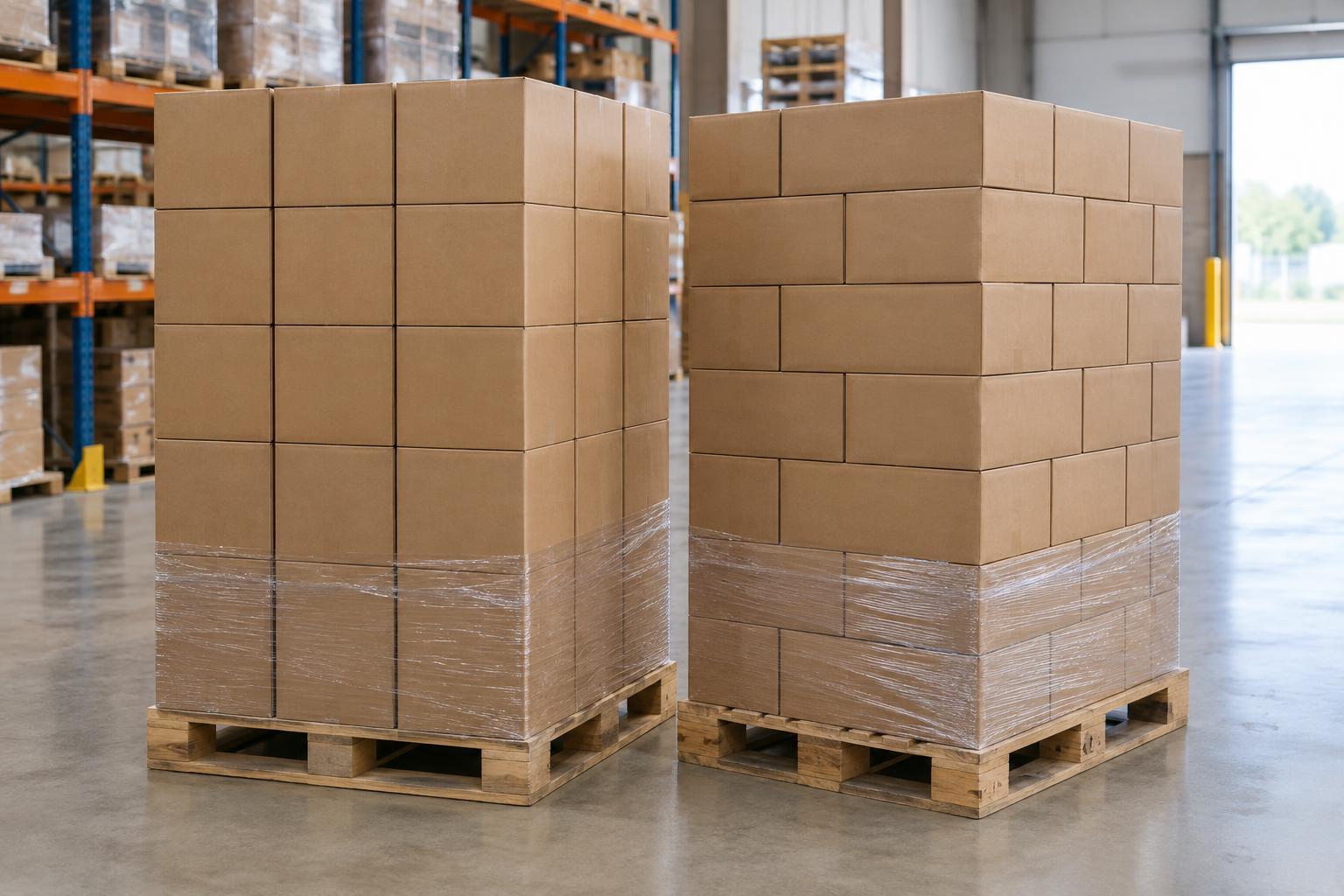
In a column pattern, cartons sit directly above matching cartons in the layer below. Their corners and vertical edges line up, creating relatively direct paths for weight to travel through the stack. This can be useful when cartons depend on those edges for compression strength. The drawback is that separate columns may move independently if the load is not adequately contained.
An interlocking pattern changes the carton orientation or position between layers so that cartons bridge joints below them. This ties parts of the load together and may reduce the tendency of individual columns to separate. It can also place weight across a carton panel rather than over its strongest edges. For a heavy or compression-sensitive load, that trade-off deserves attention rather than an assumption that interlocking is always safer.
The two approaches are not mutually exclusive. A load may use mostly aligned layers with a strategically placed interlocking layer, or a repeated pattern that changes direction while preserving support under the heavier cartons. The choice depends on the package, not just the appearance of the finished pallet.
Use pallet area without creating weak spots
Sketch each possible layer using the carton’s actual outside dimensions, including any expected variation from bulging or closure seams. Compare how many cartons fit, where gaps occur and whether the arrangement is balanced around the pallet. Small, distributed gaps are generally easier to manage than one large unsupported space in the middle of a layer. Avoid forcing cartons into a layout that bends them or prevents them from sitting flat.
Keep the load within the pallet footprint unless the handling plan explicitly allows otherwise. Overhanging cartons are more exposed to impacts and may lose support under their edges. A pattern that leaves some pallet surface visible can be preferable to one that gains an extra carton by creating overhang. Likewise, a higher stack uses vertical space but raises the center of gravity and increases the weight carried by lower packages.
For mixed carton sizes, build a level, well-supported base with heavier and sturdier packages low in the load. Avoid placing a small carton beneath the unsupported span of a larger one. If the layer heights differ, a flat divider may help distribute contact, but it cannot make a weak carton strong. Odd-sized items sometimes warrant a separate pallet rather than an awkward compromise that destabilizes every layer.
Containment is part of the design
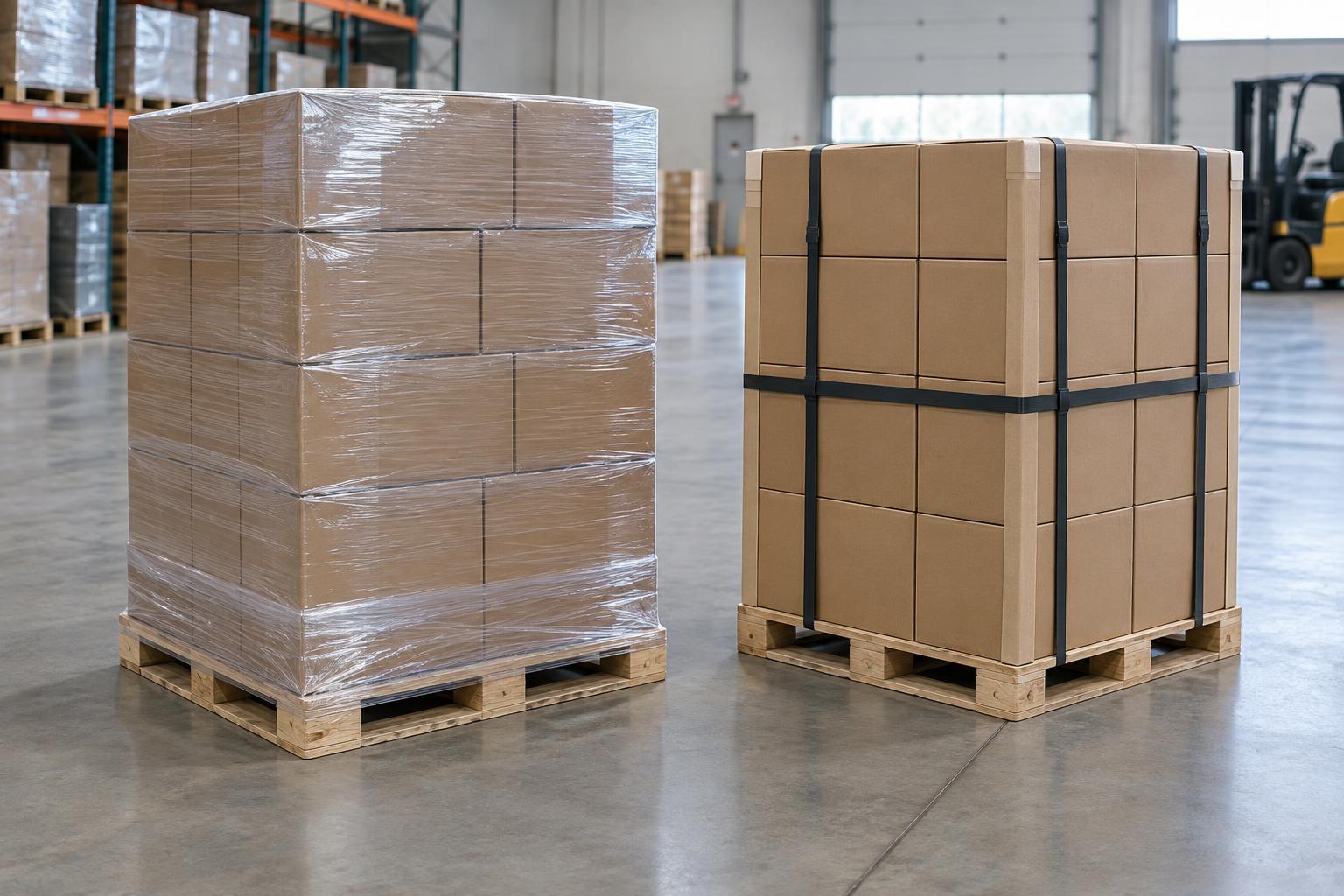
A good stacking pattern reduces movement, but it does not replace load containment. Stretch film, straps, corner protection or other measures may be appropriate depending on the goods and handling conditions. The aim is to keep cartons together and connected to the pallet without deforming their packaging. Applying more film cannot reliably correct a badly supported stack.
Think through the full route: loading, forklift travel, warehouse storage, vehicle movement and unloading. Acceleration, braking, vibration and repeated handling can reveal weaknesses that are not visible on a stationary pallet. A load that looks square at the packing station may change shape if cartons settle into gaps or if the bottom layer cannot carry the layers above it.
Check the pattern before standardizing it
Build a representative pallet and inspect it from all sides. Check that cartons sit flat, edges are supported, the load is centered and no package protrudes beyond the intended footprint. Confirm that the completed height and weight suit the pallet, handling equipment and storage arrangement. If practical, observe the load after normal internal movement and check for leaning, crushed corners, loosened containment or shifted cartons.
Record a simple layer diagram and the permitted carton orientation so the pattern can be repeated consistently. Revisit it when carton dimensions, board construction, pack weight or the transport route changes. The most useful pallet pattern is not merely the one that fits the most units; it is the one that uses space efficiently while keeping those units supported and manageable throughout the journey.