Start with what the product needs
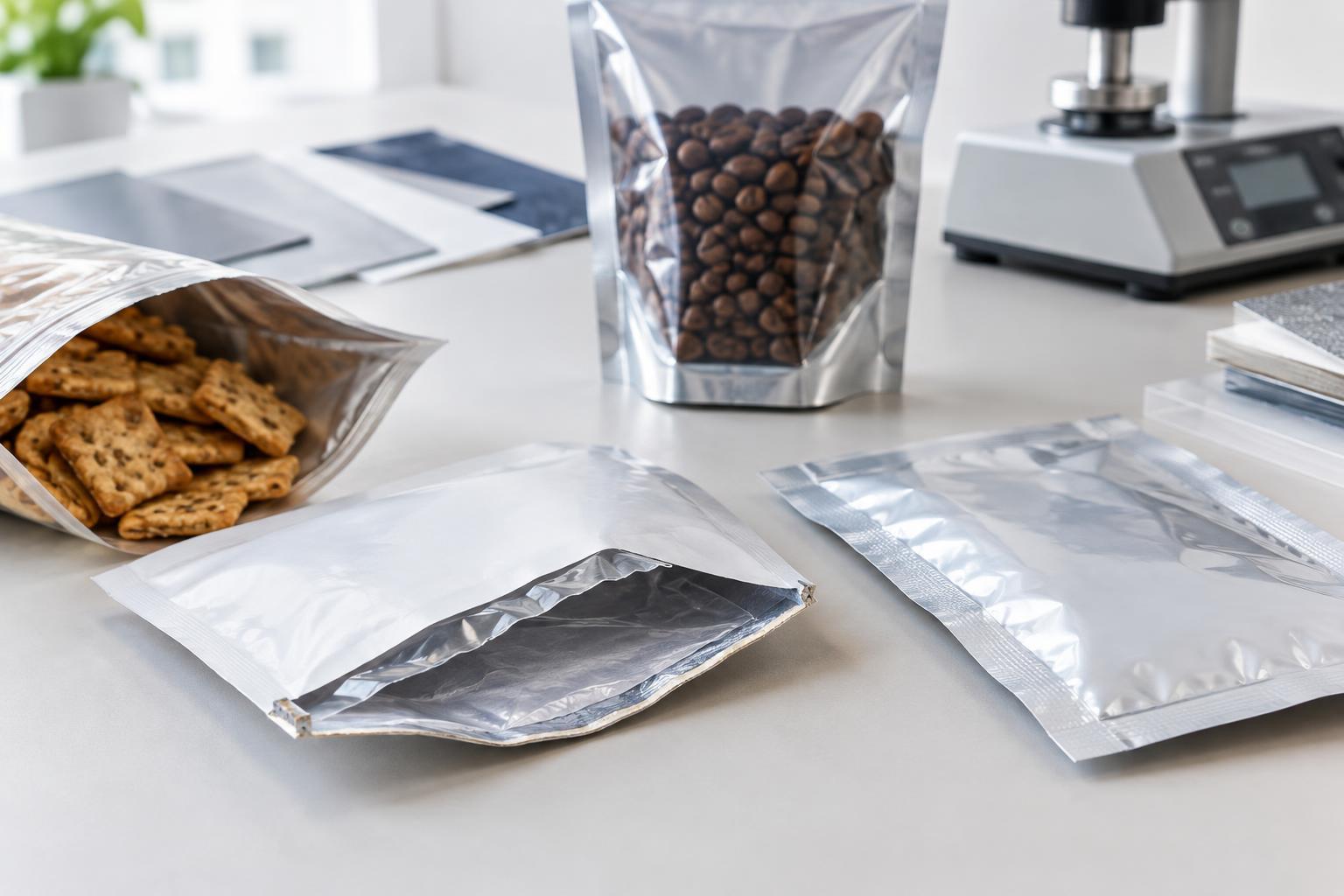
Flexible packaging ranges from a simple plastic pouch to a laminate made from several thin layers. Choosing between them starts with the product, not the film. A crisp snack may need protection from incoming moisture, while a moist product may need to limit water loss. Oils and other oxygen-sensitive ingredients may benefit from a package that slows oxygen entry. The acceptable level of exposure depends on what changes the product can tolerate over its intended storage period.
A barrier does not stop every molecule. It slows movement through the packaging material. Moisture and oxygen barriers are often described by water vapor transmission rate (WVTR) and oxygen transmission rate (OTR). These measures help compare materials under stated test conditions, but a number on a film specification is not a promise of performance in every package. Temperature, humidity, film thickness and the way a pouch is made can all affect the result.
Understand what each layer contributes
A flexible structure may combine layers because no single material offers every useful property. One layer might provide strength or a printable surface; another might slow gas or moisture movement; an inner layer might form the heat seal that closes the pack. Polyethylene and polypropylene are commonly used as sealant layers and can offer useful moisture resistance. Other materials, including certain specialty polymers, coatings and aluminum foil, can be selected when stronger oxygen protection is needed. Their performance and suitability depend on the complete structure.
Barrier choices involve tradeoffs. Foil can provide a strong barrier when intact, but folds or rough handling may create tiny defects. Some oxygen-barrier polymers perform differently at high humidity. Adding layers may improve protection while making the package harder to separate for recycling. Rather than asking which material is universally best, designers need to compare viable structures against the product’s requirements, the packing equipment and the package’s likely route after use.
Treat seals and openings as part of the barrier
Even a film with an excellent barrier will underperform if air or moisture can pass through a weak seal. Heat-seal quality depends on the material, temperature, pressure and time used by the packing machine. Wrinkles, product caught in the sealing area or inconsistent equipment settings can leave channels. Corners, zipper tracks and spouts also deserve attention because they add features that must stay closed during filling, transport and use.
The air sealed inside the pack matters too. An oxygen-barrier film slows new oxygen from entering, but it cannot remove oxygen already trapped around the product. Depending on the application, a packer may reduce that initial exposure by controlling fill volume, removing air or using a suitable gas-flushing process. Those steps should be judged alongside material selection: improving one part of the package will not compensate for an uncontrolled leak elsewhere.
Evaluate the package under realistic conditions
Material data is a useful starting point, but testing a finished package answers a different question. Converting a film into pouches introduces seals, folds and handling. A trial should therefore examine both the material’s transmission properties and the integrity of completed packs. Seal-strength and leak checks can reveal faults that a film data sheet cannot. Product observations during planned storage can help determine whether the chosen barrier meets the actual need.
Test conditions should reflect the package’s expected journey as closely as practical. A pouch may encounter warm storage, humid air, compression in a shipping case or repeated handling on a shelf. Results obtained under one set of conditions may not transfer directly to another. Teams can make comparisons more meaningful by recording the structure tested, pack dimensions, sealing settings, storage conditions and the condition of the contents at each check.
Choose enough protection, not just the highest barrier
The aim is to control exposure to an acceptable level without adding unnecessary complexity. Begin by identifying the product’s likely failure mode: loss of crispness, drying, oxidation or another observable change. Then consider how long the product must remain suitable, how it will be packed and what conditions it may face. These answers help narrow the range of materials worth trialing.
Finally, compare the whole-pack results with practical constraints such as cost, machinability, damage risk and end-of-life options. A higher-barrier film may be valuable when it solves a demonstrated problem; it may offer little benefit if seals are unreliable or the product does not need that level of protection. Flexible packaging works best when material, closure, filling process and distribution are designed as one system.