The difference starts with the polymer structure
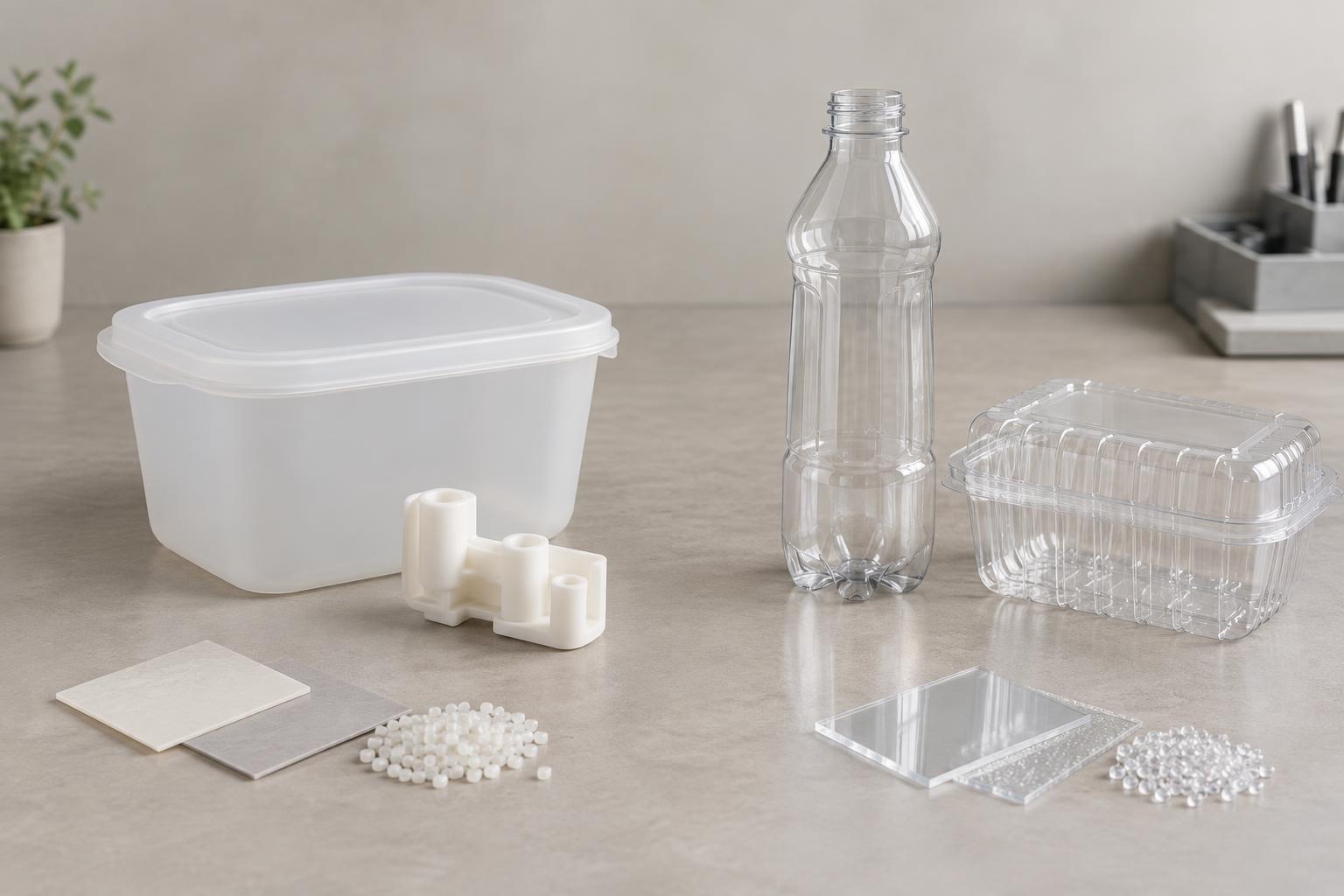
Thermoplastics and thermosets are both families of polymers, but they respond differently to heat because of how their molecules are connected. A thermoplastic softens when heated and becomes firm again as it cools. This change can generally be repeated without forming a new chemical network. Familiar examples include polyethylene, polypropylene, ABS, and nylon.
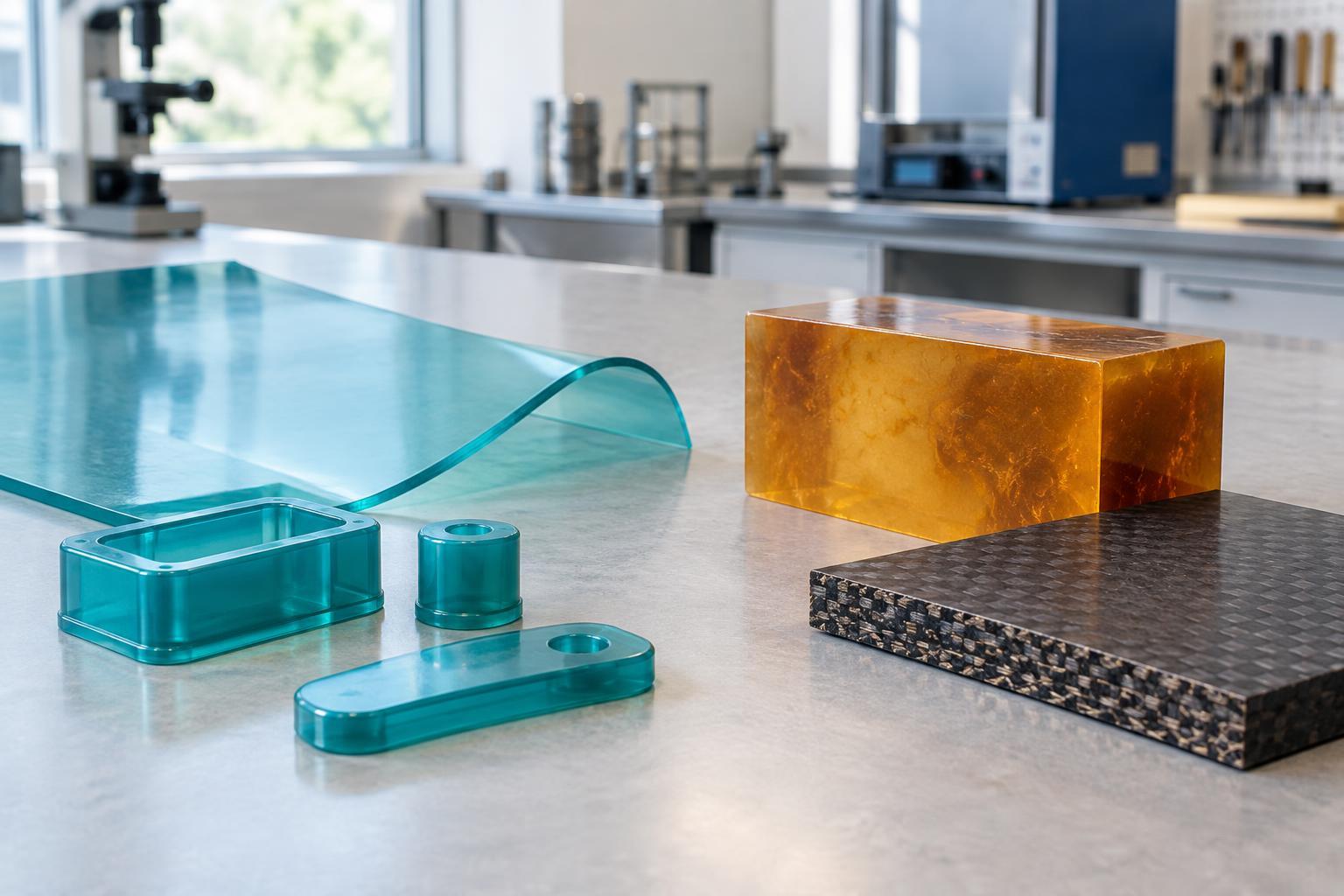
A thermoset starts as a material that can be shaped or applied, then undergoes a curing reaction. Curing creates a network of chemical links between polymer chains. Once that network has formed, heating does not turn the part back into a flowable material. Epoxy resins, many electrical encapsulants, and certain composite matrices are thermosets.
Neither category has one fixed set of properties. A flexible thermoplastic and a rigid thermoplastic can behave very differently, as can two thermosets. Fillers, reinforcing fibers, additives, part geometry, and processing conditions all affect the finished product. The distinction is a useful starting point, not a substitute for choosing a specific grade.
How processing shapes the choice
Thermoplastics are commonly formed by melting pellets or another feedstock, shaping the material, and cooling it. Injection molding can produce detailed parts repeatedly, while extrusion makes continuous shapes such as films, pipes, and profiles. Because the material solidifies on cooling, production planning often centers on melt flow, tooling, cooling time, and dimensional change as the part contracts.
Thermosets require a different sequence: place or shape the uncured material, then allow it to cure under suitable conditions. Depending on the system, curing may involve heat, mixing reactive components, or another trigger. The process must account for working time before cure, the time needed to reach useful properties, and any heat released during the reaction. Once cured, the material cannot simply be melted and molded again to correct a defect.
These differences affect cost and production volume, but not in a universal way. A thermoplastic mold may be attractive for repeated production of the same part; a thermoset may suit a casting, adhesive bond, coating, or fiber-reinforced component. The practical comparison is between complete processes, including tooling, cycle time, finishing, scrap, and inspection.
Heat, loads, and service conditions
A common shortcut is to call thermosets heat-resistant and thermoplastics heat-sensitive. That can be misleading. Both families include materials suited to different temperature ranges. Thermoplastics may soften, creep, or lose stiffness as temperature rises, but some grades are designed for demanding heat exposure. Thermosets do not melt back into shape, yet they can still degrade, crack, or lose useful properties when exposed to excessive heat.
Mechanical performance also depends on the job. A snap-fit cover may benefit from a thermoplastic that can flex repeatedly. A rigid bonded assembly may call for a curing adhesive. A reinforced thermoset composite can provide stiffness at relatively low weight, while a reinforced thermoplastic may offer its own balance of stiffness, toughness, and production speed. Neither label alone predicts impact resistance or fatigue life.
Describe the conditions the part will actually face: operating and peak temperatures, load duration, moisture, chemicals, sunlight, and cleaning methods. A brief hot-water rinse is different from carrying a load for years in a warm environment. Comparing candidate grades against those conditions is more useful than comparing polymer families in the abstract.
Assembly, repair, and end-of-life options
Material choice continues to matter after a part is formed. Some thermoplastics can be joined by heat welding; others are better suited to mechanical fasteners or adhesives. A damaged thermoplastic part may sometimes be reheated or welded, depending on its composition and condition. A cured thermoset generally cannot be reshaped this way, though a component may still be patched, bonded, or mechanically repaired.
Thermoplastic production scrap can often be ground and reprocessed if it is clean, identified, and compatible with the intended part. Repeated heating and contamination may limit its reuse. Cured thermoset scrap is harder to return to the same forming process, although some applications can use it as ground material or recover value through specialized routes. Actual recycling options depend on the product, local collection systems, and whether the material is mixed with fibers, fillers, coatings, or other components.
For a product intended to be disassembled, the whole design matters as much as the resin. Permanent bonds, embedded inserts, and mixed materials can complicate repair or separation regardless of which polymer family is used.
A practical way to narrow the options
Begin with the part’s function rather than a preferred material. List the properties that are essential, such as stiffness, flexibility, electrical insulation, chemical resistance, appearance, or dimensional stability. Then identify the manufacturing method, expected production quantity, joining needs, and any repair or end-of-life goals. Separate firm requirements from preferences so that tradeoffs remain visible.
Next, compare specific candidate grades and make representative samples. A molded test piece can reveal fit, surface finish, warping, and assembly problems that a material description cannot. For critical uses, test parts under conditions that resemble their real service environment. Thermoplastics offer reshaping and many established high-volume forming methods; thermosets offer curing routes and permanent networks useful for certain bonds, coatings, and composites. The better choice is the one that meets the part’s requirements through a workable production process.