Start with the fiber, then look at the fabric
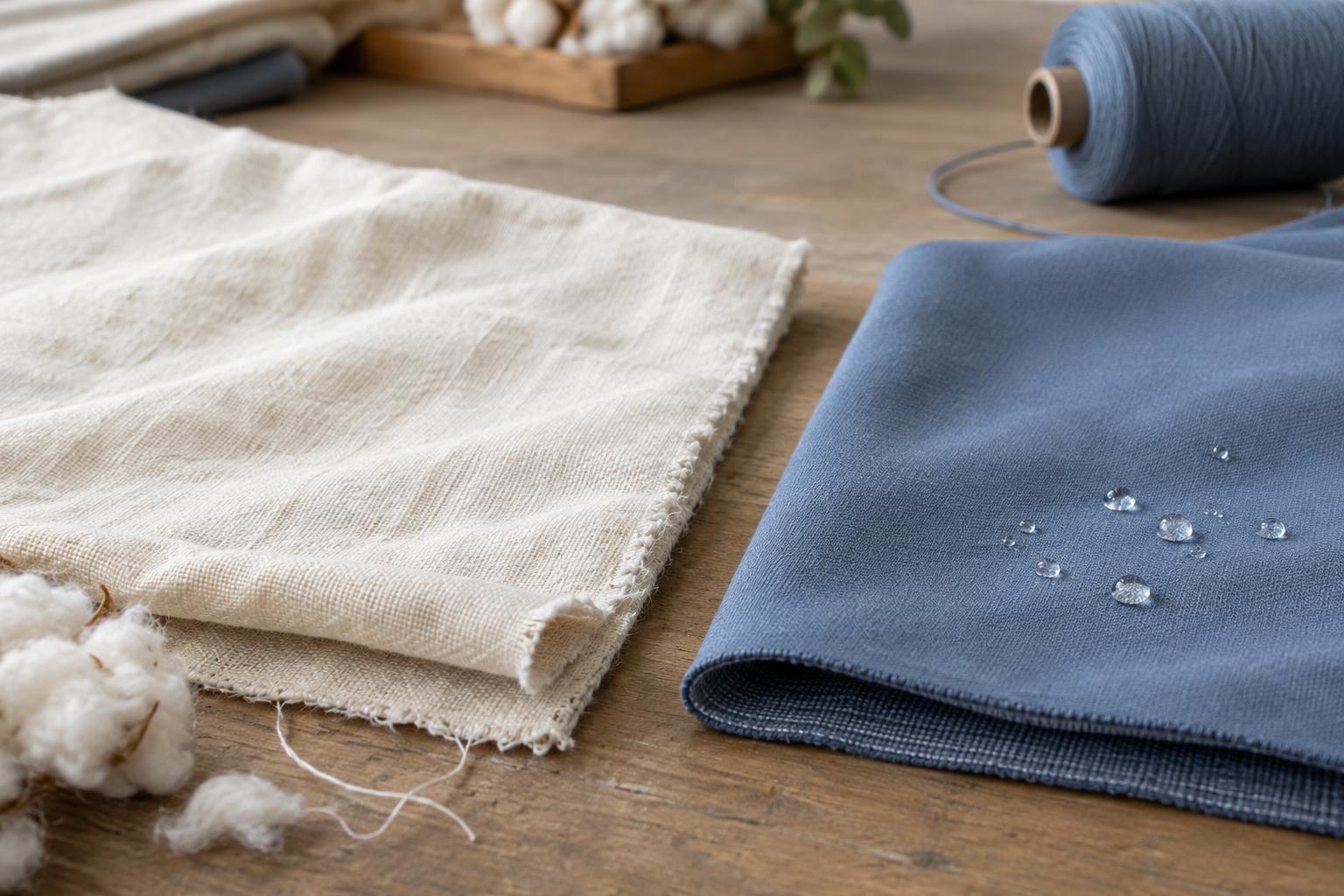
Cotton is a plant-derived fiber, while polyester is a manufactured synthetic fiber. That distinction helps explain their different behavior, but it does not tell the whole story. A tightly woven cotton canvas and a lightweight cotton jersey will not wear or feel alike. The same is true of polyester fleece and a smooth polyester lining.
Yarn thickness, knit or weave, fabric weight and finishing treatments all affect performance. When comparing two products, check the care label and handle the fabric if possible. Consider whether the product needs to feel soft against skin, keep its shape, dry between uses or withstand rubbing. Those requirements offer a better starting point than treating either fiber as universally better.
Durability: strength is only one part of wear
Polyester fibers generally resist stretching and recover their shape well. They can be useful in items that are repeatedly handled or washed, such as bags, uniforms and everyday clothing. Polyester also tends to resist wrinkling. Cotton can be strong and long-lasting too, especially in sturdy constructions such as denim or canvas, but it may crease, shrink or lose shape more readily depending on how it was made and cared for.
Neither fiber is immune to visible wear. Friction can roughen cotton surfaces or wear through a light fabric. Polyester may develop pills—small balls of tangled fiber—particularly where fabric rubs against itself. A strong fiber does not guarantee a durable product if the fabric is thin or the seams are poorly made. For a product expected to last, examine fabric density, stitching, high-wear areas and how the item will be cleaned.
Moisture: absorbing water is not the same as drying fast
Cotton absorbs moisture readily. That can make it feel comfortable against skin in ordinary use, but a soaked cotton garment may feel heavy and take time to dry. Polyester absorbs much less water into its fibers, so it often dries faster after washing. It can still hold water between yarns, however, and its performance depends on the fabric’s construction.
Some polyester fabrics are designed to move sweat across their surface so it can evaporate. This is often called wicking; it is not a property shared equally by every polyester garment. Likewise, neither fiber alone determines whether a fabric feels airy. A loose construction may allow more airflow than a dense one, regardless of fiber. For towels, absorbency may be the priority. For clothing that must dry quickly between uses, drying behavior may matter more.
Care: read the label before setting the wash
Cotton often tolerates routine washing, but heat can encourage shrinkage, especially if the fabric was not preshrunk. Dyes and finishes can also affect how a cotton item responds to washing. Polyester is less prone to shrinkage and usually dries quickly, yet excessive heat can damage it or set wrinkles. A garment made from either fiber may also contain trims, elastic or coatings that call for gentler care than the main fabric suggests.
For both materials, follow the product’s care label, wash with suitable colors and avoid harsher settings than the item needs. Prompt drying helps prevent damp laundry from developing an odor. If a polyester item retains smells, washing it before residue builds up may help; adding more detergent than directed can leave its own residue. A low-heat drying setting, or air drying when practical, is a cautious choice for items whose construction is uncertain.
Choosing for the product’s job
For a soft casual shirt, cotton may appeal if absorbency and a familiar hand feel matter most. For a lightweight item that needs to dry quickly and hold its shape, polyester may be a better fit. In upholstery or a reusable shopping bag, abrasion resistance and fabric construction may matter more than either fiber’s feel against skin. Blends can combine characteristics, though their behavior depends on the proportion of each fiber and how the fabric is made.
There is no single winner across durability, moisture and care. Define the item’s main task, then compare actual fabrics under the conditions in which they will be used. A simple check of weight, surface, seams and care instructions can reveal more about a finished product than its fiber name alone.